
THE ASIAN INDEPENDENT UK
 Dr. Ramji Lal, Social Scientist,
Former Principal, Dyal Singh College,
Karnal (Haryana, India)
The elite and reactionary classes propagate that students should not participate in politics because it will ruin their future. But they forget that politics influences social, economic, and political systems, from domestic to international levels. If students and youth do not participate in politics, the political system will fall into the hands of criminals, corrupt people, smugglers, and anti-social elements. And as a result, criminals will become politicised and politics will become criminalised. According to the N.N. Vohra Committee ( 1993)the nexus of politicians ,bureaucrats and criminals is becoming dominant in Indian politics. In other words, If the youth is not awakened politics will be last refuge of scoundrels who will try to divide the common people, especially the youth, on the basis of religion, caste, sect, language, and region.
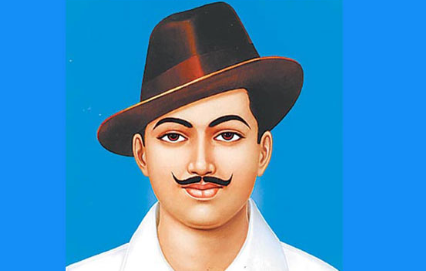
Bhagat Singh tried to understand this conspiracy and in his article “Students and Politics,” he clearly wrote, “We believe that the primary task of students is to study, and they should devote their full attention to it. But isn’t that education also a requirement for knowledge of the country’s conditions and the ability to think about their improvement? If not, then we consider that education worthless if it is acquired solely for clerical work. What is the need for such an education? Some clever people say, “child(KAKA), you should certainly study and think about politics, but don’t take any practical part. You will prove beneficial to the country by becoming more qualified.”
Power of Scientific and Practical Knowledge
The fundamental purpose of education is not merely to pass exams by rote learning, but to challenge the elements hindering social progress, namely superstition, religious fanaticism, and narrow-mindedness, through scientific reasoning and discernment. Academic training can only help in securing a job, but where are jobs even available? Therefore, education must be grounded in practical aspects. Bhagat Singh was well aware of this. He vividly penned:
“Everyone agrees that India needs patriots right now, who will dedicate their bodies, minds, and wealth to the country and, like madmen, sacrifice their entire lives for its freedom. But can such men be found among the elderly? Will such individuals emerge from among the mature, entangled in the complexities of family and worldly affairs? This can only be achieved by young people who are not entangled in any entanglements. Before falling into entanglements, students or young people can think only if they have acquired some practical knowledge, and not just crammed math and geography for exam papers.”
Bhagat Singh, in his article titled “Different Views of New Leaders,” substantiates his views by quoting Jawaharlal Nehru. Jawaharlal Nehru believed that youth should rebel in social, economic, religious, and political spheres based on their own understanding. According to Jawaharlal Nehru, “Every young person should rebel. Not only in the political sphere, but also in the social, economic, and religious spheres. I have no need for someone who comes and says that such and such a thing is written in the Quran. Anything that cannot be proven correct by the test of one’s own understanding should not be accepted, no matter how good it is said in the Vedas and the Quran.”
Bhagat Singh: A Bookworm
Bhagat Singh developed a deep appreciation for knowledge that could be validated through logic and real-life experience. He believed that scientific knowledge, supported by reasoning, is a powerful tool capable of bringing about significant changes for individuals, countries, and societies. According to J.N. Sanyal, who shared a prison cell with Bhagat Singh, he was an exceptionally knowledgeable individual who primarily focused on socialism. During his lifetime, Bhagat Singh read approximately 735 books. His ideas are vividly expressed in his jail diary, titled *Shaheed-e-Azam Bhagat Singh’s Jail Diary* (2011). An earlier version edited by Bhupendra Huja, called *A Martyr’s Notebook* (Jaipur, 1994), also chronicles Bhagat Singh’s experiences in jail. This diary features excerpts from 108 different authors and 43 books, predominantly written by Marx, Engels, and Lenin, alongside various other writers.
Bharat Naujawan Sabha: Lahore – 1926
An organization is essential for promoting any ideology. In response to this need, Bhagat Singh, Sukhdev, Bhagwati Charan Vohra, Yashpal, and others founded the Bharat Naujawan Sabha in Lahore in 1926. The primary objective of the Sabha was to unite the youth of peasants and labourers, inspiring them to strive for Swaraj (self-rule) through a revolt against imperialist, British, Indian, capitalist, and feudal exploitation. This organisation served as the public face of the Hindustan Socialist Republican Association, which was dedicated to the revolutionary movement opposing the exploitation of peasants and labourers.
The Manifesto of Bharat Naujawan Sabha: April 6, 1928
To inspire the youth of farmers and laborers with revolutionary ideology, a manifesto was prepared in Lahore in April 1928. This document highlighted the sacrifices of revolutionaries from Russia and China, as well as the youth of Poland. It honoured brave figures such as Guru Gobind Singh, Shivaji, and Hira Singh, and referenced the Jallianwala Bagh massacre. Additionally, it acknowledged influential scholars like Dostoevsky, Dadabhai Naoroji, and R. C. Dutt.
Main Focus of the Manifesto:
The manifesto, signed on April 6, 1928, by Bhagwati Charan Vohra, the publicity minister of the Bharat Naujawan Sabha, aimed to oppose religious superstition, fanaticism, sectarianism, narrow-mindedness, British and Indian capitalism, British imperialism, exploitation, and inequality. It emphasised self-sacrifice, commitment, and independent thinking grounded in rationality, seriousness, peace, and patience.
The manifesto argued against pushing youth and students into politics without a clear ideology and purpose, as promoting violence is detrimental to both youth politics and society. This is why Bhagat Singh and his comrades advocated for strengthening the revolution through ideas rather than through bombs and pistols. The youth should distance themselves from the violent movements of contemporary extremists, terrorists, Maoists, and communalists, since building an alternative socialist system led by farmers and labourers is impossible without public support.
Scientific and Practical Knowledge: A Self-Guide
Students and young people should guide themselves based on scientific and practical knowledge. They must not allow themselves to be used as tools by miscreants. A movement is successful only when it is non-violent, democratic, and peaceful. In all democracies around the world, the primary means of effecting change is through the proper use of voting in elections. However, when elected governments become autocratic and priorities the interests of a wealthy few over the public’s needs, it becomes necessary to initiate a movement.
According to the manifesto, youth and students should adopt “service, sacrifice, and commitment” as their guiding principles, approached with seriousness and honesty. The manifesto emphasises that “nation-building requires the sacrifice of thousands of unknown men and women who care more about their country than about their personal comforts and interests, and even the lives of themselves and their loved ones.”
In summary, based on scientific knowledge, youth and students should oppose social inequality, economic exploitation, rampant capitalism, Neo-imperialism, escalating animosity, unemployment, religious communalism, and other forms of sectarianism. This opposition aims to establish a system where farmers and labourers have control over national resources and political power. The scientific temper expressed by Bhagat Singh serves as a guiding light for students and youth, inspiring them to move from darkness to enlightenment. We advocate that Bhagat Singh should be honoured with the Bharat Ratna.