THE ASIAN INDEPENDENT UK

Bal Ram Sampla
Geopolitics
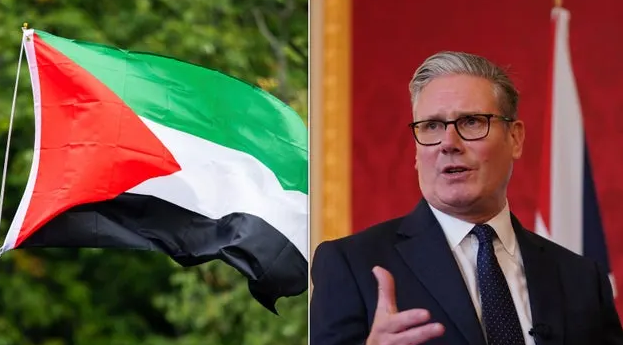
On September 21, 2025, Prime Minister Keir Starmer made the historic deci sion to formally recognise Palestine as a state. This move put Britain alongside over 150 other countries that have already taken this step. But why did Starmer choose to do this now, and what factors pushed him toward this decision?
The Electoral Pressure
One of the biggest reasons was politics at home. In the 2024 election, Labour lost five safe seats to independent candidates who campaigned on supporting Gaza and Palestine. These losses were a wake-up call. Studies showed that Labour lost nearly a third of its Muslim voters because of the party’s position on Gaza during the war with Israel.
Areas with large Muslim populations saw Labour’s vote share drop by more than 14%. This wasn’t just a small problem – it was a serious threat to Labour’s future electoral success in key constituencies across England.
The Corbyn Challenge
Making matters worse for Starmer, Jeremy Corbyn launched a new left-wing party in July 2025. Corbyn, who has always been strongly pro-Palestine, was attracting former Labour voters who felt betrayed by the party’s stance on Gaza. Polling showed that nearly one in three people who voted for Starmer in 2024 would consider backing Corbyn’s new party.
With six independent MPs already forming a significant group in Parliament, and most of them supporting Palestine, Starmer faced real competition from his political left. Recognising Palestine was a way to win back some of those lost voters.
Parliamentary Pressure
It wasn’t just voters putting pressure on Starmer. Inside Parliament, 255 MPs from nine different political parties had signed letters urging the government to recognise Palestine. This cross-party support showed that the issue went beyond just appeasing Muslim voters – there was genuine political momentum behind recognition.
International Coordination
Starmer didn’t act alone. The UK coordinated its recognition with Canada and Australia, making it seem like a reasonable, international move rather than a radical departure from previous policy. This gave the decision more legitimacy and made it harder for critics to dismiss it as purely domestic politics.
Keeping Campaign Promises
During the election campaign, Labour had hinted that it would be more supportive of Palestinian rights than the previous Conservative government. Recognising Palestine allowed Starmer to say he was keeping his promises to voters who supported Labour partly because of this stance.
The timing was also carefully chosen. Starmer waited until after Donald Trump’s state visit to the UK before making the announcement. Trump had expressed disagreement with the recognition, so waiting until after his visit avoided an awkward diplomatic moment while still allowing Starmer to follow through on his decision.
Historical Justification
Starmer could also point to historical precedent. The 1917 Balfour Declaration, which supported a Jewish homeland in Palestine, also promised to protect the rights of existing non-Jewish communities. Recognising Palestine could be seen as finally fulfilling the other half of that century-old commitment.
Conclusion
Starmer’s decision to recognise Palestine was driven by multiple factors working together. Electoral pressure from lost Muslim votes, competition from Corbyn’s new party, strong parliamentary support, and the opportunity for international coordination all pushed him toward recognition.
While critics might see this as “playing the Muslim card” to win back voters, supporters would argue that Starmer was simply doing the right thing – fulfilling promises, following international law, and recognising the legitimate rights of the Palestinian people.
The timing suggests that domestic politics played a major role, but the decision also fit with Labour’s broader foreign policy approach and international trends. Whether it helps or hurts Labour in future elections will depend on how British voters react to this foreign policy move.
References
1.https://ukandeu.ac.uk/the-myth-and-reality-of-ethnic-minority-support-for-labour/
2. https://www.electionanalysis.uk/uk-election-analysis-2024/section-2-voters-polls-and-results/changing-pattern-amongst-muslim-voters-the-labour-party-gaza-and-voter-volatility/
3. https://www.npr.org/2025/09/21/nx-s1-5549084/uk-canada-recognize-palestinian-state-australia
4. https://www.palestinechronicle.com/uk-to-formally-recognize-a-palestinian-state-following-us-president-trumps-visit/
5.https://www.aljazeera.com/news/2025/7/30/how-significant-is-uks-move-to-recognise-palestinian-state-and-why-now