THE ASIAN INDEPENDENT UK

Bal Ram Sampla
Geopolitics
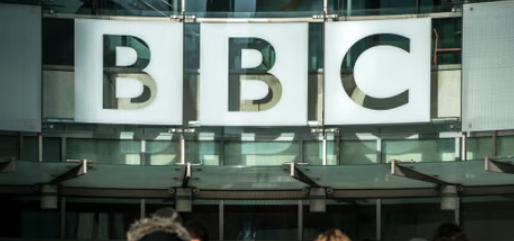
The British Broadcasting Corporation, known worldwide as the BBC, is facing the most serious crisis in its history. The organization that once stood as a symbol of trustworthy journalism is now fighting for its survival. Multiple scandals, accusations of bias, and a broken funding model have combined to create a perfect storm that threatens the future of Britain’s public broadcaster.
The immediate crisis began in October 2024, just one week before the American presidential election. The BBC aired a documentary about Donald Trump that deliberately edited his January 6th speech to make it look worse than it was. The editors cut and pasted different parts of Trump’s speech together, removing his call for supporters to protest “peacefully and patriotically” while making it appear he directly told crowds to march on the Capitol and “fight like hell.”
This was not a small mistake. It was broadcast to millions of viewers at a crucial moment in American politics. When the error was discovered, Trump’s legal team demanded an apology and compensation. The BBC delayed and avoided taking responsibility. Now Trump is threatening to sue the BBC for one billion dollars in defamation damages.
The scandal forced both the BBC Director-General Tim Davie and the BBC News Chief Deborah Turness to resign. Yet even in resignation, BBC leadership refused to admit the organization had institutional bias problems.
The Israel and Hamas Controversy
The Trump scandal was not the only problem revealed in leaked internal reports. A former BBC adviser named Michael Prescott documented extensive anti-Israel bias at BBC Arabic and BBC News.
The findings were shocking. BBC Arabic used contributors who had posted hateful comments about Jews and Israelis on social media. One contributor who described Israelis as less than human appeared on BBC Arabic 522 times. Another who said Jews should be burned “as Hitler did” appeared 244 times. While the main BBC website had 19 stories about Israeli hostages taken by Hamas, BBC Arabic had none.
BBC News also made serious errors. They falsely reported that the International Court of Justice had ruled Israel’s war a “plausible genocide” when the court had said no such thing. They aired Hamas claims that 14,000 babies would die within 48 hours, even after these claims were proven false. The corrections took months.
Despite this evidence, outgoing BBC News Chief Deborah Turness insisted the BBC was not institutionally biased. The denial of obvious problems has made the crisis worse.
A Long History of Bias Accusations
The BBC has faced accusations of bias for decades, from all sides of politics. During Margaret Thatcher’s government in the 1980s, Conservatives accused the BBC of left-wing bias. The corporation’s coverage of the Falklands War angered Thatcher’s government so much that some thought she might shut down the BBC entirely.
In 2004, the BBC director general resigned after a massive controversy about the Iraq War. The BBC had reported that the government “sexed up” intelligence about Iraqi weapons of mass destruction. The government fought back hard, and the resulting inquiry led to the director general’s resignation.
More recently, the BBC has been accused of bias during the Brexit referendum and the Scottish independence vote. Studies found the corporation gave unfair treatment to the “Yes” campaign in Scotland. During the Boris Johnson “Partygate” scandal, the BBC ran a piece so biased that the organization later admitted it “did not meet our standards of due impartiality.”
The BBC suspended popular football presenter Gary Lineker in 2023 for criticizing the government’s asylum policy, then backed down after massive public protest. This made the BBC look both politically biased and weak.
What is remarkable is that both Conservative and Labour supporters regularly accuse the BBC of favoring the other side. A 2023 poll found that only 22% of British people think the BBC is generally neutral. When almost nobody trusts you to be fair, you have a credibility crisis.
The Money Problem
While the BBC fights accusations of bias, it faces an even more existential threat: it is running out of money.
The BBC is funded by a mandatory licence fee that every household with a television must pay. The fee is currently £174.50 per year. This system worked for decades when everyone watched television and there were few alternatives.
But the world has changed. Young people watch Netflix, YouTube, and streaming services instead of traditional television. They resent paying for a service they barely use. Over half a million households cancelled their licences last year alone. The number of people paying the licence fee has fallen from 26 million five years ago to just 23.4 million today. The BBC now faces a decline in income of more than 30%.
One former government minister warned there is “a risk of a tipping point where the steady trickle of people saying they’re not going to pay becomes a flood. We are not there yet, but it is in sight.”
The BBC’s Royal Charter, which sets out how it is funded and what it does, expires in 2027. The government must decide what comes next. All options are on the table except direct government funding, which everyone agrees would make political interference worse.
Possible alternatives include a subscription model like Netflix, a household levy like Germany uses, a fee added to internet bills, or a mixed model combining public and commercial funding. Each option has serious problems.
Political Pressure from All Sides
The current Conservative opposition leader Kemi Badenoch has called for “top-to-bottom” reform of the BBC, claiming it is full of “institutional bias.” Conservative MPs have demanded reviews of BBC funding and editorial standards.
Meanwhile, Prime Minister Keir Starmer’s Labour government is in an awkward position. Starmer called the Trump editing “a serious error” but defended the BBC as vital in an age of disinformation. He refuses to agree with Trump that the BBC is corrupt, but he cannot ignore the serious problems.
Starmer faces pressure from Liberal Democrats who want him to tell Trump to “keep his hands off” British institutions. At the same time, he needs to maintain good relations with President Trump on crucial issues like trade and Ukraine. And he must prepare for the 2027 charter renewal negotiations while the BBC is at its weakest and most unpopular.
The Trump scandal and other controversies have given BBC critics powerful ammunition at exactly the wrong time. Those who want to abolish or drastically reform the BBC now have fresh evidence of editorial failures to support their arguments.
Why This Matters
The BBC is not just another media company. It is one of Britain’s most important cultural institutions. The BBC World Service broadcasts to millions of people in countries where independent journalism is dangerous or impossible. BBC News is often the only reliable source of information in war zones and disasters. The BBC produces world-class documentaries, dramas, and educational programming that British people and audiences worldwide value.
But institutions cannot survive on past glory. The BBC’s refusal to acknowledge and address serious bias problems, combined with a collapsing funding model and declining public trust, has created a crisis that threatens its existence.
The next few years will determine whether the BBC can reform itself and survive, or whether Britain’s public broadcaster will be abolished, privatized, or reduced to a shell of its former self. The organization that invented modern public broadcasting may not survive to celebrate its 100th birthday in 2032 unless it can solve these problems quickly.
Conclusion
The BBC is in crisis because it faces three serious problems at once: proven editorial failures and bias that it refuses to properly acknowledge, a funding model that no longer works in the streaming age, and political attacks from all sides at the moment it is most vulnerable.
The Trump lawsuit may cost the BBC one billion dollars. The loss of licence fee payers is costing it millions more each year. But the loss of public trust may be the most expensive cost of all. When people no longer believe the BBC is fair and honest, they have no reason to pay for it and no reason to defend it when politicians attack it.
The BBC can still save itself, but only if it admits its problems, fixes its bias issues, and finds a new funding model that works in the 21st century. Time is running out. The 2027 charter renewal is just two years away. What the BBC does now will determine whether it survives or becomes a cautionary tale about what happens when a great institution loses its way.
References
1.https://www.foxnews.com/media/trump-puts-bbc-notice-retract-apologize-false-defamatory-documentary-face-1-billion-suit
2.https://www.broadbandtvnews.com/2025/10/06/nandy-signals-shift-from-licence-fee-to-mixed-bbc-funding-model/
3.https://www.gov.uk/government/news/new-plans-to-ensure-the-bbcs-financial-sustainability-set-out-by-the-culture-secretary
4.https://www.ibtimes.co.uk/true-cost-tim-davies-exit-amid-bbc-political-storm-1753642
5.https://www.thelondoneconomic.com/politics/ed-davey-urges-british-leaders-to-defend-bbc-against-trump-400121/
6.https://www.politics.co.uk/reference/bbc-bias/
7.https://reutersinstitute.politics.ox.ac.uk/news/bbc-under-scrutiny-heres-what-research-tells-about-its-role-uk
click on the link below to download ‘The Asian Independent App’
https://play.google.com/store/apps/details?id=in.yourhost.theasianindependent