THE ASIAN INDEPENDENT UK

Bal Ram Sampla
Geopolitics
Prayers, Politics, and a Party in Crisis
Why Nick Timothy’s Comments Have caused a storm in British Politics
On the evening of 17 March 2026, thousands of Muslims gathered in Trafalgar Square — one of London’s most famous public spaces — for a communal iftar, the meal that breaks the daily Ramadan fast. London’s Mayor, Sadiq Khan, joined them. People prayed together in the open air. It was a peaceful, joyful occasion.
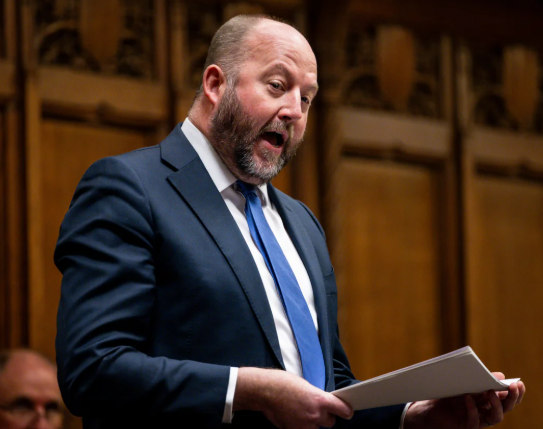
Nick Timothy, a Conservative MP and shadow justice secretary, watched the video and posted on X (formerly Twitter). He called the public prayers an “act of domination,” said they “do not belong in our churches and cathedrals,” and claimed they were “straight out of the Islamist playbook.”
Those words set off a political firestorm that has not died down since.
Why Are the Comments So Controversial?
Most observers see a major difference between a Muslim and an Islamist — one describes a person of faith, the other describes a political ideology. Critics argue Timothy deliberately blurred that line.
A cross-party letter signed by 26 MPs called the remarks incompatible with “the fundamental British values of mutual tolerance and respect.” Prime Minister Keir Starmer said at PMQs that if Timothy were in his team, “he would be gone.”
Why Didn’t the Conservative Leader Act?
Here is where things get politically complicated. Conservative leader Kemi Badenoch refused to sack or discipline Timothy. Her spokesman defended him, saying the issue was about the “exclusionary use of shared civic spaces” — essentially backing Timothy’s argument.
Timothy has a track record. In 2025, he campaigned against a UK definition of Islamophobia, calling it a move toward “Islamic blasphemy laws.”
The Bigger Picture: Labour’s Muslim Vote Crisis
To understand why this controversy matters so much right now, we need to look at what is happening to Muslim voters in Britain — and why Labour is deeply anxious about it.
For decades, Muslim communities voted overwhelmingly for Labour. It was one of the party’s most reliable voter blocs. But that loyalty has been crumbling fast. In the 21 parliamentary seats with the highest Muslim populations, Labour’s vote share collapsed from 65% in 2019 to just 36% in 2024. That is a catastrophic drop in just five years.
The reasons are multiple. Many Muslims were furious with Labour’s initial response to the Gaza conflict. Others felt let down by dithering of domestic policies like two child cap which impacts muslim community.
The key question is: where are these voters going? The answer is increasingly clear — the Green Party.
Labour’s Real Nightmare
In February 2026, the Green Party did something it had never done before: it won a Westminster by-election. In Gorton and Denton — a constituency in Manchester where Muslims make up more than a quarter of voters — the Greens came first, Reform came second, and Labour was pushed into third place.
The Green campaign was direct. They distributed leaflets in Urdu, showing their candidate in front of a mosque wearing a keffiyeh, urging voters to “make Labour pay.” It worked.
Under their new leader Zack Polanski — who took over in September 2025 — the Greens have positioned themselves as the party of the left that Labour refuses to be. They have built what analysts call a “Red-Green alliance,” combining secular left-wing voters with Muslim communities united by opposition to Labour’s foreign policy and domestic cuts.
The numbers tell the story. Green Party membership has tripled to over 200,000. National polls in early 2026 have placed them ahead of both Labour and the Conservatives in some surveys.
Labour’s Impossible Dilemma
This is why the Timothy controversy matters so much to Labour. It is not just about one Conservative MP saying something offensive. It fits into a much larger battle for the hearts and minds of British Muslim voters.
Labour has already made significant concessions to win back Muslim support: reinstating funding for UNWRA (the UN agency for Palestinian refugees), halting some arms sales to Israel, and recognising a Palestinian state. Yet even these moves have not stopped the bleed.
The problem is that Labour is fighting a two-front war. On one side, Reform UK is eating into its white working-class vote in post-industrial towns. On the other side, the Greens are peeling away Muslim voters and young progressives in urban areas. Labour risks being squeezed from both ends.
Critics say Labour has been too eager to appease Muslim voters in ways that have upset other parts of its coalition. But for many Muslim voters, Labour’s moves have not gone nearly far enough. The Green Party has been happy to fill that gap.
A Note of Complexity
Some Muslim voters who switched to the Greens quickly had second thoughts — discovering that the Greens’ policies on legalising drugs and other policies conflict sharply with their values. This suggests the Green-Muslim alliance is not as stable as it might appear.
There are also genuine concerns about election integrity in some contests, with reports of unusually high levels of “family voting” — where one person fills in ballots on behalf of others — in some Muslim-majority areas.
And some people — including writers who disagree with Timothy’s framing — argue that the right to openly criticise any religion, including Islam, is a cornerstone of free speech in a liberal democracy. They worry that calling all such criticism Islamophobic makes honest public debate impossible.
Conclusion: More Than One Man’s Tweet
What began as a post on X by one Conservative MP has become a window into some of the deepest tensions in British politics today: about belonging, about religion in public life, and about which party can speak for a rapidly changing country.
For Conservatives, the controversy raises questions about whether the party has drifted into prejudice or whether it is bravely saying things others dare not say.
For Labour, it is a reminder that Muslim voters — once a bedrock of its support — are no longer guaranteed. They have somewhere else to go.
And for British Muslims themselves, the question is simpler and more personal: does the country they live in see them as equal citizens, or as outsiders whose faith is still treated with suspicion? Nick Timothy’s words stung because, for many, they answered that question in a way they had feared.
References
1.https://www.spectator.com.au/2026/03/nick-timothy-isnt-the-bad-guy-in-the-row-over-mass-muslim-prayer/
2.https://redstate.com/wardclark/2026/02/28/the-united-kingdoms-leftist-greens-are-courting-the-muslim-vote-while-leaving-some-key-things-unsaid-n2199683
3.https://www.thejc.com/opinion/the-greens-dangerous-mainstreaming-of-
sectarian-muslim-politics-h9cyylp3
4.https://www.el-balad.com/16884965
5.https://www.lbc.co.uk/article/starmer-tories-sack-shadow-justice-secretary-muslim-comments-5HjdWTn_2/