

THE ASIAN INDEPENDENT UK

Bal Ram Sampla
Geopolitics
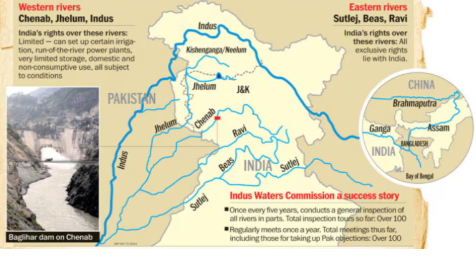
In April 2025, a terrible terrorist attack occurred in Pahalgam, Kashmir, killing at least 26 people. India blamed Pakistan for supporting terrorism across the border. In response, India took a dramatic step on April 23, 2025: it suspended the Indus Waters Treaty, a water-sharing agreement that had been in place since 1960. The very next day, Pakistan retaliated by suspending the Simla Agreement.
Why India Won’t Attend the Vienna Talks
India has refused to attend the Indus Waters Treaty proceedings in Vienna, Austria, for a straightforward reason: India says the treaty no longer applies. From India’s perspective, once you suspend an agreement, you are no longer bound by any of its rules or procedures. Attending discussions under the treaty would contradict India’s position that the treaty is “in abeyance” – essentially on hold.
India has made its position clear: the treaty will remain suspended until Pakistan stops supporting cross-border terrorism. India’s Home Minister Amit Shah has even stated that India will “never” restore the treaty and will instead use the water for its own internal needs. By refusing to attend the Vienna proceedings, India is reinforcing its message that it considers the treaty dead until Pakistan changes its behaviour on terrorism.
Interestingly, these Vienna proceedings were originally requested by India itself, but now India has walked away from them entirely. The Neutral Expert overseeing the discussions has ruled that the proceedings can continue even without India’s participation, and Pakistan continues to attend “in good faith.”
Pakistan’s Hypocritical Position
What makes Pakistan’s complaints about India’s treaty suspension particularly hard to take seriously is Pakistan’s own track record with the Shimla Agreement. This hypocrisy shows itself in several ways.
1. The timing issue.
Pakistan suspended the Simla Agreement on April 24, 2025, the day after India suspended the Indus Waters Treaty. Pakistan then complained about India not honoring international commitments while simultaneously refusing to honour its own commitment under the Simla Agreement. It’s difficult to claim the moral high ground while doing exactly what you’re criticizing the other side for doing.
2. Pakistan has been violating the Simla Agreement for decades.
The core promise of the Simla Agreement, signed in 1972, was that India and Pakistan would resolve all their disputes through bilateral negotiations – meaning just the two countries talking directly to each other. The agreement specifically said disputes “shall be settled by bilateral negotiations or by any other peaceful means mutually agreed upon.”
But what has Pakistan done for over 50 years? It has raised the Kashmir issue at the United Nations and in other international forums year after year. This directly violates the bilateral framework Pakistan agreed to in the Simla Agreement. Pakistan made a promise to keep disputes between the two countries, then immediately broke that promise and has continued breaking it for half a century.
3. Pakistan’s “suspension” is meaningless.
When you formally suspend an agreement you’ve been ignoring for 50 years anyway, it’s not a real sacrifice or meaningful retaliation. Pakistan has been acting as if the Simla Agreement doesn’t exist for decades, so announcing its suspension in 2025 changes nothing about Pakistan’s actual behaviour.
The Problem with Crocodile Tears
Pakistan now wants India to restore the Indus Waters Treaty while Pakistan itself has suspended the Simla Agreement and, more importantly, violated it consistently for decades before that. This is what people call “crocodile tears” – fake crying about something while being guilty of the same behaviour yourself.
Pakistan argues that the Indus Waters Treaty is different because it affects millions of people who depend on water for survival, while the Simla Agreement is just a diplomatic framework. There’s some truth to this – water access is indeed a humanitarian issue. But this argument is self-serving. It essentially says “my treaty violation is justified, but yours isn’t” or “the agreement I’m breaking isn’t important, but the one you’re breaking is critical.”
The reality is that both countries have now abandoned longstanding agreements. But Pakistan’s position is particularly weak because it’s complaining about treaty violations while having a long, documented history of violating the very treaty it claims to care about.
Conclusion
India is not attending the Indus Waters Treaty discussions in Vienna because it considers the treaty suspended and believes attending would contradict that position. India’s suspension came in response to the Pahalgam terrorist attack and India’s demand that Pakistan stop supporting terrorism.
Pakistan’s response – suspending the Simla Agreement and complaining about India’s actions – rings hollow. Pakistan has violated the Simla Agreement for over 50 years by refusing to keep Kashmir discussions bilateral. Complaining about India breaking a treaty while Pakistan has systematically broken its own treaty commitments for decades is the definition of hypocrisy.
Both countries are now in a dangerous situation where the framework of agreements that governed their relationship for decades has collapsed. But in terms of moral authority to complain about treaty violations, Pakistan’s position is exceptionally weak given its own track record.
References
1.https://www.business-standard.com/external-affairs-defence-security/news/india-pakistan-simla-agreement-suspended-wagah-border-visa-staff-125042400879_1.html
2.https://www.eurasiantimes.com/diplomatic-fiasco-for-pakistan-why-suspension-of-1972-simla-agreement-is-an-open-invitation-to-india-to-seize-pak-occupied-kashmir-oped/?amp
3.https://www.asianage.com/india/all-india/india-to-skip-indus-waters-treaty-proceedings-in-vienna-1916680
4.https://www.india.com/news/world/masterstroke-by-modi-govt-as-india-to-boycott-indus-water-treaty-proceedings-pakistan-rattled-due-to-indus-waters-treaty-suspension-8180382/
5.https://www.npr.org/2025/07/08/g-s1-73122/pakistan-india-indus-waters-treaty