THE ASIAN INDEPENDENT UK

Bal Ram Sampla
Geopolitics
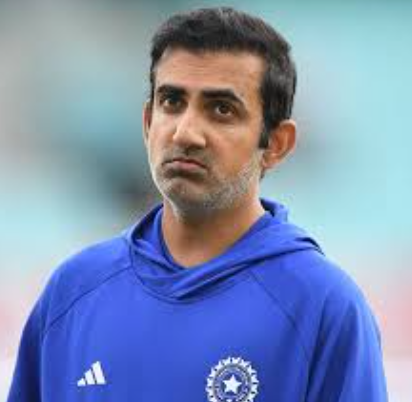
Gautam Gambhir’s tenure as India’s head coach has been marked by a troubling pattern: the same selection mistakes repeated match after match, series after series. While every coach deserves time to settle into the role, there comes a point where repeated errors stop being growing pains and start being fundamental flaws in judgment. India has reached that point with Gambhir.
First he made serious selection errors in two test matches India lost to South Africa. Also lost to New Zealand at home.
The Same Mistakes on Loop
The most damning indictment of Gambhir’s coaching is not that he makes mistakes—all coaches do—but that he refuses to learn from them. The recent T20I against South Africa crystallizes this problem perfectly. Despite having multiple opportunities to correct his approach, Gambhir persists with decisions that defy both logic and results.
The Shubman Gill Problem
Shubman Gill is a talented cricketer. Nobody disputes this. He is also, quite clearly, not a T20 player. His game is built for the longer formats—the elegant strokeplay, the ability to construct innings, the classical technique. These are assets in ODIs and Tests. In T20 cricket, where you need to score at nine or ten runs per over from ball one, Gill’s approach is a liability.
Yet Gambhir continues to select him. Match after match, Gill either consumes too many deliveries getting set or gets out trying to play shots that don’t come naturally to his game. The solution is obvious: players like Sanju Samson are sitting on the bench, natural T20 batsmen who can provide the aggression India needs at the top of the order. But Gambhir either cannot or will not see it.
This isn’t about Gill’s ability. It’s about playing the right player in the right format. Gambhir’s failure to understand this basic principle—or his stubbornness in refusing to act on it—is coaching malpractice.
The Axar Patel Disaster
Then there’s the Axar Patel at number three debacle. In a chase of 214, with the match on the line, Gambhir sent out a lower-order all-rounder to bat in the top three. This wasn’t a tactical masterstroke or a bold gamble that didn’t pay off. It was simply wrong.
Axar is a valuable player—a handy lower-order hitter and a useful spinner. But he is not, and has never been, a top-order batsman. Promoting him to number three suggests either panic, poor planning, or a fundamental misunderstanding of players’ roles and capabilities. None of these options reflects well on the coaching staff.
The Discipline Disaster
Beyond selection, there’s the issue of basic discipline. In the same match against South Africa, Arshdeep Singh bowled multiple wides while Jasprit Bumrah—one of the world’s best bowlers—repeatedly bowled full tosses. These aren’t complex tactical issues. These are fundamental execution errors that gift runs to the opposition.
In T20 cricket, where margins are razor-thin, giving away 20-30 extra runs through wides and poor execution is match-losing. The fact that these issues persist suggests that either the coaching staff isn’t addressing them, or the players aren’t responding to the coaching. Either way, it’s a failure of leadership.
The Cost of Stubbornness
Cricket coaching at the international level requires flexibility, adaptability, and the willingness to admit when something isn’t working. Gambhir has shown none of these qualities. Instead, he doubles down on failed approaches, seemingly hoping that if he picks the wrong players enough times, they’ll somehow become the right players.
This stubbornness has real consequences. India is losing matches they should win. Player confidence is being eroded—both for those being misused and those being overlooked. The team’s T20 identity is becoming muddled, with no clear sense of roles or game plans.
The Comparison Problem
It’s impossible not to compare Gambhir’s approach to successful T20 coaching. The best coaches in the format understand that T20 requires specialist skills and specific player types. They’re ruthless about picking horses for courses, about matching players to roles that suit their strengths. They don’t try to shoehorn ODI players into T20 lineups or send all-rounders to bat at three.
Gambhir, by contrast, seems to be coaching as if all formats are the same, as if good players will automatically succeed regardless of role or format. This one-size-fits-all approach might have worked in his playing days, but modern T20 cricket has evolved beyond it.
Time for Change
The evidence is clear and mounting. Gambhir is making the same mistakes repeatedly. He’s not learning, not adapting, not showing the tactical acumen required at this level. India has the talent to be a dominant T20 side, but that talent is being wasted by poor selection and questionable tactical decisions.
With three matches still to play in this series and crucial T20 tournaments on the horizon, India cannot afford to continue down this path. Every match lost to poor selection is a match that didn’t need to be lost. Every talented player left on the bench while the wrong player struggles in the wrong role is an opportunity wasted.
The definition of insanity is doing the same thing over and over and expecting different results. By that measure, Gambhir’s continued faith in failed approaches is cricket’s version of madness. India deserves better. The players deserve better. And if Gambhir cannot or will not change his approach, then it’s time for India to change their coach.
The pattern is established. The mistakes are repeated. The results speak for themselves. Gautam Gambhir needs to go.
South Africa 213-4
India 162