

Ravinder Singh Sodhi

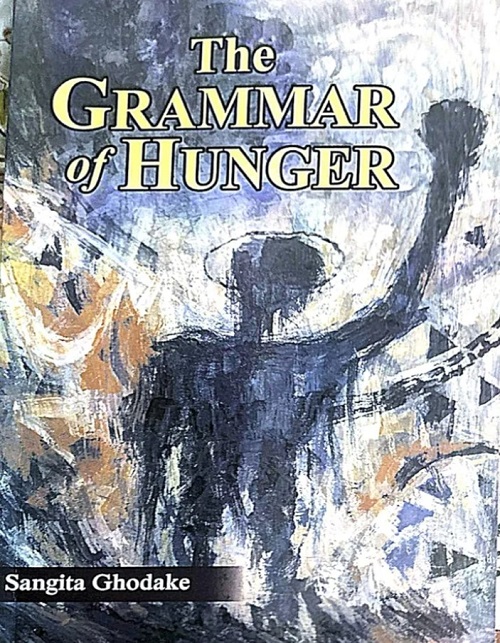
(Asian independent) Sangita Ghodake’s The Grammar of Hunger is a thoughtful and ambitious collection of short stories that attempts to examine one of the most powerful impulses shaping human life—hunger. The title itself immediately attracts attention, for it suggests that hunger has its own language, its own logic, and perhaps even its own grammar. As the stories unfold, the reader gradually realises that the hunger spoken of here is not merely physical. It is the deeper hunger of the human spirit: the longing for love, recognition, dignity, knowledge, belonging, and sometimes even transcendence.
The preface prepares the reader for this wider understanding. It observes that the stories take us into “the many chambers of the human spirit; some dim, some luminous, all truthful.” This remark serves as an apt introduction to the collection. Indeed, the stories travel through several emotional landscapes—some reflective, some dramatic, and some quietly philosophical.
The foreword carries this idea further by presenting hunger as more than a mere human necessity. It describes hunger as “a teacher, a compass, a companion, a mirror, a rebellion, and a spiritual calling.” In other words, hunger becomes the restless force that moves individuals to dream, struggle, and sometimes even lose their way.
One of the strengths of The Grammar of Hunger lies in the variety of its themes. The stories range from mythological reinterpretations to contemporary social realities and imaginative reflections on the future. Despite this diversity, the idea of human longing quietly binds them together.
The opening story, “Becoming One with the Universe,” introduces Prerana, a successful corporate professional whose growing fascination with the cosmos begins to influence her entire outlook on life. Her journey reflects a deep spiritual hunger—the desire to understand one’s place in the universe. The story raises an interesting philosophical question: can the pursuit of spiritual truth sometimes distance a person from ordinary human relationships?
In “Bhima and His Big Hungry Belly,” the author turns to mythology. Drawing upon the well-known character of Bhima from the Mahabharata, the narrative is presented with humour and warmth. Bhima’s legendary appetite becomes symbolic not merely of physical hunger but of vitality, courage, and a zest for life.
The theme of social aspiration appears vividly in “Curious Minds.” Here we encounter Kamble Guruji, who transforms a forest into a classroom for tribal children such as Savita. The story celebrates the hunger for knowledge that exists even in difficult circumstances. Education, in this narrative, becomes a source of dignity and empowerment.
Human relationships are portrayed with sensitivity in several stories. “Love or Perish” presents the bond between Jatin and his loyal dog Bruno, reminding readers that companionship is among the deepest emotional needs of human life. Likewise, “Perfectly Imperfect Us” offers a realistic portrayal of married life through the everyday disagreements between Shyam and Meera. The story gently suggests that relationships endure not because they are flawless, but because people learn to live with one another’s imperfections.
Some stories also engage with contemporary social concerns. Narratives such as “Refractions of the Rainbow” and “The Longing for Belonging” explore questions of identity and acceptance. Through these stories, the author attempts to present the emotional struggles faced by individuals seeking dignity and recognition within society.
Another notable narrative is “Myth of Muscles,” which follows Peter Blaze, an actor obsessed with achieving the perfect physique and gaining fame. The story reflects a modern cultural phenomenon—the hunger for recognition in a world driven by image and celebrity. It also hints at the emotional costs that such ambitions may carry.
From a technical perspective, Sangita Ghodake shows considerable versatility. Her narrative style adapts comfortably to different themes. The mythological stories carry a storytelling rhythm reminiscent of traditional tales, while the contemporary narratives depend more on emotional realism. At places the author ventures into imaginative or speculative territory, demonstrating a willingness to experiment.
The language of the stories is simple and direct. This simplicity helps the ideas emerge naturally without unnecessary complexity. At times, however, a few stories appear somewhat ambitious in the range of ideas they attempt to cover, and a more restrained narrative approach might have made them even more effective. Yet such ambition also reflects the author’s desire to explore a wide literary canvas.
Perhaps the most interesting achievement of the book lies in the symbolic use of hunger. Throughout the collection we encounter many forms of hunger—the hunger for knowledge in a child, the hunger for fame in an ambitious actor, the hunger for love in a lonely heart, and the hunger for spiritual meaning in a searching mind. By presenting these varied dimensions, the author succeeds in turning hunger into a unifying literary motif.
Several stories linger in the reader’s mind after the reading is complete. They gently encourage reflection on our own desires and priorities. What do we truly hunger for in life? And how far are we willing to go in pursuit of those desires? Such questions give the book its reflective quality.
The preface expresses the hope that the author’s imagination is far from spent and that this book may be only the beginning of a longer creative journey. After reading The Grammar of Hunger, one feels that this expectation is well justified.
In the final analysis, The Grammar of Hunger is a sincere and engaging attempt to explore the many dimensions of human desire. Sangita Ghodake shows an observant eye for human emotions and social realities. With continued refinement of her craft, she has the potential to develop an even stronger and more distinctive narrative voice.
Readers who appreciate reflective short fiction will certainly find this collection rewarding. One can only hope that the author continues to pursue this creative path and enrich contemporary storytelling with many more thoughtful works in the years to come.