THE ASIAN INDEPENDENT UK
 Ramesh Chander
The writer is A Retired Career Diplomat.
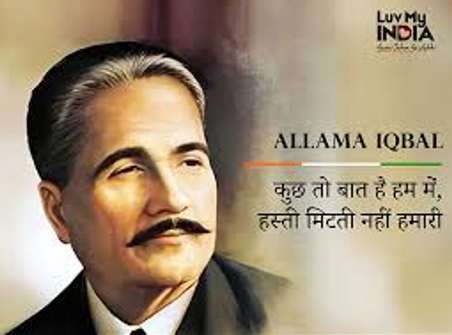
I wrote on the subject briefly in my blog when Vice Chancellor of Delhi University supported the idea of taking Allama Iqbal out of the University syllabus. Delhi University Vice-Chancellor Yogesh Singh supported removing Allama Iqbal from the political science syllabus, stating that those who “laid the foundation to break India should not be in the syllabus”. The move to drop the Urdu poet, often cited as the initiator of India’s partition, was unanimously passed by the academic council in May 2023, urging a focus on national heroes. The decision drew criticism from some who viewed it as a politically motivated attempt to redefine the syllabus, though the administration officially maintains it is aimed at promoting nationalistic fervor.
Yet another such case has come-up. The University of Jammu intends to erase Allama Iqbal from its curriculum. Hasseb Drabu in an article in the Tribune has termed it as. “Reducing a towering mind to a political label is an act unworthy of a university” and wrote, “It is indeed tragic that a university which once hosted this finest post-Partition exponent of Iqbaliyat — the specialized field of research on the poetry and philosophy of Iqbal — should now seek to erase Sir Muhammad Iqbal from its curriculum.”
 Allama Iqbal, arguably one of the greatest poets of the subcontinent, traced his roots to the Kashmir valley, a fact he celebrated in his writings. He retained a deep emotional and cultural bondage with Kashmir despite his ancestors — Kashmiri Pandits of the Sapru clan – embraced Islam three centuries ago and later shifted to Sialkot, a twin city of Jammu before the partition in 1947. Hasseb Drabu has written, “Jagan Nath Azad, a scholar of rare distinction, must be turning in his grave. It was at the University of Jammu that he wrote eleven books on Muhammad Iqbal, including the authoritative five-volume biography, Roodad-e-Iqbal, and a translation of his magnum opus Javed Nama. Scholars described Azad, a professor at the university, as “Iqbal Academy Incarnate”.”
I am not an academic or a scholar of poetry (Shyari) but a humble ‘Fan’ of Allama Iqbal just by reading his poetry in Devnagri without even understanding many of the nuances of Urdu/Persian poetry. His Shyari (Poetry) in the first phase till mid1930s is full of lofty ideals of nationalism, anti-colonialism, Indian traditions and culture,
egalitarian society and humanism like Rabindranath Tagore. In the second phase, Iqbal tilted towards ‘Two Nation Theory’ and became a proponent of Pakistan which ultimately became a reality. It shall not be held against him, to my mind. I have no intention to visit the political and communal history here. What changed him and his thinking is the subject to be researched and analyzed by the historians and scholars.
He wrote a beautiful Nazm – Taran-e-Hind in 1904 explicitly as a patriotic song for children which become one of the most popular songs of India and was designated as a ‘National song of India’ and rightly so –
saare jahāñ se achchhā hindostāñ hamārā
ham bulbuleñ haiñ is kī ye gulsitāñ hamārā
maz.hab nahīñ sikhātā aapas meñ bair rakhnā
hindī haiñ ham vatan hai hindostāñ hamārā
His Nazm – Naya Shivala is yet another gem which as relevant today as it was before –
aa ġhairiyat ke parde ik baar phir uThā deñ
bichhḌoñ ko phir milā deñ naqsh-e-duī miTā deñ
suunī paḌī huī hai muddat se dil kī bastī
aa ik nayā shivāla is des meñ banā deñ
His ‘Quomi Geet’ sets the cultural aspect of Hindostan that is Bharat in its right perspective –
चिश्ती ने जिस ज़मीन में पैगाम-ए-हक़ सुनाया
नानक ने जिस चमन में वेहदा का गीत गाया
मेरा वतन वोही है मेरा वतन वोही है
यूनानियों को जिस ने हैरान कर दिया था
सारे जहाँ को जिस ने इल्मो-हुनर दिया था
मिट्टी को जिसकी हक़ ने ज़र का असर दिया था
तुर्कों का जिस ने दामन हीरों से भर दिया था
मेरा वतन वोही है, मेरा वतन वोही है
How much he loved the soil of his country that is Hindostan? It may be felt from his poem – Bache Ki Dua –
लब पे आती है दुआ बन के तमन्ना मेरी
ज़िंदगी शम्अ की सूरत हो ख़ुदाया मेरी!
हो मिरे दम से यूँही मेरे वतन की ज़ीनत
जिस तरह फूल से होती है चमन की ज़ीनत
ज़िंदगी हो मिरी परवाने की सूरत या-रब
इल्म की शम्अ से हो मुझ को मोहब्बत या-रब
हो मिरा काम ग़रीबों की हिमायत करना
दर्द-मंदों से ज़ईफ़ों से मोहब्बत करना
मिरे अल्लाह! बुराई से बचाना मुझ को
नेक जो राह हो उस रह पे चलाना मुझ को
Iqbal was not oblivious of the challenges and difficulties before India. I quote from one of his very famous and sagacious Nazm – Tasveere Dard –
Watan Ki Fikar Kar Nadan! Musibat Ane Wali Hai
Teri Barbadiyon Ke Mashware Hain Asmanon Mein
Na Samjho Ge To Mit Jao Ge Ae Hindustanon Walo !
Tumhari Dastan Tak Bhi Na Ho Gi Daston Mein
As I said that I am no authority on Allama Iqbal but I am fully convinced that he was a nationalist to the core and a humanist par-excellence. Some of us may be of the view that he was one of the proponents of Pakistan but he fully recognized the core of the soul of India in his poem – Ram:
इस देस में हुए हैं हज़ारों मलक-सरिश्त
मशहूर जिन के दम से है दुनिया में नाम-ए-हिंद
है राम के वजूद पे हिन्दोस्ताँ को नाज़
अहल-ए-नज़र समझते हैं इस को इमाम-ए-हिंद
There is no point in trying to erase and distort history by blocking Allma Iqbal –
hazāroñ saal nargis apnī be-nūrī pe rotī hai
baḌī mushkil se hotā hai chaman meñ dīda-var paidā
click on the link below to download ‘The Asian Independent App’
https://play.google.com/store/apps/details?id=in.yourhost.theasianindependent