THE ASIAN INDEPENDENT UK

Bal Ram Sampla
Geopolitics
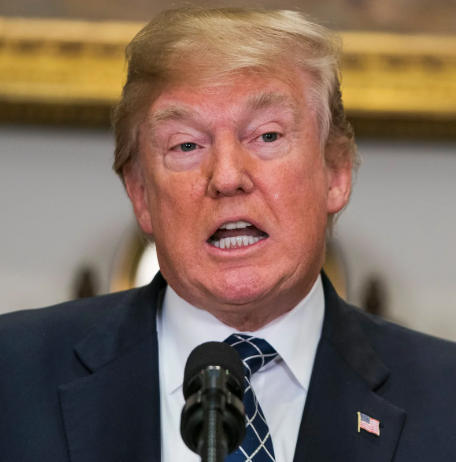
President Donald Trump made the unprecedented decision to boycott the G20 Summit in Johannesburg, South Africa. His stated reasons centered on allegations of white farmer persecution in South Africa, claims widely disputed by fact-checkers and international observers. While Trump may have intended this boycott as a statement of principle, the consequences reveal a significant strategic error that has diminished American influence on the world stage.
The Immediate Fallout
The boycott’s first consequence was diplomatic humiliation. South African President Cyril Ramaphosa refused to accept a junior diplomat as America’s representative, ultimately handing over the rotating G20 presidency to an “empty chair.” This symbolic gesture underscored a hard truth: the world’s most important economies were willing to proceed without American participation.
More substantively, the G20 nations adopted a comprehensive declaration addressing climate change, global inequality, and economic cooperation entirely without US input. When American officials later complained about the language and content, South Africa’s response was blunt: the declaration “can’t be renegotiated.” For the first time in modern history, the world’s largest economy had surrendered its seat at the table and lost its ability to shape the outcome.
The Formation of Alternative Alliances
Perhaps the most damaging consequence occurred while America was absent. India, Canada, and Australia announced the Australia-Canada-India Technology and Innovation (ACITI) Partnership, a trilateral agreement focusing on emerging technologies, supply chains for critical minerals, clean energy, and artificial intelligence. These are precisely the strategic sectors where the United States has sought to maintain leadership and ensure its allies remain within the American sphere of influence.
The timing is particularly significant. Canada’s participation reflects deteriorating relations with Washington over Trump’s trade policies and controversial suggestions about Canadian statehood. Australia and India, both traditional US partners, chose to formalize cooperation without American involvement. This partnership demonstrates that US allies are increasingly willing to hedge their bets and pursue multilateral cooperation that doesn’t centre on Washington.
The Broader Pattern
This boycott fits a troubling pattern from Trump’s foreign policy approach. During his first term, withdrawal from the Paris Climate Agreement and the Trans-Pacific Partnership similarly aimed to punish or reject international frameworks, but the result was simply that these initiatives continued without American participation. Allies didn’t follow the US out; they filled the vacuum left behind.
French President Emmanuel Macron’s response to the G20 boycott captured this dynamic perfectly: “I do regret it, but it should not block us. Our duty is to be present, engage and work all together.” The world, it seems, has learned to function without American leadership when necessary.
The Cost of Absence
The G20 represents approximately 85% of the world’s economy, 75% of international trade, and more than half the global population. By choosing not to attend, Trump forfeited influence over discussions that will shape global economic policy, climate initiatives, and technological standards for years to come. The agenda he rejected—climate change, inequality, and inclusive development—will proceed regardless of American objections, but now without provisions that might have protected American interests.
President Ramaphosa’s assessment was pointed: “The United States needs to think again whether boycott politics actually works because in my experience it doesn’t work.” His observation that America was “giving up the very important role that they should be playing as the biggest economy in the world” highlights the self-inflicted nature of this damage.
Conclusion
Trump’s G20 boycott reveals a fundamental misunderstanding of how power operates in the modern international system. Boycotts are only effective when others depend on your participation. In this case, the world demonstrated it could negotiate, cooperate, and forge new partnerships without American involvement.
The result is not that the agenda changed to accommodate US preferences, but rather that strategic partnerships like ACITI emerged, declarations were adopted over American objections, and the precedent was set that multilateral cooperation can proceed successfully without Washington at the table. Far from strengthening America’s hand, the boycott has accelerated exactly what it presumably sought to prevent: a world order where American influence is optional rather than essential.
References
1.https://www.business-standard.com/india-news/pm-modi-announces-trilateral-technology-partnership-with-australia-canada-125112200590_1.html
2.https://www.tribuneindia.com/news/aciti/australia-canada-india-technology-and-innovation-partnership-to-deepen-collaboration-pm-modi
3.https://www.npr.org/2025/11/21/nx-s1-5615174/south-africa-g20-us-boycott
4.https://www.cbsnews.com/news/g20-summit-south-africa-declaration-us-boycott/
5.https://www.aljazeera.com/economy/2025/11/22/g20-summit-in-south-africa-whos-attending-and-whats-on-the-agenda