

THE ASIAN INDEPENDENT UK

Bal Ram Sampla
Geopolitics
The Court of Arbitration sounds impressive. It issues rulings. It sets hearing schedules. It warns about “adverse inferences” when countries don’t comply. But here’s the simple truth: it has no teeth.
When India rejected the Court’s authority in 2025, the Court couldn’t do anything about it. It cannot send police. It cannot impose fines. It cannot force India to show up or hand over documents. All it can do is write more orders that India will continue to ignore.
This is the fundamental weakness of international law between powerful nations. These courts run on consent and cooperation. When a major country decides it won’t play along, the court becomes little more than a debating society. The judges can declare India is breaking the rules, but they cannot make India care.
Pakistan’s War Rhetoric: All Bark, No Bite
Pakistan’s response has been dramatic. Its National Security Committee declared that violating the Indus Waters Treaty would be treated as an “act of war.” Strong words. Scary headlines. But ultimately, it’s bluster.
Pakistan is not going to war with India over this treaty. Both countries have nuclear weapons. A real war would be catastrophic for everyone involved. Pakistan’s leaders know this. India’s leaders know this. Everyone knows this.
So what is Pakistan really doing? It’s huffing and puffing. It’s making noise on the international stage. It’s hoping the threat sounds serious enough to pressure India into backing down. But when push comes to shove, these are empty threats designed for domestic consumption and diplomatic posturing, not actual military action.
The Real Problem: A 1960s Treaty in a 2020s World
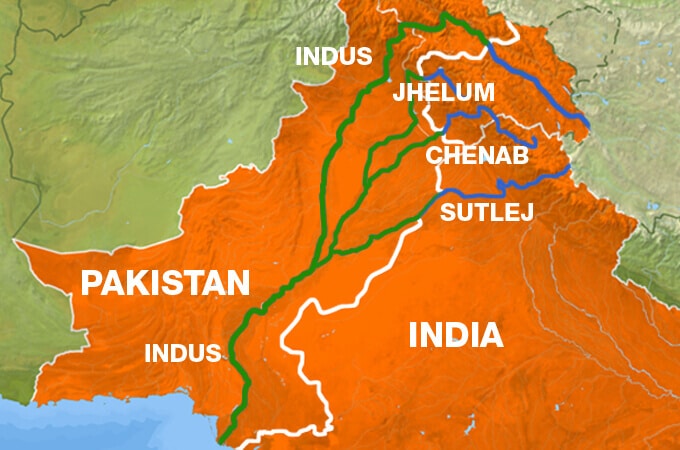
Here’s what gets lost in all the legal arguments and war rhetoric: the Indus Waters Treaty was signed in 1960. That’s over 65 years ago.
The world was completely different then. Climate change wasn’t on anyone’s radar. Water scarcity wasn’t the crisis it is today. India’s population was around 450 million; now it’s over 1.4 billion. Technology for dam construction and water management has transformed entirely.
The treaty divided rivers between the two countries based on 1960s needs and 1960s understanding. It made sense then. But times have changed dramatically.
Climate change has altered rainfall patterns across South Asia. Glaciers that feed these rivers are melting at unprecedented rates. Extreme weather events are becoming more common. Water demand has exploded with population growth and development.
Pakistan wanted the treaty to stay frozen in time because it locked in favorable terms from six decades ago. But India argues, reasonably, that a treaty designed for a different era cannot address today’s realities. When India tried to renegotiate or update the terms to reflect modern challenges, Pakistan refused. Pakistan wanted to keep its 1960 advantages in a 2025 world.
3 Pakistan’s Own Track Record with International Law
Here’s where Pakistan’s outrage becomes particularly hard to take seriously: Pakistan itself has violated UN resolutions for over 75 years.
UN Security Council Resolution 47, passed on April 21, 1948, laid out a clear three-step process to resolve the Kashmir dispute. Step one was simple and unambiguous: Pakistan had to withdraw all its nationals and tribesmen who had entered Kashmir for fighting. Only after the UN Commission verified this withdrawal would step two begin, where India would reduce its forces. Step three would be a UN-supervised plebiscite.
Pakistan never completed step one. It never withdrew its forces and nationals from Kashmir. The resolution accepted by both countries clearly stated that Pakistan must pull out first, but Pakistan refused. Instead, it has spent 77 years demanding the plebiscite while ignoring the precondition it agreed to fulfill.
The UN Commission reported in August 1948 that Pakistan’s military presence in Kashmir represented a “material change” in the situation. Pakistan effectively rejected the resolution’s terms even as it claimed to support the plebiscite. India accepted the resolution, but the process stalled because Pakistan wouldn’t take the first required step.
So when Pakistan now runs to international courts and cries about India violating the Indus Waters Treaty, there’s a certain irony. Pakistan wants India bound by a 1960 treaty while Pakistan itself has ignored a 1948 UN resolution for three-quarters of a century.
You can’t spend decades violating one international commitment while demanding the other side honour a completely different one. Well, you can try, but nobody should take it seriously.
The Stalemate
This is where we are: a court that cannot enforce its rulings, a country making threats it won’t follow through on while having its own history of ignoring UN resolutions, and an outdated treaty that neither side can agree to fix.
India has decided the political and security costs of maintaining the old treaty are too high, especially given terrorist attacks it blames on Pakistan-backed groups. It’s willing to accept being called a treaty violator.
Pakistan has decided that threatening war and running to international courts makes it look strong domestically, even though both strategies are ultimately ineffective.
And the Court of Arbitration? It will keep issuing rulings that nobody is required to follow.
This dispute reveals an uncomfortable truth about international law: it works best when countries want it to work. When powerful nations decide their interests lie elsewhere, these institutions become stages for diplomatic theater rather than meaningful arbiters of justice.
The real solution would be sitting down and negotiating a new treaty that reflects 2025 realities instead of 1960 assumptions. But that requires both sides to compromise, and right now, neither seems willing to do that. So the stalemate continues, the court issues unenforceable rulings, and Pakistan makes threats it won’t carry out.
That’s the messy reality of international relations: sometimes there’s no referee with real power, and the loudest voices are often the least likely to act.
References
1.https://en.wikipedia.org/wiki/United_Nations_Security_Council_Resolution_47
2.https://dailypioneer.com/news/india-hardens-stand-on-indus-water-pact
3.https://www.aljazeera.com/features/2025/7/9/can-india-stop-pakistans-river-water-and-will-it-spark-a-new
4.https://thehill.com/opinion/international/5698162-the-mother-of-all-mega-dams-is-chinas-hidden-weapon-in-the-himalayas/