

THE ASIAN INDEPENDENT UK

Bal Ram Sampla
Geopolitics
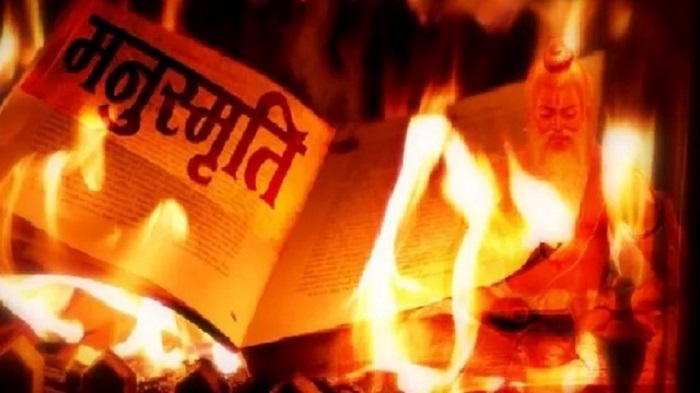
On December 25, 1927, Dr. B.R. Ambedkar led one of the most symbolic acts of protest in Indian history when he organized the public burning of the Manusmriti during the Mahad Satyagraha. This event marked a turning point in the struggle against caste discrimination and represented a powerful challenge to the religious foundations that supported the oppressive caste system in India.
The Manusmriti, also known as the Laws of Manu, was an ancient Hindu legal text that outlined social rules and hierarchies. Dr. Ambedkar viewed this text as “a charter of rights for the upper caste but a Bible of slavery for untouchables.” He believed that the Manusmriti provided philosophical justification for the discrimination faced by Dalits and other marginalized communities in Indian society.
The burning took place during the Mahad Satyagraha, which was organized to assert the rights of “untouchables” to access public water sources and to claim their basic human dignity. The choice of Mahad was strategic, as it had support from some progressive upper-caste individuals, including Surendranath Tipnis, the municipality president who had declared public spaces open to untouchables.
The Symbolic Act and Its Meaning
The public burning of the Manusmriti was carried out on a specially constructed symbolic funeral pyre. This dramatic act served multiple purposes beyond mere protest. First, it represented a complete rejection of the religious basis for untouchability. By burning the text publicly, Ambedkar was challenging not just social practices but the very scriptures that legitimized these practices.
Second, the burning symbolized the emancipation and self-dignity of Dalits and women, who were both oppressed under the traditional interpretations of Hindu law. It was a declaration that marginalized communities would no longer accept their prescribed inferior status in society.
Historical Significance
The burning of the Manusmriti holds several layers of historical significance. It was the first major collective protest by untouchables under Ambedkar’s leadership, marking the beginning of an organized Dalit liberation movement. While the non-Brahmin leader Periyar had organized a similar burning in Madras in 1926, Ambedkar’s action carried special importance because it was led by those who suffered most directly under the caste system.
The event also demonstrated Ambedkar’s unique approach to social reform. Unlike other leaders who sought to reform Hinduism from within, Ambedkar was willing to challenge its very foundations. He argued that the problem was not just in the practice but in the texts and beliefs that supported discrimination.
Reactions and Opposition
The burning provoked strong reactions from different sections of society. Mahatma Gandhi opposed the book burning, arguing that while caste discrimination was harmful, it had nothing to do with true Hinduism and its texts. Gandhi believed in reforming the caste system rather than rejecting the religious texts entirely. This disagreement highlighted the fundamental difference between Gandhi’s reformist approach and Ambedkar’s more radical stance.
The Brahmin community and other upper castes generally opposed such direct challenges to their traditional authority. However, some progressive individuals like G.N. Sahasrabudhe, a Chitpavan Brahmin from the Social Service League, supported the movement, showing that not all upper-caste individuals were opposed to reform.
Long-term Impact
The burning of the Manusmriti had lasting effects on Indian society and the struggle for social justice. It inspired other marginalized communities to challenge oppressive traditions and assert their rights. The day is now commemorated as “Manusmriti Dahan Divas” (Manusmriti Burning Day), serving as a reminder of the ongoing fight against caste-based discrimination.
The event also established Ambedkar as a fearless leader who was willing to confront the most sacred texts and traditions if they perpetuated injustice. This approach later influenced his decision to convert to Buddhism and his work on the Indian Constitution, where he ensured fundamental rights for all citizens regardless of caste.
Conclusion
The burning of the Manusmriti by Dr. B.R. Ambedkar was far more than a symbolic gesture of protest. It represented a fundamental challenge to centuries-old systems of oppression and marked the beginning of a new phase in the struggle for equality and human dignity in India. By rejecting the religious justifications for caste discrimination, Ambedkar paved the way for a more inclusive vision of Indian society.
The significance of this act continues to resonate today, reminding us that true social progress sometimes requires challenging even the most deeply held beliefs and traditions when they perpetuate injustice. Ambedkar’s courage in burning the Manusmriti remains an inspiration for all those who fight against discrimination and inequality in any form.
References
1.https://www.quora.com/What-was-Dr-B-R-Ambedkars-reasoning-behind-burning-the-Manusmriti
2.https://www.sci.gov.in/centenary-of-dr-b-r-ambedkars-enrolment-as-an-advocate/
3. https://ebooks.inflibnet.ac.in/socp4/chapter/non-brahmin-approach-to-the-study-of-indian-society-dr-b-r-ambedkar/