THE ASIAN INDEPENDENT UK
S.V. Rajadurai

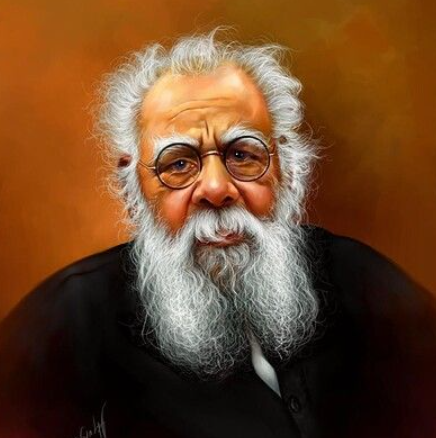
This year 2025 is witnessing the centenary of the Self Respect Movement of Periyar E.V. Ramasami. The term ‘self-respect’ encapsulates the main ideals of the movement, viz abolition of the distinctions between Pariya and Brahmin, the rich and poor and the man and woman, the distinctions undergirded by the hierarchical caste order with Brahminism as its ideological prop.
Though the movement was centred in the Tamil speaking areas of the Madras Presidency and Pondicherry , it reached out to the downtrodden masses in Dharavi and Pune, Travancore Princely state and the migrant Tamil communities in Malaya, Singapore, Ceylon and Burma.
Privileging ‘Self-Respect’ as the birthright of human beings as against the claim of B.G. Tilak’s Swaraj, Periyar argued, that caste does not make for a healthy sense of the self, and to develop such a sense, one would have to practise self-respect, learn to value one‘s self. In fact this had to precede all other values and objectives, including freedom and self-rule, in short even swaraj. Periyar defined self-respect in diverse ways, and depending on the context of his utterance and the historical moment in which that utterance was required, self-respect was aligned to socialism, Islam, to the Buddhist notion of samadharam. Periyar‘s use of the word ‘samadharma’, as a counter to Manudharma, and as an adjunct of socialism, which he argued had to do with the logic of just distribution, whereas ‘samadharma’ required a just and equal ethics which implicates all of us, the form of that ethical consensus that we forge with each other, that we shall hold and exercise rights and compassion in common.
Periyar’s criticism of Hinduism proceeded from his understanding of caste as a system and ideology : the Brahminical ideology determined what the women and men of the Hindu faith ate, how they dressed, whom they married, their choice of a profession, their relationships with each other, their behaviour in public places, their political choices, their modes of worship, in short, a religious sensibility was manifest in the Hindu’s each and every actions. Hinduism was fundamental to the very organization of caste society and had to be viewed not merely in terms of beliefs, faith and the succour it offered to the believer, but in terms of its material everyday existence. Periyar’s idea on brahminical patriarchy drew its sustenance from his rejection of the conventional ideal of chastity. Periyar argued that ‘child rearing’ could be taken up by the men as well. By making parenthood rather than motherhood the decisive factor in the nurture and care of human life, Periyar liberated the female body and thus granted the female person a will and subjectivity. He also attacked the fetishisation of female body and urged the women not to internalize the notions of beauty and become mere ‘pegs’ on which one hangs jewellery.
The politics of the SR movement was defined as a critique of Congress nationalism and political Non-brahminism. Self-respecters understood political Non-brahminism as a creed that rejected what it termed, the hierarchical privileges of the caste order, opposed brahminical pride and social power, endorsed the rights of untouchables to an equal, self-respecting and free existence, and which upheld women’s reproduction rights as well as their right to education and independence. Further, even when Periyar supported governments that appeared to him to be receptive to social justice ideals, he never allowed such support to interfere with his critical work in the civil and public realms. He was insistently critical of the electoral politics and legislative exercises , which to him, were inexorably given to instrumental reasoning and limited goals. He felt that being active in this sphere could prove corrupting – and so decided to keep away from it, and instead function as a permanent dissident and critical movement in society.
The SR movement drew inspiration from the Russian Revolution, though it abhorred violence manifesting in any form. The only English weekly the SR Movement has ever had was ‘revolt’ launched from Erode on 7the November 1928,which, in the words of the leader written for its first anniversary number was “that memorable day in the history of the nations, the day of the… immortal Revolution in Russia..” One can see from the journals of the SR movement hundreds of articles on the achievements of Soviet Russia, some of which looked for the social markers of women’s progress civil society as well (It had great admiration for King Amanullah Khan of Afghanistan and Mustafa Kemal Pasha of Turkie for overturning the centuries old dress code for the women.) Periyar had the Preamble and the first section of the ‘Communist Manifesto’ translated into Tamil and published it in ‘Kudi Arasu’ before leaving for a ‘global tour’, which was only a ploy to enter into the Soviet territories. After returning to Erode by the end of 1932, he and S. Ramanathan, a veteran of the SR Movement translated into Tamil seven articles of Lenin on Religion to be published in ‘Kudi Arasu’. A few months later’ Kudi Arasu’ featured the first Tamil translation of Engels’s ‘The Principles of Communism’ by another Self Respecter and during 1937-38, a full length biography of Karl Marx were published.
The SR movement forged close contact and comradely relationship with Babasaheb Dr B.R. Ambedkar. It was the SR journals that introduced Babasaheb to Tamil Nadu through its reports on Mahad Satyagraha and Kalaram Temple entry movement and it mobilized all its strength to support of the Separate electorate demand. Similarly from 1935 onwards it supported Ambedkar’s decision to leave the Hindu fold not to die as a Hindu. Periyar however, was unhappy about Babasaheb’s decision to join the Constituent Assembly as he felt that the latter’s legilslative labour would only be harvested by the ‘North Indian Aryans’. In the post Independent India, Periyar disagreed with Babasaheb’s solution to Kashmir problem and also his advocacy of aligning with the USA. But these political differences were overcome with Periyar’s support to Babbasaheb in all other issues.
Periyar maintained that social inequalities derived from one’s birth would remain active under any economic system as a deterrent to any radical change in society and would even reproduce the economic disparities that were abolished. Pointing out that it was under the caste system that several people became wealthy and acquired a superior status, he insisted that even implementation of Communist doctrines in full force could not bring about any reform in a hierarchically organized caste society and that therefore the first and fundamental task of a Socialist in this country was to abolish the caste system. Periyar’s position was not agreeable to the ‘socialists’ (future Communists) in the SR movement like M. Singaravelu who insisted on ‘class struggle’ and broke away from Periyar to join the Congress Socialist Party in 1936. It was precisely during this period, Periyar was able to get a copy of’ ‘Annihilation of Caste’, and translated into Tamil and serialized in ‘Kudi Arasu’.
Love and Hate relationship between the Self Respect Movement and the Communists continued after 1947 ( between 1946-1947 there was a sharp ideological struggle between the Self Respecters and the Communists on the question of understanding the real nature of the ‘Independence’ of India granted by the British .But the Dravidar Kazhagam (the reshaped Self Respect Movement) was the only party in the Tamil speaking areas of the erstwhile Madras Presidency that condemned the ban on the Communist Party of India imposed by the Nehru Government in 1949. It expressed it solidarity with the Communist Prisoners and organized state-wide meetings to condemn the killing of 22 Communist Prisoners in Salem Central Prison. The prisoners were protesting against the ill-treatment and frequent torture, inferior quality of food supplied to them, denial of the right to receive the visitors of their choice. reading material and other rights given in the Jail Manual. During the first general election held in 1952 with adult franchise, Periyar supported the Communist candidates in specific constituencies while the Communists were expected to support a few candidates of Periyar’s choice. Though Periyar never believed in electoral politics , he decided to field one of his close comrades of that time, a Dalit for the reserved seat in a double member parliament constituency. But the gentlemen’s agreement was flouted by the Communists who fielded their own candidate in that constituency. Infuriated, Periyar spared no efforts to ensure the victory of his candidate. Subsequently, the Communists and the Self Respecters ( members of the DK) have been viewing each other with disdain till two decades ago, but of late the former have realized the value of Periyar, especially in the context of the brutal march of the Hindutva Hegemons. It is a historical challenge for both the movements , in theory and practice, to club the anti-caste struggle with the class struggle.
The range of concerns and the commitments of the Self Respecters could be seen in the pages of the Self-Respect journals which published a wide variety of articles ranging from scholarly critiques of Ramayana, Mahabharatha, Bhagwad Gita and the Puranas to the translations of anti-clerical articles from the West, essays of Voltaire, Rousseu, Thoams Paine and Ingersol on the one hand and the writings of Dr R.P.Paranjape, J. Krishnamurthi and M. Singaravel on the other. These journals also featured atheist writings of Bertrand Russell and Bhagat Singh. Some of the stories of Boccacio were also translated and published along with one or two articles by Rahul Sankrityayan and Meghnath Saha. All these were intended to cultivate rationalist outlook and critical thinking amongst the Self Respecters and also the general public.
Periyar’s genius, for example his profound knowledge of Indian Philosophical systems could be seen in his article ‘Materialism or Pragrridivad’, written from what he called ‘the perspective of Nirvana’ remains to be explored by those interested in understanding Periyar and his anti-caste movement.
Despite Periyar’s radicalism with which he selflessly spent nearly 75 years of his long life, it is yet to gain a solid anti-caste space in the civil society while the ‘real-politik’ of the political parties that claim his legacy has led them to get immersed in the logic of Westminster system resulting in the emergence of powerful intermediate castes whose ‘caste pride’ entails in the increasing number of atrocities on Dalits. While Tamil Nadu has done better than the rest of the country as many indicators would show, in interpersonal caste relationships however , it is becoming intolerant and violent whenever the norms of castes are challenged. This has led the new generation of Dalit Intellectuals to reject the entire trajectory of the Self-Respect movement. We also witness the blatant slanders and distortion of Periyar’s thoughts and mission resorted to by some of them, even at the risk of losing a powerful ally in their struggle for equality, fraternity and dignity.