
THE ASIAN INDEPENDENT UK
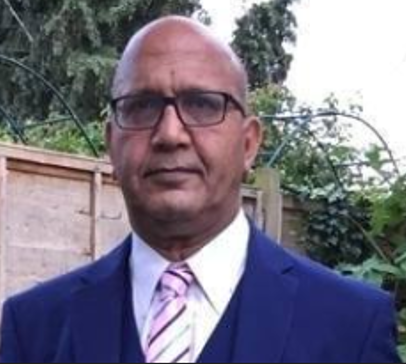
Bal Ram Sampla
Geopolitics
The Price of Appeasement
Labour’s Muslim Vote Bank Politics, and the Warnings of Farage and Robinson
A Political Analysis
In politics, parties make deals. Some are debated openly. Others happen quietly — through things left unsaid, crimes overlooked, and inconvenient truths buried. The relationship between the Labour Party and Muslim bloc voting is hardly discussed — of these silent deals in modern British history.
The results are now plain to see. From the grooming gang scandals in Rotherham and Rochdale to mass public prayers in Trafalgar Square in March 2026, voices on the right — led by Nigel Farage and Tommy Robinson — have argued that Labour and local authorities placed Muslim votes above the safety and rights of ordinary British people. This essay examines that argument honestly and without pulling punches.
I. The Numbers Game
To understand Labour’s behaviour, start with basic electoral maths. Britain has over three million Muslims, mostly concentrated in cities across the North, the Midlands and London. In places like Birmingham, Bradford, Oldham, Rochdale and Tower Hamlets, Muslim voters can make up 20 to 40 percent of the electorate. Labour has historically won between 75 and 90 percent of that vote.
This was not accidental. Labour spent decades cultivating relationships with mosque networks, community leaders and Pakistani and Bangladeshi organisations. In return, those leaders delivered votes reliably. Council contracts, planning permissions and local authority jobs flowed back the other way. Both sides benefited — except, as it turned out, the children whose abuse was quietly ignored to keep the arrangement intact.
This is not a conspiracy theory. It is ordinary machine politics. The problem is not that Labour courted a community’s votes — all parties do that. The problem is what they were willing to overlook in exchange for those votes. And what they overlooked was the sexual exploitation of thousands of children.
II. The Grooming Gang Scandal: Silence Was a Choice
The grooming gang scandal is the most damning evidence of Labour’s vote bank politics. What happened in Rotherham, Rochdale, Telford and other towns was not simply a policing failure. It was the systematic rape and abuse of thousands of girls — predominantly white and Sikh working-class children — by networks of predominantly British-Pakistani men. And it was allowed to go on for decades because the people in a position to stop it made a conscious choice not to.
It is important to note that Sikh communities were the first to raise the alarm — as far back as the 1970s and 1980s. Sikh families saw their daughters targeted, warned the authorities, and were dismissed. Some were accused of racism for daring to name the ethnicity of the perpetrators. That injustice has never been formally acknowledged by the British government, and it should be.
When the Rotherham scandal finally broke publicly in 2014, the Jay Report documented the abuse of at least 1,400 children over sixteen years. Police had been told not to pursue cases. Social workers had been disciplined for raising concerns. Council leaders had sat on reports and done nothing. One Labour MP, Denis MacShane, later admitted he had known about concerns and had deliberately avoided investigating them — he did not want to be seen as colluding with racists. Children paid the price for his political cowardice.
Even after the Jay Report, the response was inadequate. When Keir Starmer became Prime Minister, his government refused to call a full national statutory inquiry. The only plausible reason is electoral: a proper inquiry, with legal powers to compel evidence, would produce findings that would damage Labour in precisely the Muslim-majority marginal seats it cannot afford to lose.
III. The Islamophobia Weapon
Alongside the vote bank calculation, the charge of Islamophobia has been used as a political weapon to shut down legitimate debate. Criticism of specific practices — whether community silence on criminal networks, extremist preaching in mosques, or foreign terror financing — has been routinely labelled as anti-Muslim bigotry. The effect has been to make Muslim community institutions almost immune from the scrutiny applied to every other institution in British public life.
Police officers in grooming gang towns have said on the record that fear of being called racist stopped them pursuing investigations. Journalists who reported the scandal were smeared. Politicians who raised it were marginalised. The Islamophobia accusation, used carelessly and sometimes dishonestly, helped keep thousands of children in danger for longer than necessary. That is a matter of documented record, not opinion.
IV. Nigel Farage: Pointing at Something Real
Nigel Farage has argued for years that Labour’s dependence on Muslim bloc votes has corrupted British institutions, suppressed legitimate concerns about national security and child protection, and allowed the slow erosion of British cultural norms. In March 2026, when thousands gathered in Trafalgar Square for mass prayers — with the call to prayer broadcast publicly across one of Britain’s most iconic spaces — Farage called it an attempt at ‘cultural dominance.’ His critics called it racism. It has to be noted that all praying seem to men and no sign of female worshipper.
But the underlying political question he was raising — about equal treatment of public religious expression — is a legitimate one.
His analysis of vote bank politics is largely correct. Where he is weaker is consistency. His anger about grooming gangs is genuine, but he has been notably quieter about parallel establishment failures — the protection of Jimmy Savile, institutional child abuse in the Catholic Church, the behaviour of powerful figures across the British establishment. Selective outrage, even when accurate in its target, invites the charge of political opportunism.
That said, the core charge stands: Labour knowingly put Muslim votes ahead of children’s safety. Farage did not invent that. The Jay Report proved it.
V. Tommy Robinson: The Inconvenient Voice
Tommy Robinson is a more complicated figure. He has criminal convictions for violence, mortgage fraud and contempt of court. He co-founded the English Defence League. He has at times made generalisations about Muslim people that go beyond legitimate criticism of Islamism. These are fair criticisms.
But his treatment by the British state has also raised serious questions. His imprisonment, solitary confinement and repeated prosecutions have looked to many observers like the use of law to silence a political voice rather than deliver justice — particularly when figures whose crimes were far greater faced no prosecution at all.
The significance of his visit to Washington in early 2026 is hard to overstate. He met Republican Congressmen and General Mike Flynn, Trump’s former National Security Adviser, at the US State Department. Elon Musk had already restored his social media access and funded his legal defence. A man the British establishment had marginalised and imprisoned was now making his case directly in the corridors of American power. His argument — that Britain is a warning to the world about what happens when governments are too afraid to confront Islamism — was being heard at the highest levels.
The British government’s response was silence. That silence said everything. A government with a clean record on grooming gangs and free speech could easily have rebutted his claims. It cannot, because the record does not allow it.
VI. Starmer’s Labour: Same Problem, New Face
Keir Starmer presented himself as a break from Labour’s Corbyn-era associations with Islamist sympathisers. In practice, the vote bank dependency has continued. His tortured, repeatedly revised positions on the Israel-Gaza conflict were not the product of genuine moral wrestling. They were the product of watching internal party polling in Muslim-majority marginals and calculating what was needed to hold those seats.
His refusal to call a full national grooming gang inquiry is the most telling decision of his premiership so far. There is no honest argument against such an inquiry. The only coherent explanation is political: the findings would be too damaging in too many Labour constituencies. Children’s interests, again, come second.
When Starmer attacked a Conservative MP at PMQs for describing mass public prayer as ‘an act of dominance’ — declaring he would have sacked him — he was performing exactly the kind of Muslim community solidarity that his critics have identified as the mechanism of appeasement. The irony is that his own record makes Farage’s case more effectively than Farage ever could.
VII. Is Britain Becoming ‘Londonistan’?
The word ‘Londonistan’ is inflammatory and needs to be used carefully. It must not mean that British Muslims as a whole are hostile to Britain. The vast majority are law-abiding citizens and taxpayers who had nothing to do with grooming gangs and nothing to do with extremist mosques. Treating an entire community as suspect is both wrong and counterproductive.
The term was coined in the early to mid 1990s by French intelligence services — specifically officers within the DGSE (Direction Générale de la Sécurité Extérieure), France’s foreign intelligence agency. French investigators were deeply frustrated that Britain was harbouring North African Islamist militants — particularly Algerian GIA (Armed Islamic Group) operatives — who were using London as a base for fundraising, propaganda and planning, while being largely untouched by British law enforcement.
France was at the time suffering a wave of Islamist terrorist attacks on its own soil, and French intelligence knew the networks behind those attacks were operating openly in London. Their British counterparts were, in the French view, either oblivious or indifferent.
Journalist Melanie Phillips, who published her influential book Londonistan in 2006 following the 7/7 bombings, bringing the term to a mainstream audience.
Figures like Abu Qatada and Abu Hamza — radical clerics preaching openly in British mosques — operated for years.
What the term does legitimately point to is an institutional double standard. Mass prayers with amplified calls to worship in Trafalgar Square face no restriction, while many other public religious gatherings require planning permission. Sharia-compatible practices have been accommodated in universities, courts and public institutions in ways that equivalent requests from other faith communities would not be. When the law appears to apply differently depending on which community is involved, that is a legitimate constitutional concern — not bigotry.
Conclusion: Who Really Paid the Price?
The bargain Labour struck with Muslim bloc voting was never openly discussed. It operated through silence. The silence of politicians who knew what was happening in Rotherham and looked away. The silence of police officers who knew which communities were producing the abusers and did not investigate. The silence of mosque leaders who knew and chose to protect their community’s reputation over children’s safety.
Farage and Robinson — for all their personal flaws and political self-interest — forced that silence into the open. They named what the mainstream political class spent decades refusing to name. They have been called racists and extremists for doing so. But the facts they pointed to are not invented. They are on public record. And they have never been honestly answered by those they indict.
The real question is not whether Farage and Robinson are admirable figures — in many ways they are not. The real question is why the only people willing to tell this truth out loud were those on the political fringe. The answer is itself the most damning verdict on the Labour Party and the institutions that served it.
The price of the Muslim vote bank bargain was not paid by Labour politicians, mosque leaders or community elders. It was paid by thousands of working-class girls — white and Sikh — whose abuse was permitted to continue because stopping it was judged too politically costly.
That is what Keir Starmer’s government still refuses to fully confront. And that refusal, more than anything Farage says at a rally or Robinson says in Washington, is what is hollowing out public trust in British democracy.
References
1.https://www.thegatewaypundit.com/2026/03/londons-trafalgar-square-is-british-not-adhan-tory/
2.https://www.middleeasteye.net/news/farage-says-sadiq-khan-attempted-dominance-over-our-culture-praying-public
3.https://x.com/i/status/2026380517739036959
4.https://www.aljazeera.com/news/2026/2/26/uk-far-right-activist-tommy-robinson-talks-up-us-state-department-visit
5.https://www.stratford-herald.com/national/ban-all-mass-religious-observances-says-farage-164282/
6. Melanie Phillips. Londonistan (2006)