

Understanding the Coldest Winters and Their Global Consequences

(Asian independent) The La Niña phenomenon is majorly characterized by an unusual cooling of sea surface temperatures in the central and eastern Pacific Ocean.This phenomenon has become a matter of serious global concern due to its capability to trigger extreme cold weather conditions. Its devastating and cascading effects on the environment, biodiversity, agriculture and human health are multifaceted and far-reaching. With most climatic models of the world suggesting that the upcoming winter may rank among the coldest of the century.Hence the scientific understanding and strategic preparedness to counter the unavoidable circumstances are critical for mitigating its impact.
THE SCIENCE BEHIND LA NINA
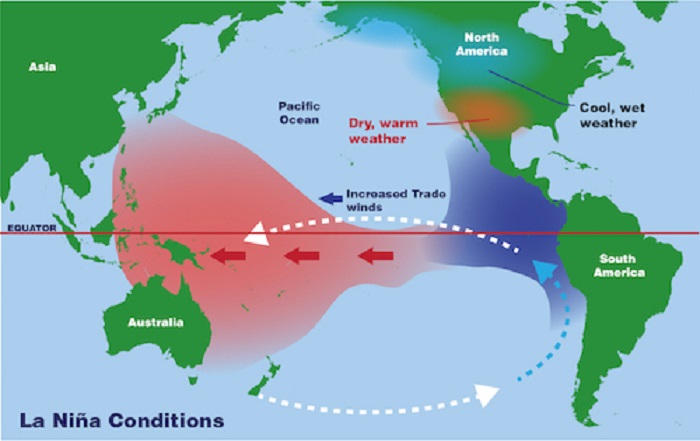
La Niña is the counterpart of El Niño, forming part of the El Niño–Southern Oscillation (ENSO) cycle. It occurs when strong trade winds push warm ocean waters westward, allowing deeper, colder waters to rise toward the surface near the equator. This cooling effect alters global weather patterns, leading to colder winters in many parts of the Northern Hemisphere and increased rainfall in some tropical regions.
Scientific monitoring has confirmed that La Niña phases can persist for 9–12 months and sometimes recur over successive years. The current atmospheric and oceanic indicators point toward an intensified La Niña event, capable of producing severe cold anomalies across North America, Europe and Asia.
POSSIBLE OUTCOMES OF EXTREME COLD WEATHER ON FLORA AND FAUNA
IMPACT ON FLORA
Frost Damage:
The prolonged sub-zero temperatures can damage the plant cells, impair photosynthesis and reduce crop yield. Sensitive crops like citrus, wheat and rice may face severe losses.
Delayed Growth Cycles:
The extremely cold temperatures would delay germination, flowering and pollination, disrupting agricultural cycles and natural vegetation patterns.
Forest Mortality:
In high-altitude regions, trees adapted to moderate climates may experience frost cracking and reduced nutrient absorption, increasing forest mortality rates.
IMPACT ON FAUNA
Altered Migration and Hibernation Patterns: Birds and mammals that rely on temperature cues for migration or hibernation may face disorientation, energy depletion or premature death.
Reduced Food Availability:
The extremely cold temperatures would limit the vegetation growth and insect populations, leading to food shortages for herbivores and insectivores.
Increased Mortality in Aquatic Life:
The sudden temperature drops can cause cold shock in fish and amphibians, leading to large-scale deaths and ecosystem imbalances.
HUMAN HEALTH AND SOCIETAL IMPACTS
The extreme cold events could pose significant risks to human health and infrastructure.
Respiratory and Cardiovascular Stress: Exposure to low temperatures can exacerbate asthma, bronchitis and cardiovascular diseases. The risk of hypothermia and frostbite increases dramatically.
Energy Demand Surge:
The demand for heating fuels rises sharply, straining energy resources and increasing emissions from fossil fuels, paradoxically worsening long-term climate instability.
Agricultural and Food Security Challenges: The crop failures and livestock mortality may lead to higher food prices, shortages and economic instability in developing regions.
Mental Health Effects: Seasonal Affective Disorder (SAD) and cold-induced isolation can elevate depression and anxiety rates, especially in high-latitude populations.
COULD THIS BE THE COLDEST WINTER OF THE CENTURY?
Climate scientists are observing strong indicators that this La Niña event could be exceptionally intense due to a combination of oceanic cooling, Arctic air displacement and disrupted jet stream patterns. While predictions must be approached with caution, satellite observations suggest that global average winter temperatures may drop below the multi-decadal norm. Regions like Northern India, Europe, Canada and parts of the United States are expected to face record-breaking cold spells, heavy snowfall and prolonged frost conditions.
However, it is crucial to note that global climate systems are increasingly unpredictable due to human-induced climate change. The coexistence of extreme cold events with global warming demonstrates the growing instability of Earth’s climate balance rather than a simple cooling trend.
PRECAUTIONARY AND MITIGATION MEASURES
To counter the severe effects of La Niña, a multi-sectoral approach is necessary:
GOVERNMENT AND INFRASTRUCTURE MEASURES
Strengthening disaster response systems and ensuring uninterrupted energy supply.
Insulating water pipelines, power grids and transport systems to prevent freezing damage.
Enhancing early warning systems through satellite and meteorological monitoring.
AGRICULTURAL ADAPTATION:
Promoting cold-tolerant crop varieties and greenhouse cultivation.
Providing timely advisories and frost protection mechanisms for farmers.
Ensuring livestock shelters and sufficient feed reserves.
PUBLIC HEALTH AND COMMUNITY PREPAREDNESS
Encouraging vaccination against influenza and respiratory infections.
Implementing public education campaigns on cold-weather safety and home heating.
Establishing community warming centers for vulnerable populations.
ENVIRONMENTAL CONSERVATION
Protecting biodiversity reserves and providing artificial feeding for affected wildlife.
Restoring vegetation buffers to maintain local microclimates.
The La Niña phenomenon while cyclical and natural, has acquired new significance in an era of anthropogenic climate disruption. Its potential to produce one of the coldest winters of the century underscores the fragility of Earth’s climate system. The impacts on flora, fauna and humans are interlinked, demanding scientific vigilance, ecological responsibility and global cooperation. Preparedness both at the policy and individual levels remains our strongest defense against the chilling grip of extreme cold weather.
SURINDERPAL SINGH
FACULTY IN SCIENCE DEPARTMENT
SRI AMRITSAR SAHIB PUNJAB.