THE ASIAN INDEPENDENT UK
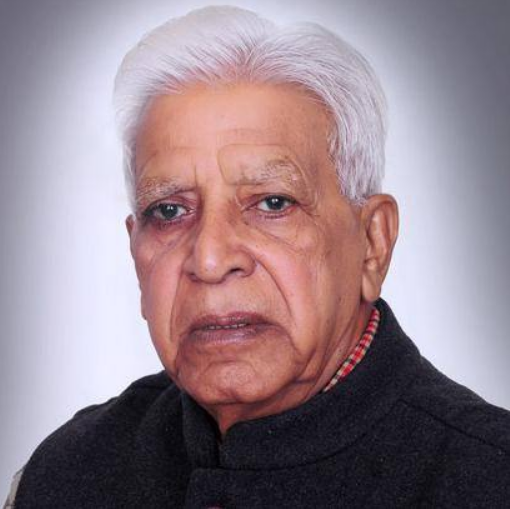
Dr Ramjilal, Social Scientist,
Former Principal, Dyal Singh College,
Karnal(Haryana –India)
Email.id Drrmjillal1947@gmail, com
To shape India’s future, the Indian Constituent Assembly carefully examined four distinct models of governance: the Gandhian approach, the Swiss system, the American presidential structure, and the British parliamentary framework. Jawaharlal Nehru outright rejected the Gandhian model, deeming it unsuitable for addressing the complexities of the 20th century, which limited the opportunity for a more thorough examination of its potential benefits. Meanwhile, the Swiss model, which combined elements of both parliamentary and presidential systems, was considered impractical for a vast and diverse country like India. Some assembly members, including Kazi Syed Karimuddin, S.L. Saxena, and K.T. Shah, strongly advocated for the American presidential model. They praised its stability, emphasis on popular sovereignty, and ability to avoid personality cults. However, the Assembly ultimately concluded that the British parliamentary system was the most suitable framework for India.
Key Reasons for Adopting the Parliamentary System in India:
This crucial decision was influenced by several important factors, particularly the education and perspectives of leaders such as Dr B.R. Ambedkar, Jawaharlal Nehru, and Sardar Patel. All three had studied in England and were deeply impressed by the British parliamentary system. Furthermore, historical circumstances—including communal riots, the 1947 partition, a devastating famine in Madras (now Chennai), and the assassination of Mahatma Gandhi—significantly shaped the Constituent Assembly’s vision for a parliamentary system based on federalism.
Another key reason for adopting the parliamentary system in India was the experience gained by Indians in participating in governance. Based on the reform acts of 1909, 1919, and 1935, Indians were actively involved in legislative and executive bodies, which helped them understand how the parliamentary system worked. The 1935 reform act, in particular, provided greater opportunities for practical experience and a deeper understanding of the parliamentary system. Consequently, Indians were better prepared to adopt the traditions of the parliamentary system compared to other models of governance.
The decision to adopt the parliamentary system in India was strongly supported by the Constitution Committee, chaired by Jawaharlal Nehru. Nehru emphasised several key advantages of this system, including its compatibility with India’s ancient traditions and its promotion of peaceful methods for resolving disputes and reaching consensus, even amidst disagreements. He considered the parliamentary framework essential for fostering dialogue and finding solutions, ensuring coordination between the legislative and executive branches of government. Nehru firmly believed that Parliament should function as the primary representative institution and possess the ultimate authority as outlined in the Constitution. He also argued that the judiciary should focus on interpreting laws rather than acting as an additional legislative body. Ultimately, on June 7, 1947, the committee concluded that the British-style parliamentary system was best suited to India’s unique circumstances.
The significant challenges facing the Indian parliamentary system:
The significant challenges facing the Indian parliamentary system are described below:
1. Decline in the Number of Parliamentary Sessions:
One of the significant challenges is the continuous decline in the number of sittings in Parliament (Lok Sabha and Rajya Sabha). Effective discussions on various issues can only occur when the Lok Sabha conducts longer sessions each year. During Jawaharlal Nehru’s tenure as Prime Minister, the first Lok Sabha (1952-1957) had an average of 135 working days per year. In contrast, the 17th Lok Sabha under Prime Minister Narendra Modi (June 2019 – February 2024) has had only 274 sittings, averaging just 55 working days per year.
Historically, between 1952 and 1970, the average number of working days was 121 per year, while the Sixth Lok Sabha (1977-1980) averaged 100 working days. From 2000 to 2019, the average fell to 68 days per year, with the 17th Lok Sabha experiencing the lowest figure of 55 working days, largely due to the COVID-19 pandemic. For comparison, the British Parliament operates with about 150-170 working days per year, and the US Congress has around 260.
2. Increase in the Number of Ordinances Issued:
The Indian parliamentary system is transitioning from a framework of parliamentary rule to one dominated by ordinances. In countries such as the UK, the US, Australia, and Canada, ordinances are rarely issued because their legislative bodies have longer working sessions. However, the limited number of working days in India has led all governments to frequently resort to issuing ordinances (under Article 123 of the Constitution) instead of passing laws.
Since 1950, more than 750 ordinances have been issued, with 76 ordinances released between 2014 and 2023 alone. Notable ordinances in recent years include the Criminal Law (Amendment) Ordinance of 2013, the Securities Law (Amendment) Ordinance of 2014, and the Scheduled Castes and Scheduled Tribes (Prevention of Atrocities) Amendment Ordinance of 2014, among others. The most controversial were the three farm ordinances issued in 2020 by the BJP-led NDA government under Prime Minister Modi, which occurred without parliamentary debate or approval. The use of ordinances should be limited to exceptional circumstances; however, various governments often issue them for political gain.
In state assemblies, the situation is even more concerning. For example, Dr D.C. Wadhwa filed a Public Interest Litigation (PIL) against the Governor of Bihar, who had re-promulgated 256 ordinances between 1967 and 1981 (with some lasting 10-14 years) without presenting them to the legislature. In the landmark case of D.C. Wadhwa and others v. State of Bihar (1986), Chief Justice P.N. Bhagwati declared that the power to issue ordinances should only be used to address extraordinary situations and ruled that all ordinances that were misused for political objectives were unconstitutional.
The growing reliance on ordinances indicates a shift from a parliamentary system to one dominated by decree. For the parliamentary system to function effectively, the number of working days should be increased, and ordinances should be restricted to extraordinary situations.
3. Disruption and Waste of Time in Parliamentary Sessions:
The Lok Sabha and state assemblies are intended to represent the people; however, once elected officials enter the House, they often neglect their shared responsibility for the functioning of the institution. Disruptive behaviours such as sloganeering, the suspension of opposition members, and walk outs undermine the dignity of these Houses. While the opposition is frequently blamed for such disruptions, it is essential to recognise that the impartiality of the Speakers is often compromised, as they may display bias towards the ruling party and misuse their authority.
4. Reduced Productivity: Rs. 2.5 Lakh Spent Every Minute:
Disruptions, sloganeering, and walkouts in the Houses of Parliament result in decreased productivity. Between 2000 and 2007, the average working hours in Parliament were less than 50% of the total time due to these interruptions. According to PRS Legislative Research, the second part of the 2018 Budget Session was among the least productive since 2000. The Rajya Sabha was active for only three minutes (6%) of the time allocated for government bills, while the Lok Sabha managed just 14 minutes (1%) of the allocated time. During that Budget Session, over 250 hours were wasted due to disruptions in both Houses (The Times of India, April 7, 2018). The 2024 Winter Session saw a loss of 65 hours and 15 minutes. The 17th Lok Sabha (2019-2024) recorded the fewest sittings (274) compared to the previous four Lok Sabhas, totalling 1,615 hours of work. While this is 20% more than the 16th Lok Sabha, it is still 40% less than the average of all prior full-term Lok Sabhas, which was 2,689 hours.
For example, during the Monsoon Session of the 18th Lok Sabha in July 2025, continuous disruptions occurred in both Houses. This resulted in approximately 31% productivity for the Lok Sabha and about 39% for the Rajya Sabha. In this session, only 37 hours of discussion took place in the Lok Sabha out of the 120 hours available, and only 41 hours and 15 minutes in the Rajya Sabha. Consequently, more than 75% of the time was lost due to disruptions, leading to a significant decline in parliamentary productivity. As a result, from the first general elections in 1952 until November 2019, a total of 3,818 parliamentary acts were enacted.
5.Running Parliament costs during an active session: Rs. 2.5 lakh per minute
Running Parliament costs Rs. 2.5 lakh per minute during an active session. Over three days, the Rajya Sabha was in session for 4.4 hours, while the Lok Sabha met for only 0.9 hours. Disruptions in the Rajya Sabha resulted in a loss of Rs. 10.2 crore for taxpayers, and Rs. 12.83 crore in the Lok Sabha, totalling Rs. 23 crore in just three days (https://www.ndtv.com/india-news/monsoon-session-lok-sabha-rajya-sabha-just-3-days-of-parliament-disruptions-have-cost-you-rs-23-crore-heres-how-8932689).
6. Suspension of MPs: An ‘Opposition-Free’ Parliament:
Members of Parliament (MPs) can be suspended for causing disturbances, using unparliamentary language, or obstructing proceedings to ensure that the parliamentary process continues uninterrupted. The Speaker of the Lok Sabha and the Chairman of the Rajya Sabha hold the power to suspend MPs to maintain order and the dignity of the Houses.
Rules for the suspension of MPs have been in place since 1952 to facilitate smooth parliamentary proceedings. In 2001, the Lok Sabha granted the Speaker additional powers to address serious situations. Notable instances of suspension include 63 Lok Sabha MPs in 1989, 45 MPs in just two days in 2019, and 23 MPs in a previous case, along with 18 more (23 + 18 = 41). The suspension of 146 MPs in 2023 set a record in the history of the Indian parliamentary system. This mass suspension of opposition members gives the impression of a ‘parliament without opposition’, which contradicts the fundamental principles of the parliamentary system.
7. Decline in Parliamentary Control and Increased Power of the Prime Minister and Cabinet
As parliamentary sessions are reduced and disruptions caused by the unruly behaviour of MPs increase, parliamentary control over the Prime Minister and the Council of Ministers diminishes significantly. This decline results in the Prime Minister and the Cabinet accruing more power, risking an “elected dictatorship.” Essentially, the parliamentary system begins to resemble a “prime ministerial system of government,” where the Prime Minister holds nearly as much power as a President does in a presidential system. This scenario raises the likelihood of ‘elected authoritarianism’. Dr. Ambedkar warned that “it is possible for this nascent democracy to maintain the facade of democracy while, in reality, functioning as a dictatorship.” He noted that a landslide victory in elections could heighten the risk of this possibility becoming a reality, a concern supported by historical precedents.
8. Lok Sabha and Rajya Sabha: Total Number of Women MPs – 117
The proportion of women contesting in Lok Sabha elections has risen from 3% in 1957 to 10% in 2024. The number of elected women members in the Lok Sabha increased from 22 in the first Lok Sabha to 27 in the second Lok Sabha, reaching 78 in the seventeenth Lok Sabha. However, this number decreased to 75 in the eighteenth Lok Sabha, which accounts for approximately 14% of the total members.
In the Rajya Sabha, the total number of women members was 15 in 1952 and has now increased to 42—approximately 17% of the total members. Thus, the total number of women MPs in both the Lok Sabha and Rajya Sabha is 117 (75 from the Lok Sabha and 42 from the Rajya Sabha). Despite the number of female voters being nearly equal to that of male voters, the representation of women MPs remains very low, causing India to rank 149th globally concerning women’s representation. Countries leading the global rankings include Rwanda with 61.3%, Cuba at 53.4%, Nicaragua at 50.6%, and Mexico at 50%.
This situation is a cause for concern as it limits women’s participation in discussions around issues that affect them. The empowerment of women can only be fully realised through a “whole-of-government” and “whole-of-society” approach.
9. Criminalisation of Politics: Political Criminalisation and the Politicisation of Criminals:
Since the 1970s, criminals have increasingly entered Indian politics, leading to the criminalisation of politics and the politicisation of criminals. The number of elected representatives with criminal backgrounds has gradually increased from state assemblies to Parliament. According to a report by the Association for Democratic Reforms (ADR), in the 2024 elections, 251 out of 543 members of the 18th Lok Sabha have a criminal background. This figure is only 21 short of a majority in the Lok Sabha. Approximately 30% of MPs and MLAs in India currently face serious criminal charges. The share of MPs facing serious criminal charges in the Lok Sabha has more than doubled since 2009. The effectiveness of the Constitution relies on the integrity of elected representatives. As Dr B.R.Ambedkar noted, “However good a Constitution may be, if those who are implementing it are not good, it will prove to be bad. However bad a Constitution may be, if those who are implementing it are good, it will prove to be good.”
10. Muslim Representation Gap: Very Low in Proportion to Population:
The Muslim population in India is approximately 15%. However, in the current Lok Sabha (2024), there are only 24 Muslim MPs, constituting 4.4% of the total Lok Sabha members. In 1952, there were 25 Muslim MPs (5.11%), and the peak number was in 1980, when 49 Muslims (9.04%) were elected to the Lok Sabha. In 2024, with only 24 Muslim MPs, the representation is one less than in 1952. The ruling National Democratic Alliance (NDA), led by the Bharatiya Janata Party under Prime Minister Narendra Modi, has no Muslim MPs in the Lok Sabha. The significantly low representation of Muslims in the Indian Parliament, compared to their population proportion, poses challenges for effective policy-making affecting Muslims and contributes to frustration, disillusionment, and obstacles to inclusive governance.
11. Regular Participation of MPs in the Lok Sabha:
The 17th Lok Sabha (June 2019 to February 2024) held 274 sittings, the lowest among all full-term Lok Sabhas. On average, the attendance of MPs (excluding the Speaker and Ministers) during this period was 79%. Regular attendance is essential for MPs to contribute effectively to parliamentary proceedings. However, attendance alone is insufficient; MPs should actively participate in discussions and ask questions on a range of issues. On average, MPs participated in 45 debates during the 17th Lok Sabha, yet nine members did not ask a single question.
In summary, the poor quality of legislation, lack of meaningful debate, low participation of members, political polarisation, corruption, the Muslim representation gap, and inadequate representation of women are key challenges facing Indian democracy.
Suggestions for Reforms
The following suggestions are key to addressing the challenges facing the parliamentary system in India:
1. Priority List: Before the start of a parliamentary session, both the ruling party and opposition parties should create a priority list of issues to be addressed during that session and ensure strict adherence to it.
2. Quality Preparation and Dignity: Members of Parliament and ministers should arrive at parliamentary debates well-prepared to focus on issues of public importance. During discussions, language should be carefully chosen to reflect mutual respect and ethical integrity, while adhering to a set timeframe to prevent offending members from either side.
3. Impartial Conduct of the Speaker: Although the Speaker belongs to a specific party and does not resign from it after taking on the role—unlike the Speaker in England—they should remain impartial and neutral, akin to a judge, in maintaining discipline in the House. The Speaker is the ultimate symbol of the House’s dignity. When considering the suspension or expulsion of Lok Sabha members, the Speaker must act with utmost caution, impartiality, integrity, and ethics so as not to compromise the dignity of their office and the House. In essence, the Lok Sabha represents the nation, and the Speaker embodies the Lok Sabha.
4. Laws and Ordinances: Lawmaking is Parliament’s primary function. When creating laws, it is vital to consider various interests, particularly major ones, to avoid situations where laws might need to be repealed, as seen with the three farm laws. Although ordinances may be necessary in exceptional circumstances, they must receive parliamentary approval within six months under Article 123 of the Constitution. Frequent issuance of ordinances can undermine the dignity of Parliament.
5. Other Suggestions: To enhance the integrity and effectiveness of Parliament, it is crucial to address the disparities in representation of women and minority groups, especially Muslims. Implementing measures to combat political corruption is also of paramount importance. Increasing the number of parliamentary seats could better reflect the country’s diverse demographics. Additionally, strengthening parliamentary committees, establishing a comprehensive code of conduct, enforcing strict discipline, and promoting technological advancements to improve operational efficiency are essential steps to consider.
Ultimately, with a population exceeding 1.4 billion people in India, it is vital for Parliament members to diligently fulfil their responsibilities to represent their constituents effectively..