THE ASIAN INDEPENDENT UK

Bal Ram Sampla
Geopolitics
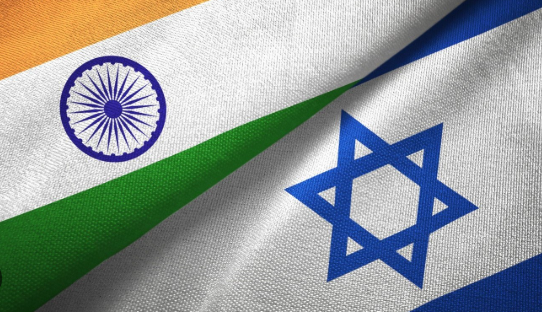
Few days ago, India and Israel signed a major defense agreement that goes far beyond just buying and selling weapons. This deal tells us a lot about how the world is changing and how countries are picking their friends in an increasingly complicated global landscape.
The agreement between India and Israel is worth about $3.75 billion and focuses on advanced military technology. India will buy missile defense systems, and both countries will work together to develop new weapons and technology. What makes this special is that Israel will share its technology with India, allowing Indian factories to build these systems themselves. This fits with India’s goal of making its own defense equipment rather than depending on other countries.
The partnership covers more than just hardware. The two nations are cooperating on artificial intelligence, cybersecurity, and other cutting-edge technologies that will shape warfare in the future. India already buys 40 percent of all weapons that Israel exports, making it Israel’s most important customer.
Why This Matters for the Region
This deal is shaking up relationships across South Asia and the Middle East. Pakistan, is reportedly worried about this partnership. While Pakistan recently signed its own defense deal with Saudi Arabia, experts point out that India’s agreement with Israel is different. Israel brings advanced technology that gives India a real edge, while Pakistan’s deal is mostly about money and support.
The agreement also puts India in a tricky spot with other Middle Eastern countries. India has traditionally been friendly with Arab nations and Iran, and it has always supported Palestinian rights in international forums. Now, by getting closer to Israel, India must carefully balance these relationships. The timing is particularly sensitive because tensions between Iran and Israel have grown sharper in recent years.
However, India is trying to maintain its balancing act. It continues to work with Iran on important projects like the Chabahar Port and keeps good relations with Gulf countries. India’s message seems to be that it can be friends with Israel without becoming enemies with anyone else.
The Global Power Game
Looking at the bigger picture, this defense deal is part of a worldwide reshuffling of alliances. Both India and Israel are worried about growing Chinese and Russian influence in their regions. By working together and strengthening ties with the United States, they are building a counterweight to these powers.
For decades, India bought most of its weapons from Russia. This new partnership with Israel shows India is spreading its options and reducing its dependence on Moscow. This shift is significant because it changes the old Cold War pattern where India leaned toward the Soviet Union while Pakistan aligned with the United States and China.
The deal also connects to ambitious projects that could reshape trade and connectivity. Israeli officials have mentioned initiatives like I2U2, which brings together India, Israel, the United Arab Emirates, and the United States. There is also the India-Middle East-Europe Corridor, which aims to create new trade routes connecting these regions. These projects show how economic and security interests are becoming intertwined.
Technology and the Future
One of the most important aspects of this deal is the focus on future technologies. Artificial intelligence, cyber warfare, and unmanned systems are becoming central to modern defense. By pooling their expertise, India and Israel are positioning themselves as leaders in these fields. India brings a huge market, manufacturing capacity, and skilled workers, while Israel offers some of the world’s most advanced military technology and innovation.
This technology sharing also helps India achieve greater self-reliance. Instead of being just a buyer, India becomes a partner and eventually a producer of advanced defense systems. This strengthens India’s industrial base and creates jobs while reducing vulnerability to supply disruptions or political pressure from weapons suppliers.
This deal raises important questions about the future of international relations. The world is moving away from the simple Cold War division of American and Soviet camps. Instead, we are seeing more flexible partnerships where countries work together on specific issues without forming permanent blocs.
India’s approach shows this new reality clearly. It maintains strategic partnerships with Russia, deepens defense ties with Israel, works closely with the United States, and keeps friendly relations with Arab nations and Iran. This balancing act requires skill and pragmatism, but it also gives India more options and independence.
For Israel, the partnership with India is equally valuable. It provides a massive market for Israeli defense exports and creates a strategic partnership with a major power in Asia. As Israel faces challenges in its immediate neighbourhood, having strong friends in other regions becomes increasingly important.
Conclusion
The India-Israel defense deal is more than a business transaction. It represents a significant shift in how countries are aligning themselves in the modern world. Regional rivalries are intersecting with global power competitions, and technology is becoming as important as traditional military hardware.
For the wider world, this deal shows that old alliances are being reconsidered and new partnerships are forming based on shared interests rather than ideology. Countries are seeking strategic autonomy while recognizing they cannot go it alone. The focus on technology cooperation suggests that future power will depend not just on military strength but on innovation and industrial capacity.
As these relationships develop, they will shape everything from regional security to global trade routes to the balance of power between major nations. The India-Israel partnership is one piece of a larger puzzle, but it is an important piece that helps us understand how the world is being remade in the 21st century. Whether this leads to greater stability or new tensions remains to be seen, but it is clear that the international order is entering a new phase where flexibility, technology, and multiple partnerships define success.
References
1.https://www.ssbcrack.com/2025/11/india-set-to-approve-3-7-billion-deal-for-indo-israeli-mr-sam-air-defence-missiles.html
2.https://www.jpost.com/israel-news/article-872722
3.https://thediplomat.com/tag/india-israel-defense-cooperation/
4.https://breakingdefense.com/2025/11/india-israel-sign-new-mou-on-defense-tech/
5. https://www.impriindia.com/insights/india-diplomacy-defense-israel/
click on the link below to download ‘The Asian Independent App’
https://play.google.com/store/apps/details?id=in.yourhost.theasianindependent