THE ASIAN INDEPENDENT UK

Bal Ram Sampla
Geopolitics
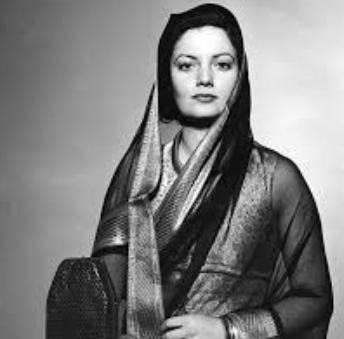
History often remembers wars through the lens of generals, statesmen, and ground-breaking battles. Yet countless individuals whose courage and determination shaped the course of events fade into obscurity, their contributions buried beneath the weight of more celebrated narratives. Among these overlooked figures stands Princess Indira Devi Kaur of Kapurthala, a woman whose defiance of convention and service during World War II made her both an inspiration and a role model for women of her generation and beyond.
Born in 1912 as the eldest grandchild of Maharaja Jagatjit Singh of Kapurthala, Princess Indira grew up in a world of privilege and strict expectations. Indian royalty, particularly women, were expected to live within carefully prescribed boundaries—arranged marriages, ceremonial duties, and lives sheltered from the wider world. But at twenty-three, Princess Indira made a choice that scandalized her family and Indian society: she secretly fled to London to pursue her dream of becoming an actress, enrolling at the prestigious Royal Academy of Dramatic Art.
This act of rebellion was extraordinary for its time. In 1935, for an Indian princess to abandon her family’s wishes and venture alone to pursue a career in the arts required remarkable courage. She was rejecting not just her family’s authority but the entire social structure that confined women to predetermined roles. Her decision declared that a woman’s dreams and ambitions mattered, that she had the right to choose her own path regardless of birth or expectation.
When War Demanded Action
When World War II erupted, Princess Indira could have remained safely distant from the conflict, pursuing her Hollywood ambitions or retreating to the comfort of her privileged background. Instead, she made another defining choice: she would serve.
Her first role was as an ambulance driver during the Blitz. Night after night, as German bombs rained down on London, she navigated darkened streets to rescue the wounded and dying. After passing the St John Ambulance examination, she drove motor ambulances through some of the most dangerous conditions imaginable. This was no ceremonial position or safe administrative role—it was dangerous, exhausting work that required physical courage and mental fortitude. The princess who had grown up in palaces now pulled victims from rubble and transported them through streets lit by flames.
She then took on the role of postal censor, a position requiring intelligence, judgment, and an understanding of the delicate balance between security and morale. Censors had to identify information that could aid the enemy while being sensitive to the psychological needs of soldiers and civilians whose letters were their only connection to loved ones. It was meticulous, psychologically demanding work that most people would never know about or appreciate.
The Voice That Reached Millions
Perhaps Princess Indira’s most significant wartime contribution came when she joined the BBC in 1942. As political correspondent for the India team, she worked alongside George Orwell with a specific mission: to enlist Indian support for the war effort. This was no simple task. India was under British colonial rule, and many Indians questioned why they should fight for an empire that denied them freedom. Independence movements were gaining strength, and the relationship between Britain and India was fraught with tension.
Into this complex political landscape stepped Princess Indira, broadcasting in Hindustani to Indian forces serving in the Middle East and Mediterranean. Her voice reached soldiers who were far from home, fighting in unfamiliar lands for uncertain reasons. As a fellow Indian, she could speak to them with cultural understanding and authenticity that British broadcasters could not. She became a link between these men and their homeland, a reminder of what they were protecting, and a source of information and morale.
The significance of her work becomes clear when we consider the scale: approximately 2.5 million Indians served in World War II, forming the largest volunteer army in history. These men fought on multiple fronts, from North Africa to Burma, suffering casualties and enduring hardships that history has often marginalized. Princess Indira’s broadcasts acknowledged their service, honored their sacrifice, and helped maintain the connection between these soldiers and the land they defended.
A Model of Female Courage and Agency
What makes Princess Indira Devi Kaur such an important role model is not just what she did, but what her choices represented. In an era when women’s roles were severely constrained—particularly for women of color and those from traditional societies—she demonstrated that women could be brave, capable, and essential to national survival.
She showed that women could drive ambulances through bombing raids with the same courage as any man. She proved that women had the intellectual capacity and judgment for sensitive government work. She demonstrated that women’s voices mattered in the public sphere, that they could inform, inspire, and influence on a mass scale. Each of these acts challenged prevailing assumptions about women’s capabilities and proper roles.
Moreover, she did all this while navigating multiple layers of identity and expectation. As an Indian woman in Britain during wartime, she faced both racial prejudice and gender discrimination. As a princess, she was expected to remain decorative and distant. As a broadcaster working with men like Orwell, she had to prove herself in an overwhelmingly male professional environment. Yet she persevered, carving out a career that would last over three decades at the BBC, often being the only woman in the House of Commons Press Gallery as she covered political programs until 1968.
Why History Forgot Her
The forgetting of Princess Indira Devi Kaur is not accidental. It reflects broader patterns in how history is recorded and remembered. Women’s contributions to war efforts have historically been minimized or relegated to support roles, even when they performed dangerous and essential work. The contributions of colonial and non-white populations to Allied victory have been systematically underrepresented in mainstream narratives that focus on European and American heroes.
Additionally, Princess Indira’s story complicates simple narratives. She was both privileged and marginalized, both insider and outsider. She served the British war effort while being from a colonized nation. She worked alongside the establishment while defying traditional expectations for women of her status. These complexities don’t fit neatly into conventional historical frameworks, making her easier to overlook than to explain.
The nature of her work also contributed to her obscurity. Broadcasting and censorship, while crucial, don’t provide the dramatic visual imagery that captures popular imagination. There are no photographs of her charging up a beach or flying a plane—just the steady, unglamorous work of showing up night after night to speak into a microphone or review letters, work whose impact was real but diffuse.
Reclaiming Her Legacy
Princess Indira Devi Kaur deserves to be remembered not as a footnote but as a central figure in understanding World War II’s human complexity. Her life offers insights into the contributions of Indian forces, the role of women in wartime, the power of media and communication in modern warfare, and the courage it takes to defy social expectations in pursuit of meaningful work.
For contemporary women, her story remains powerfully relevant. She reminds us that courage takes many forms—the courage to leave comfort behind, the courage to serve even when that service goes unrecognized, the courage to speak when others expect silence, and the courage to persist in spaces that were never designed to include you.
She also reminds us that history’s silence about certain people and their contributions is not natural or inevitable but the result of choices about whose stories we tell and preserve. By reclaiming Princess Indira’s story, we take a small step toward a more complete and honest historical record—one that recognizes the full diversity of people who shaped our world.
In the end, Princess Indira Devi Kaur’s life stands as testament to a simple but profound truth: that ordinary heroism, sustained over time and in the face of indifference, can be as important as any celebrated act of valor. Her voice, broadcast across thousands of miles to soldiers who needed connection and purpose, may have faded from collective memory, but the impact of her choices—to break free, to serve, to speak—ripples forward still, waiting for us to listen and remember.
History may have forgotten the Radio Princess, but her example endures: that women can be brave, capable, and essential, and that the courage to choose one’s own path can be the most revolutionary act of all.
References
1.https://en.wikipedia.org/wiki/Indira_Devi_of_Kapurthala
2.https://aboutherbysangeeta.com/princess-indira-devi-kaur-of-kapurthala/
3.https://www.easterneye.biz/indira-devi-the-radio-princess/
4.https://turtledove.fandom.com/wiki/Indira_Devi_of_Kapurthala