THE ASIAN INDEPENDENT UK

Bal Ram Sampla
Geopolitics
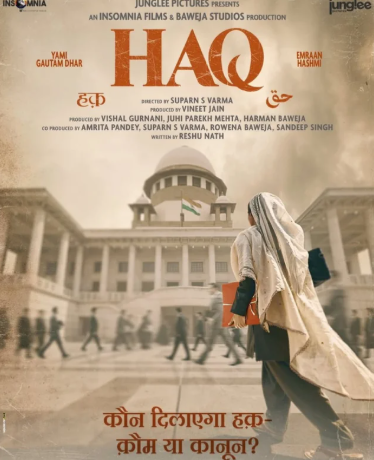
In November 2025, a new film called “Haq” was released in theatres. The film stars Yami Gautam and Emraan Hashmi. It tells the true story of Shah Bano, a woman who fought for her rights in court in 1985. This case became one of the most controversial moments in Indian history. The story involves women’s rights, religious laws, politics, and justice. Even though these events happened 40 years ago, the film has started important conversations again.
The Shah Bano Case
To understand the film, we need to know the real story first.
In 1978, Shah Bano was a 62-year-old woman living in Indore, Madhya Pradesh. She had been married for 43 years and had five children. Her husband, Mohammed Ahmed Khan, divorced her using “triple talaq” (a practice where a Muslim man can divorce his wife by saying “talaq” three times). Soon after, he married another woman. Shah Bano was left with no money and no support.
In 1985, the Supreme Court of India ruled in her favor. The court said her husband must give her maintenance money. The Chief Justice also suggested that India needed one common law for all citizens (called a Uniform Civil Code) to prevent such problems in the future.
Many people celebrated this judgment. Women’s rights activists were happy. But many conservative Muslim groups were very angry. They said the court should not interfere with Muslim personal laws. These groups organized protests across the country.
Many people criticized this decision. They said the government betrayed women’s rights for political reasons.
Sadly, Shah Bano herself also changed her position. Under pressure from religious leaders in her community, she said she did not want the court’s judgment anymore. She said she wanted to live as a good Muslim woman.
What the Film Shows
“Haq” tells this story as a courtroom drama. It shows Shah Bano’s struggle—from being abandoned by her husband to fighting in court, winning in the Supreme Court, and then seeing the government reverse that victory.
The film discusses several important topics:
(1) How divorced women suffer in male-dominated societies
(2) The conflict between religious laws and constitutional rights
(3) How courts try to protect people’s rights
(4) How politicians sometimes give up their principles to win votes
Criticisms and Controversies
The film has faced several criticisms:
1.Legal Problems
Shah Bano’s daughter has filed a case in court. She says the film shows her mother’s private life without permission from the family. This raises questions about privacy and whether filmmakers can tell historical stories without consent.
2. Political Bias
Critics say the film promotes one political party’s agenda. They claim the film’s ending credits the BJP government for helping Muslim women through the triple talaq law. But the film allegedly ignores how the Supreme Court first declared triple talaq unconstitutional, before the BJP passed the law.
3. Missing Facts
Some experts say the film leaves out important details. For example, in 2001, the Supreme Court said that the 1986 law actually supported the ideas in the original Shah Bano judgment, even though it was meant to reverse it. This shows the issue was more complicated than the film suggests.
The film appears to support a Uniform Civil Code (one law for all religions). Critics say this threatens religious freedom and minority rights protected by the Constitution.
Important Questions the Film Raises
Beyond the controversies, “Haq” makes us think about big questions that India still faces:
1. Women’s Rights vs. Religious Freedom
How should we balance protecting women’s rights with respecting religious diversity? Is one common law for everyone the answer? Or are there other ways to ensure justice while respecting different beliefs?
2. Political Courage vs. Vote Politics When should governments stick to their principles even if it costs them votes? The Shah Bano case shows the challenges of governing a diverse country where different communities have strong beliefs about law and religion.
3.Role of Courts
What should courts do? Should judges push society toward progressive values? Or should they respect cultural traditions and let people make democratic choices?
How the Film Performed
At the box office, “Haq” earned about ₹11-12 crore (110-120 million rupees) in its first week. This is not a big success. Even audiences who might agree with the film’s message did not rush to see it. This suggests that people may not want their entertainment to be so openly political.
However, the film’s importance is not just about ticket sales. By bringing the Shah Bano case back into public discussion, it has made people talk about these issues again. This is especially important for younger people who may not know about the original events. Whether you agree with the film or not, it has made people think and debate.
Conclusion
“Haq” is more than just a film. It has restarted important debates about Indian democracy, secularism, and justice. The Shah Bano case remains one of the saddest and most important episodes in India’s history after independence. It was a moment when politics won over justice and women’s rights. A woman who simply wanted basic financial support became caught in big political and religious battles.
Whether you think the film is good art or bad propaganda may depend on your political views. But one thing is clear: the story it tells is still important today. Shah Bano paid a terrible price for seeking justice. She died in 2023, having spent her final years mostly forgotten by the nation that once debated her case so intensely.
Perhaps the greatest value of “Haq,” despite its flaws, is that it reminds us of her story. It forces us to think about uncomfortable questions: What compromises do we make for political peace? Who suffers when we sacrifice principles for votes?
That is the real “haq” (right) that Shah Bano’s story demands from us—not easy answers, but honest, difficult conversations about justice, equality, and the kind of country we want to be.
References
1.https://www.koimoi.com/box-office/haq-box-office-day-5-10th-highest-grossing-film-of-yami-gautams-career-is-2-98-crore-away-from-the-next-milestone/
2.https://www.thequint.com/opinion/haq-turns-muslims-rights-into-a-political-weapon-shah-bano
3.https://theindiaobserver.com/movie-haq-based-on-the-shah-bano-case-sparks-controversy/