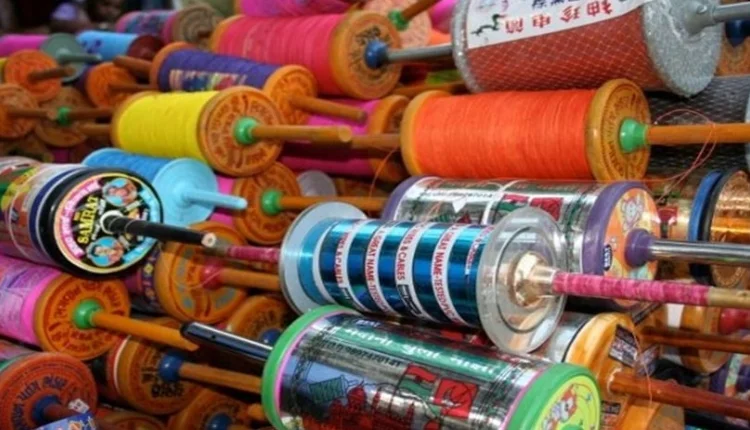

(Asian independent) The kite flying is a famous cultural tradition which is followed across the globe with special enthusiasm in South Asia during festivals of Makar Sankranti, Basant Panchami and Independence Day. But this recreational activity has increasingly become risky and deadly due to the use of Chinese string which is a modern, abrasive and highly dangerous variant of kite string. This deadly string is known locally as Chinese manja or China dor, this material has transformed the otherwise joyous sky-full-of-kites into a source of public safety and environmental concern with frequent cases of death and injuries.
WHAT IS CHINESE STRING AND HOW IT IS MANUFACTURED?
At its core, Chinese string is an engineered kite thread designed not merely to support a kite but to serve as a cutting tool in competitive kite flying. Unlike traditional cotton threads, Chinese string is made using synthetic materials such as nylon, plastic filaments or monofilament fishing lines. These fibres are coated with abrasive substances such as finely powdered glass, metal dust or other sharp agents that drastically increase their cutting ability.The traditional aerobatic string (manja) was often made from cotton coated with rice glue and natural gum which while rough, was biodegradable and less injurious. Chinese string substitutes this with non-biodegradable synthetics that are stronger, more resilient and far more dangerous.
The process involves the impregnation of the thread with adhesive and abrasive particles, which adhere firmly to the nylon surface, creating a nearly invisible yet ultra-sharp filament capable of slicing through other kite lines.
WHY IS CHINESE STRING SO POPULAR AMONG CHILDREN AND YOUTH?
Several factors contribute to the widespread appeal of Chinese string or chinese manjha especially among children and adolescents:
Competitive Advantage: In kite flying there is a mini battle between the two kites with an objective to cut the opponents strings with their own string and this was a tough task that requires high level skills and professionalism. The enhanced strength and razor-like surface of Chinese string make it more effective at cutting competitors kite lines.
COST AND ACCESSIBILITY:
The chinese and synthetic string is cheaper per metre than traditional cotton alternatives hence offering longer reels of string at a lower price.This extra string is very appealing for frequent flyers and children who often purchase it with pocket money.
THRILL AND IDENTITY:
Mastery of kite flying especially in festival seasons is a source of pride and community identity among youth. The ever tempting urge of winning kite fights heightens the use of more aggressive materials.
These cultural and economic drivers however have overshadowed safety concerns leading to pervasive use despite growing awareness of dangers.
THE EXTREME DANGERS OF CHINESE STRING
HARMFUL FOR HUMAN HEALTH
Chinese string poses serious risks of deep cuts and wounds which are often life-threatening:
DEEP WOUNDS
Chinese string poses high risks for commuters pursuing their journey on high speeds, whether on a bicycle, scooter or on foot whenever they come in contact with tight chinese string can produce severe cuts, including to the neck, face and hands. Several reports include fatal throat injuries and profound disfigurement.
ELECTROCUTION AND FALLS
Because metal or abrasive coatings can conduct electricity, loose strings caught on power lines may cause short circuits, electric shocks and falls when individuals attempt removal or inadvertently make contact.
UNSEEN HAZARD:
The fine, nearly colorless nature of the filament makes it difficult to spot, increasing the likelihood of accidental contact.
IMPACT ON WILDLIFE AND DOMESTIC ANIMALS
The chinese string is not only harmful for humans but even birds and animals suffer disproportionately by its impact:
Entanglement: Flying birds often cannot perceive the nearly invisible strands, becoming ensnared mid-flight. Wing entanglement leads to immobility, breakage, deep cuts, or death.
Ingestion and Strangulation: Animals can mistake loose strings for food or become trapped around legs and necks, leading to infection, injury, or fatality.
ENVIRONMENTAL POLLUTION
Unlike traditional cotton, Chinese string is non-biodegradable. Waste fragments remain in urban and rural ecosystems long after festivals, entangling vegetation, littering streets and contributing to microplastic pollution of soil and waterways.
PUBLIC SAFETY, LEGAL STATUS AND COMMUNITY RESPONSES
Governments and civic bodies have responded to mounting evidence of harm:
Legal Bans: Jurisdictions across India, including Delhi, Punjab and various district administrations, have banned the sale, manufacture and use of synthetic or Chinese kite string under public safety and environmental protection codes.
Public Awareness Campaigns: Authorities has strictly appealed to the youth for the use of plain cotton threads and safe flying zones away from roads and power lines.
Penalties for Violations: Those who are found using the banned string are often penalized that includes fines and possible imprisonment in some regions where bans are codified in law.
Despite these measures, enforcement remains challenging due to underground sales and enduring cultural practices.
STRATEGIES TO HANDLE THIS BLOODY NUISANCE
EDUCATION AND COMMUNITY ENGAGEMENT
Raising awareness in schools and communities about risks and alternatives can shift behavior. Encouraging young kite flyers to choose eco-friendly string and recognize hazards is essential.
SAFER ALTERNATIVES
Promotion of plain cotton threads or biodegradable substitutes that retain kite-flying enjoyment without endangering life and ecosystems.
ORGANIZED KITE FLYING ZONES
Establishing controlled kite flying areas with safety protocols can reduce pedestrian and animal exposure.
RESPONSIBLE WASTE MANAGEMENT
Post-festival cleanup drives to collect discarded strings can prevent long-term environmental impacts.
POLICY AND INNOVATION
Supporting innovation in safe kite string materials and strengthening policy enforcement ensures both tradition and safety coexist.
Chinese string illustrates how a cultural pastime, when modified with modern materials and commercial incentives can evolve into a public health and ecological crisis. Its popularity among youth, driven by tradition and competition must be balanced against documented harms to human safety, wildlife and the environment. Through education, regulation and innovation communities can reclaim the joyful essence of kite flying while eliminating the silent danger that Chinese string represents.
Dr.Surinderpal Singh
FACULTY IN SCIENCE DEPARTMENT
SRI AMRITSAR SAHIB PUNJAB.