(Pros, Cons and the Future of Electrical Psychiatry)
SURINDERPAL SINGH
(Asian independent) The depression is one of the most disabling mental health disorders which is affecting millions of people across the globe. The person suffering from depression suffers physical and psychologically with symptoms ranging from persistent sadness, loss of interest in life and fatigue to suicidal thoughts. The most common traditional treatments used to counter depression includes antidepressant medications, psychotherapy and lifestyle interventions.Although this could help many persons but a significant proportion of patients suffer from treatment-resistant depression (TRD). With the advancement in medical science neuroscientists and clinicians have turned to the advanced neuromodulation therapies among which the brain pacemaker or deep brain stimulation (DBS) has emerged as a promising intervention. This therapy involves the surgical implantation of electrodes that delivers weak electrical impulses to the specific brain regions with the aim of restoring normal neuronal activity and alleviating depressive symptoms.
THE SCIENCE BEHIND BRAIN PACEMAKERS
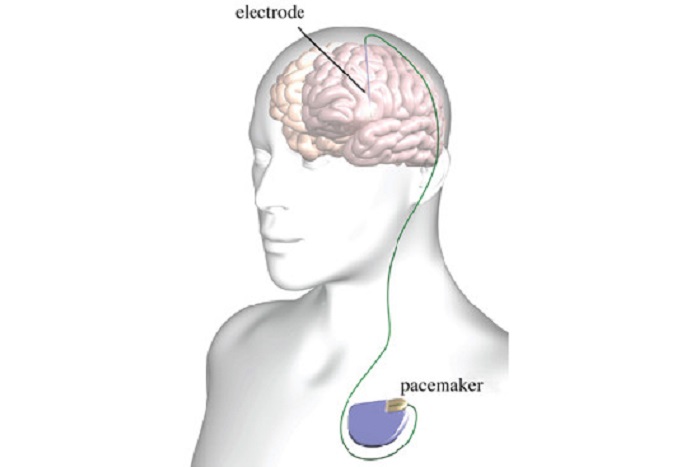
A brain pacemaker is conceptually similar in functioning to a cardiac pacemaker.Whereas cardiac pacemakers are used in regulating abnormal heart rhythms the brain pacemakers modulates the dysfunctional brain circuits.
The device typically consists of:
1. Electrodes implanted into targeted areas of the brain which needs to be stimulated by weak electrical impulses .
2. An electrical impulse generator usually implanted under the skin in the chest which can produce controlled electrical signals.
3. Connecting wires that link the electrodes to the electrical impulse generator.
By delivering finely tuned electrical impulses, Deep Brain Stimulation therapy aims to rebalance the neural circuits that are underactive or overactive in the brain during the depression.This therapy thus improves the mood regulation and cognitive function of the brain.
PROS OF BRAIN PACEMAKERS
1. Hope for treatment-resistant patients: This therapy provides relief for the individuals who do not respond to medication or psychotherapy.
2. Targeted therapy:
Unlike systemic drugs DBS therapy acts directly on the specific brain regions resulting in minimizing the widespread side effects which are a must in other therapies.
3. Adjustable and reversible:
The physicians can modify stimulation parameters without the need for another surgery and the device can be turned off or removed if needed.
4. Continuous effect:
Offers sustained symptom relief compared to medications that require daily compliance.
5. Potential neuroplastic benefits:
This therapy may promote long-term reorganization of neural circuits leading to lasting improvements.
CONS OF BRAIN PACEMAKERS
1. Invasive surgery:
The DBS Therapy requires neurosurgical implantation, which carries risks such as infection, bleeding or device malfunction.
2. Cost and accessibility:
High costs limits the availability of this unique therapy to the wealthy patients or those in advanced healthcare systems.
3. Variable effectiveness:
The numbers of patients responding positively to the therapy is considerable but not without notable exclusions; some patients may experience little or no benefit at all during the course of the therapy.
4. Possible side effects:
Mood swings, anxiety, speech problems or cognitive changes may occur during the duration of the therapy.
5. Ethical concerns:
Direct brain manipulation raises a number of heated debates about identity, autonomy and consent of the patients.
COST OF BRAIN PACEMAKER THERAPY
The cost of deep brain stimulation varies by country and healthcare system. On average DBS therapy is quite expensive and even it’s annual maintenance is costly. In regions with universal healthcare, partial or full coverage may be available, but in most cases, the expense remains a major barrier for patients.
THE FUTURE OF DBS Therapy
The field of neuromodulation is rapidly evolving. Promising directions include:
1. Closed-loop systems:
Future pacemakers may automatically adjust stimulation based on real-time brain activity, offering personalized therapy for the patients.
2. Smaller, wireless devices:
Advances in bioelectronics may make devices less invasive and more energy-efficient to use.
3. Combination therapies:
DBS may be paired with psychotherapy or pharmacological treatments for synergistic effects.
4. Expansion of targets:
Ongoing research is testing new brain regions that may yield higher success rates.
5. Ethical frameworks: With the growing circle of DBS therapy bioethicists and policymakers will develop clearer guidelines to protect patient rights while encouraging innovation.
The concept of a brain pacemaker is amongst the most exciting breakthroughs in psychiatry and neuroscience. By directly modulating dysfunctional brain circuits this therapy provides new hope for patients with symptoms of treatment-resistant depression. However the high cost of therapy combined with expensive annual maintenance, invasive nature and ethical complexities are few hurdles that need to be crossed if the therapy is to be developed as universal solution for depression.With the scientific and technological advances and development the brain pacemakers may become safer, cheaper and more effective tools for countering depression with potential for transforming the future of mental health treatment.