THE ASIAN INDEPENDENT UK

Dr. Ramjilal, Social Scientist, Former Principal, Dyal Singh College, Karnal (Haryana – India)
Email: [email protected]
Brief Overview:
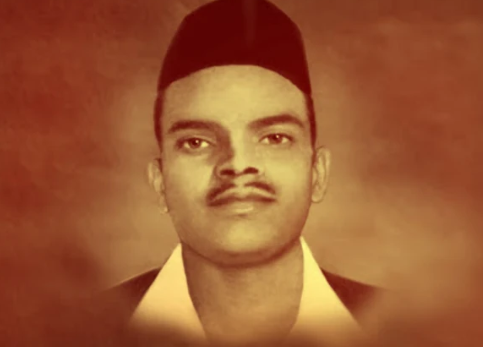
In the realm of India’s revolutionary movement, the name of Shaheed-e-Watan Rajguru often resonates less loudly than that of his compatriot, Bhagat Singh. However, he stands shoulder to shoulder with Singh and Sukhdev, all three brave souls who faced the gallows together on 23 March 1931 in the Central Jail of Lahore. While the name of Bhagat Singh frequently captures popular admiration and attracts media attention, Rajguru and Sukhdev, despite their equally valiant contributions, often recede into the shadows during discussions and commemorations on Martyrs’ Day (23 March). It is crucial to recognise the interwoven narratives of these revolutionaries, who together shared a profound commitment to the cause of India’s freedom.
In-Depth Exploration:
Shivram Hari Rajguru was born on 24 August 1908 into a Brahmin family in the quaint village of Khed, located near Pune in the then Bombay Presidency, now Maharashtra. He was the son of Hari Narayan and Shrimati Parvati Bai. Tragically, Rajguru’s father passed away when he was merely six years old, placing the economic burden of the family squarely on the shoulders of his elder brother. After completing his early education in Khed, Rajguru’s thirst for knowledge led him to the New English High School in Pune. His remarkable intelligence and determination shone through early on; however, a harsh reprimand from his brother for performing poorly in an English exam drove him to leave home with just a single rupee (16 annas) in his pocket. Following the advice of Eknath Sadashiv Rao, he journeyed to Varanasi, where he embarked on a rigorous study of Sanskrit and Hindu scriptures, mastering difficult texts such as the Laghu Siddhanta Kaumudi and excelling academically.
Influences on His Ideology:
Rajguru’s youthful experiences profoundly influenced his ideological development. His mastery of Sanskrit and the study of Hindu scriptures served as a foundation for his revolutionary thoughts. Several key influences shaped his worldview: the spiritual teachings of Jagat Guru Shankracharya, the passionate nationalism espoused by Bal Gangadhar Tilak, the guerrilla warfare tactics of Chhatrapati Shivaji, and the oppressive British imperialist regime that fostered widespread suffering and poverty among Indians. Personal struggles after leaving home and the deeply disturbing events of the Jallianwala Bagh massacre on April 13, 1919, further galvanised his spirit for revolution. Like many of his contemporaries, Rajguru distanced himself from Mahatma Gandhi’s philosophy of non-violence, seeking instead a more confrontational approach against colonial rule.
The fiery revolutionary ethos embodied by Chandrashekhar Azad, Bhagat Singh, and Sukhdev invigorated Rajguru’s resolve to envision an independent India rooted in the principles of nationalism, socialism, and secularism—a nation liberated from the cruel grasp of exploitation. His dedication to the cause grew so immense that he was compelled to lay down his life for India’s freedom.
Personal Attributes:
Rajguru was distinguished by an array of exceptional qualities—an indomitable spirit, formidable physical and mental endurance, unmatched bravery, unwavering loyalty to his comrades, and an extraordinary intellect, particularly in Sanskrit. While he was a serious revolutionary, he also had a captivating, light-hearted side that endeared him to his fellow activists. His jovial nature masked a powerful determination; one notable instance was when he bravely touched a hot iron rod to evaluate his capacity to withstand police torture, impressing the indomitable Chandra Shekhar Azad.
Known as “HSRA’s Gunman,” Rajguru was a sharpshooter, and his ability with firearms earned him admiration among his peers. However, his propensity for excessive sleepiness led his friends to lovingly nickname him “Kumbhakaran,” a reference to the sleepy giant from Hindu mythology. His lesser-known pseudonym “Raghunath” has largely escaped public awareness, typically overlooked in media narrations. In rural Maharashtra, he is recognised as “Rajguru the Gunman,” but this identity remains obscure beyond those borders.
Political Ideologies:
As an active member of the Hindustan Republican Association, Rajguru later became an integral figure within the Hindustan Socialist Republican Association (HSRA). This revolutionary organisation was deeply influenced by Marxist and Leninist thought, championing radical societal transformation. Alongside his fellow revolutionaries, Rajguru was a fiery advocate for India’s liberation from imperialism, fervently believing in” armed struggle” as a legitimate means to achieve freedom—a stark contrast to the nonviolent principles promoted by figures like Mahatma Gandhi. The HSRA sought to dismantle the oppressive structures of British rule and create a socialist state in India, wherein land distribution and the means of production would be restructured to forge a just and egalitarian society, free from exploitation. Additionally, their aspirations included the establishment of a secular state that would embrace the rich diversity of Indian society, fostering unity among its myriad communities
Murder of Saunders:
On the fateful day of December 17, 1928, a tragic incident ignited a fierce resolve within Rajguru and his revolutionary comrades. During a protest against the oppressive Simon Commission, the venerable Punjab Kesari, Lala Lajpat Rai, suffered fatal injuries at the hands of the Lahore Superintendent of Police, James A. Scott. This brutal act of violence unleashed a torrent of rage and indignation among the revolutionaries. Initially, their target was the infamous Scott, whose cruelty drove them to seek vengeance. However, a grave miscalculation led Rajguru and his fellow revolutionary, Bhagat Singh, to mistakenly carry out their plan against John P. Saunders, the Assistant Superintendent of Police in Lahore. This fateful encounter resulted in Saunders’ untimely death, forcing Rajguru and his associates to go underground, evading the relentless pursuit of law enforcement.
Secret Events from Rajguru’s Life:
Following the dramatic assassination of Saunders, Rajguru sought refuge at the residence of Baburao Dada Khare, an RSS worker in Nagpur. This period saw him associating with Dr. K.B. Hedgewar, the founder of the RSS, highlighting the intricate web of connections between the revolutionaries and various political factions of the era. Notably, the RSS headquarters in Nagpur became a bastion for revolutionaries, revealing a deeper alliance that warrants further exploration. Rajguru was often recognised by his distinctive attire—a black cap, a half-sleeve white shirt, and khaki pants—marking his connections to the RSS before he fully dedicated himself to the socialist revolutionary movement.(Verma.A, 2008). In a twist of fate that would haunt him, British intelligence reports speculated that Rajguru was hiding in Burma (now Myanmar) following the upheaval. However, he was ultimately apprehended in the early hours of December 29, 1929, at 1:00 am, within the confines of Dinkar’s residence in Pune. This successful capture was facilitated by covert information provided to the Inspector of the Intelligence Department by an informant named Kesarkar. One particularly astonishing, yet largely unknown, chapter from Rajguru’s life unfolded on January 20, 1928. In a tragic misfire, the revolutionary aimed to take the life of Hasrat Nizami, but instead, Rajguru inadvertently shot and killed Nizami’s father-in-law, a blunder that would shadow his revolutionary legacy.
The Trial and Martyrdom: March 23, 1931
The Lahore Conspiracy Case culminated in a momentous and heart-wrenching event on March 23, 1931. At precisely 7:30 p.m., Rajguru, alongside his devoted comrades Sukhdev and Bhagat Singh, faced the gallows within the grim confines of Lahore Central Jail. Their martyrdom reverberated through the nation, sending shockwaves of anger and sorrow from the snow-capped peaks of Kashmir to the sun-drenched shores of Kanyakumari, and from bustling Bombay to the vibrant streets of Calcutta. In the wake of their execution, widespread protests erupted, embodying the collective outrage of an oppressed populace. This marked the first significant confrontation between the Indian people and colonial forces since the uprising of 1857, resulting in a tragic toll of 141 lives lost, 586 individuals injured, and 341 arrests. Each year, on March 23, a grateful nation commemorates the sacrifices of these three brave martyrs, celebrating their enduring legacy and unyielding commitment to the relentless struggle for freedom and justice.
I pay my Tribute to the Invincible Martyrs of India on supreme sacrifice day in Indian revolutionary history.
(Note: Dr. Ramjilal is the author of Political India 1935-42: Anatomy of Indian Politics (Ajanta Publications, Delhi, 1986).)