THE ASIAN INDEPENDENT UK
A Special Article on the Birth Anniversary of Shaheed-e-Azam Udham Singh

Dr. Ramji Lal, Social Scientist,
Former Principal of Dyal Singh College,
Karnal (Haryana, India)
Overview:
Udham Singh (December 26, 1899 – July 31, 1940) was a significant figure in India’s struggle for independence, known for his unwavering commitment to the cause. He demonstrated qualities of patience, courage, national pride, and a socialist revolutionary spirit. Throughout his life, Singh travelled extensively across Europe, Eastern Europe, Africa, and the Americas, engaging with various political ideologies, including Russian communism and German nationalism, while opposing British imperialism. His journey lasted 21 years, underscoring his remarkable determination and resilience. Born in Punjab, Udham Singh remains a key inspiration for youth to instill patriotism. He witnessed the Jallianwala Bagh massacre and pledged to avenge the atrocity committed by Michael O’Dwyer, the Lieutenant Governor of Punjab, despite lacking personal animosity toward him.
Birth and Early Life:
Udham Singh was born on December 26, 1899, in the Pilbad neighborhood of Sunam, approximately 130 miles south of Lahore in the Patiala State (now Punjab). His parents were Mrs. Narayani Kaur and S. Tehal Singh Kamboj, who originally named him Sher Singh. Despite the tragic circumstances that would follow, few could have foreseen that he would evolve into a figure reminiscent of revolutionary leaders, inspiring a new generation of Indian revolutionaries.
Singh experienced profound loss at a young age, with the death of his mother in 1901 and his father in 1907, leaving him and his brother, Sadhu Singh, without parental support. They were admitted to the Central Khalsa Orphanage in Putlighar, Amritsar, by Kishan Singh Ragi. In a naming ceremony conducted in line with Sikh customs, Sher Singh was renamed Udham Singh, while Sadhu Singh became Mukta Singh, with ‘Mukta’ signifying liberation from the cycle of rebirth. Udham Singh was affectionately called “Ude” by his peers, a nickname he later embraced. The passing of his brother Mukta Singh profoundly affected Udham Singh, intensifying his sense of solitude. He left the orphanage after completing his matriculation in 1918.
Influences on Udham Singh’s Character and Values:
Several factors significantly shaped Udham Singh’s character and values, including the early loss of his family, his challenging upbringing, feelings of loneliness, and the poverty he experienced. The exploitation of India by British colonial forces, along with the widespread suffering—including poverty, hunger, and unemployment—had a lasting impact on his worldview. However, the Jallianwala Bagh massacre on April 13, 1919, was particularly pivotal in shaping his political ideology, marking a defining moment in his life and commitment to revolutionary change.
The struggle against British imperialism in India during the early 20th century was significantly influenced by national leaders and revolutionaries. Key figures such as Swami Shraddha Nand, who delivered impactful speeches at the Amritsar Congress session in December 1919, played crucial roles, alongside revolutionaries from the Ghadar Party. This group included prominent activists like Lala Hardayal, Professor Mota Singh, Sardar Basant Singh, and members of the Bhagat Singh family, all of whom inspired a large section of the populace in their quest for independence.
One notable figure influenced by this revolutionary environment was Udham Singh. His ideological development was largely shaped by the Babbar-Akali movement, which he encountered during his time in America with the Ghadar Party. This organization aimed to mobilize expatriate Indians against British rule. Udham Singh’s revolutionary perspective was further enriched by elements of Marxism, Leninism, and Bolshevism. Among these influences, his admiration for Bhagat Singh had the most profound effect on him; Singh regarded Bhagat Singh as both a close friend and a mentor.
Udham Singh’s commitment to the revolutionary cause led him to engage with various organisations, including the Bharatiya Mazdoor Sangh, the Hindustan Socialist Republican Association (HSRA), the Electrician Union in England, the Workers Association (IWA), and the Ghadar Party in America. In London, he founded the Azad Party to mobilise Indian nationals for revolutionary activities.
Revolutionary Beginnings: The Gadar Party and the Hindustan Socialist Republican Association (HSRA):
Inspired by the tragic Jallianwala Bagh massacre, Udham Singh became a part of the Gadar Party, founded by Indian expatriates in the United States and Canada with the aim of overthrowing British rule in India. In 1924, he actively engaged with Gadar leaders and their organizational methods, partaking in various revolutionary activities such as distributing anti-British literature and organizing protests. His collaboration with Bhagat Singh and the HSRA led him to adopt socialist revolutionary ideals, including Marxism, Leninism, and Bolshevism.
Sikh Punjabi Marxist: Udham Singh’s Ideology:
Udham Singh’s thought processes were notably impacted by Marxist theories. In July 1927, he was arrested in Rambagh, Amritsar, under Section 20 of the Arms Act. During this arrest, authorities found him with the banned Gadar Party newspaper “Ghadr-di-Gunj” (“Voice of Revolt”), leading to his identification as the “Sikh Punjabi Marxist.” His revolutionary inspirations also included Russian Bolsheviks and the writings of Baba Jawala Singh, particularly the book *Gadar*.
Arrest for Revolutionary Activities and Imprisonment:
On March 23, 1931, key revolutionaries Bhagat Singh, Sukhdev, and Rajguru were executed, while Udham Singh was imprisoned. After his release in 1931, he managed to evade the intelligence department and Punjab police, traveling through Kashmir to Germany and ultimately settling in London in 1934.
Marriage and Personal Life:
Udham Singh, during a visit to the United States in February 1922, met Lupe Hernandez in Claremont, California, and they married in 1923. This coincided with the Johnson-Reed (Immigration) Act of 1924, which encouraged Indian men to marry Hispanic women to avoid deportation. Singh later disclosed that he had two sons who attended school in Sacramento( Claremont). However, in 1927, he departed from the United States, leaving his family to pursue his revolutionary aspirations, particularly focused on assassinating Michael O’Dwyer, who he held responsible for the Jallianwala Bagh massacre.
Additionally, British intelligence reports suggested that Singh married a white woman during a visit to England in November 1936, and they lived in London’s West End. It remains unconfirmed whether this second marriage resulted in any children.
Various Aliases:
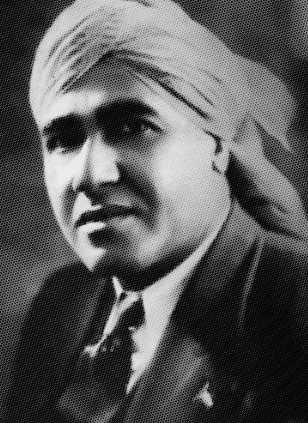
To evade detection, revolutionaries, including Udham Singh, often adopted various aliases and altered their appearances. Singh, like Bhagat Singh, discarded traditional Sikh symbols, opted for a clean-shaven look, and adopted Western clothing styles, including hats and suits. Records from the London Metropolitan Police (File MEPO 3/1743) indicate that Singh utilised several pseudonyms throughout his life, including Ude, Sher Singh, Uday, Frank Brazil, Ude Singh, Udban Singh, Udham Singh Kamboj, Mohammad Singh Azad, and Ram Mohammad Singh Azad.
A report dated March 16, 1940, from the Metropolitan Police (File MEPO 311743), characterized him as an active, well-travelled, politically motivated, and secular-minded young man with high aspirations and a strong opposition to British rule in India. While in custody at Brixton Jail on April 6, 1940, Singh identified himself as Ram Mohammed Singh Azad, a name symbolising the three major religions of India and the concept of freedom. He noted that during a session in the House of Commons, Prime Minister Chamberlain referred to him as Mohammad Singh, which is why he was called that while in prison.
The Assassination of Michael O’Dwyer:
On March 13, 1940, Udham Singh assassinated Michael O’Dwyer, the former Lieutenant Governor of Punjab known for his role in the Jallianwala Bagh massacre, during a meeting of the Royal Central Asian Society in London. He was subsequently tried at the Central Criminal Court at Old Bailey.
Singh’s name, which he adopted in his childhood, became emblematic of his strength when he assassinated O’Dwyer, solidifying his title as the lion of India. His name change to Udham, meaning ‘turmoil,’ was fitting as his actions drew global attention to the shortcomings of British imperial governance.
Trial, Hunger Strike, and Execution:
During his trial, Udham Singh undertook a 42-day hunger strike, famously asserting that his actions were a duty to his nation. Convicted of murder, he was executed by hanging on July 31, 1940, at Pentonville Jail in London.
Udham Singh’s Vision for India
Udham Singh’s ideology extended beyond simple nationalism; it was shaped by revolutionary thought, encompassing elements of socialism, Marxism-Leninism, Bolshevism, and the Ghadar movement. He envisioned not merely independence from British rule but also comprehensive social, economic, political, and educational reform in a free India. His advocacy emphasized unity among Hindus, Muslims, and Sikhs, along with the need to eradicate poverty, ignorance, and illiteracy.
In correspondence dated July 15, 1940, from Pentonville Jail, Singh articulated:
“Our greatest responsibility is to drive the British out of the country and then establish Hindu, Muslim, and Sikh unity. We must eliminate hunger, ignorance, and disease. People should have access to justice, enough food for farmers and laborers, high-quality schools and colleges, and playgrounds and parks for children and the elderly. I wish people would invest in higher education instead of the pomp and circumstance of weddings. I am confident that you will adopt these values. May my country prosper.”
The name Ram Mohammed Singh Azad represents the unity among the major religions of India, emphasising the significance of communal harmony. Current policies such as liberalisation, privatisation, globalisation, and disinvestment may be at odds with the political vision he advocated. To honor his legacy, it is important to consider a socialist approach that focuses on building a self-reliant India, addressing critical issues such as hunger, poverty, and unemployment. This approach could provide a framework for fostering equitable development and social justice in the country.