THE ASIAN INDEPENDENT UK
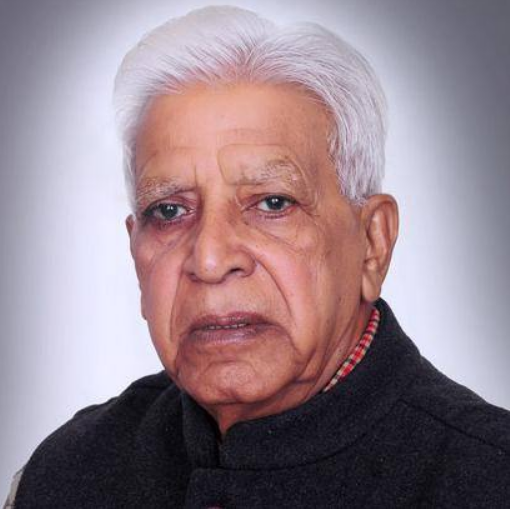
Dr. Ramjilal,
Social Scientist and Former Principal,
Dyal Singh College, Karnal (Haryana, India).
Email.id : drramjilal1947 @gmail.com
Background:
India is a land of villages. Mahatma Gandhi believed that the soul of India resides in its villages. Agriculture serves as the backbone of the Indian economy, with nearly 50% of the country’s approximately 1.44 billion people engaged in farming and related activities. Indian farmers and agricultural labourers play a crucial role in ensuring the nation’s food security, contributing significantly to the GDP and food grain exports. This is Why they are regarded as the foundation of the Indian economy and the “providers of food” for the country.
However, various problems plague Indian agriculture, farmers, and agricultural labourers, with the most pressing issue being the ever-increasing debt passed down through generations. This situation makes it seem impossible to fundamentally improve the condition of farmers.
The issue of agricultural debt has been a concern in Indian political discourse since the 20th century. In 1906, liberal Congress leader Gopal Krishna Gokhale raised this issue in the Imperial Legislative Council of India. He highlighted that Indian farmers were victims of exploitation by moneylenders and stressed the need to free them from the burden of debt to liberate them from such exploitation.
In Punjab, the total agricultural debt rose dramatically from Rs. 90 crore in 1901 to Rs. 200 crore in 1921. By 1923, 80% of farmers in Punjab were in debt. The consequences of this agricultural debt were severe: in 1901, moneylenders possessed 43.5 lakh pakka bighas of land. The situation in Rohtak, for example, was particularly dire, with 53,590 acres of land sold due to debt and 1,49,823 acres mortgaged to moneylenders for Rs. 4,80,567 (Dr. Anil Dalal, Administrative Reformer: Chaudhary Chhotu Ram, 2017). As a result, farmers are crushed under the weight of this debt, which continues to reverberate through generations.
In his book, “The Punjab Peasant in Prosperity and Debt” (H. Milford, Oxford University Press, 1925), Malcolm Lyall Darling discussed the plight of Punjabi farmers, stating that they “are born in debt, live in debt, and die in debt; even after death, they remain in debt.” In Punjab, the burden of debt is inherited from one generation to the next. If a grandfather is in debt, the succeeding generations struggle throughout their lives to repay it. Even a century later, in 2025, farmers still find themselves burdened by debt. As of March 31, 2024, the total outstanding debt of farmers in Punjab, Haryana, Himachal Pradesh, and Chandigarh exceeded ₹2.20 lakh crore. Therefore, it is accurate to say that farmers were in debt 100 years ago, are in debt today, and will likely remain in debt in the future.
Expansion
Number of Marginal Farmers
Approximately 90% of farmer families in India are marginal farmers. A marginal farmer is a family that owns less than 5 acres (2 hectares) of land. Among these, the number of ultra-marginal farmers is also very high, as these families own less then 0.1 hectares of land. According to a NABARD survey, in 2016-17, the Average landholding per farmer family was 1.08 hectares. However, as families grew and split, the landholding per farmerfarmer’s family decreased, resulting in a reduction to 0.74 hectares per farmer family in 2021-22. According to the official report of NSSO Report No. 587 (2021), 70.4% of agricultural households owned less than one hectare of land. Therefore, as the population increased, the landholding decreased, income decreased, and debt increased. In other words, the debt burden on farmers increased.
National Average Debt per Farmer Family:
In a written reply to the Lok Sabha by the Minister of State for Agriculture and Farmers Welfare, Ramnath Thakur, it was informed that as of March 31, 2024, 18.74 crore (50.2% of the total farmers) farmers were burdened with agricultural debt. In response to unstarred question 2285 by Haryana MP Deepender Hooda on March 2023, the then Minister of State for Agriculture, Dr. Bhagwat Karad, stated that the national average debt per farmer family was ₹74,121. This answer from the Minister of State for Agriculture is based on 2019 data. Today, after 6 years, it is likely that this debt has increased significantly. According to the National Survey on “Situation Assessment of Agricultural Households and Land and Livestock Holdings of Households in Rural India” (2018-19), the average monthly income of agricultural households is only ₹10,218. A farmer earns only ₹27 per day from agriculture. However, the average income of agricultural labour households is higher than the average income of farmer households.
Indebted Agricultural Households-Top States:
According to the serial number of part (b) of Unstarred Question No. 485 of the Rajya Sabha, regarding the average income of farmers, Andhra Pradesh had ₹2,45,554 (93.2% of indebted agricultural households), Kerala ₹2,42,482 (69.9% of indebted agricultural households), Telangana ₹1,52,113 (91.7% of indebted agricultural households), Karnataka ₹1,26,240 (67.6% of indebted agricultural households – 1.62 crore), Tamil Nadu ₹1,06,553 (65.1% of indebted agricultural households – 2.88 crore farmers), Punjab ₹2,03,249 (54.4% of indebted agricultural households), Haryana ₹1,82,922 (47.5% of indebted agricultural households), Rajasthan ₹1,13,865 (60.3% of indebted agricultural households), Odisha ₹32,721 (61.2% of indebted agricultural households), Maharashtra ₹82,085 (54% of indebted agricultural households – 2.88 crore farmers), and West Bengal ₹26,452 (50.8% of agricultural households) burdened with agricultural debt. In short, the Minister of State for Agriculture and Farmers Welfare, Ramnath Thakur, informed the Lok Sabha in a written reply that as of March 31, 2024, 18.74 crore farmers (50.2% of farmers) were burdened with agricultural debt. On the surface, it seems that farmers are very happy. However, internally, they are very unhappy and distressed due to the stress in their hearts and minds.
From the above loan figures, it can be inferred that the debt burden per farmer varies across different states and regions. According to the NAFIS survey (2021-22), the average outstanding debt per farmer household at the national level was approximately ₹47,000. State-wise data for the same period showed that the average debt was highest in Kerala, Andhra Pradesh, and Punjab, while it was lowest in Assam, Jharkhand, and Chhattisgarh. As of March 31, 2024, the total outstanding debt of farmers in Punjab, Haryana, Himachal Pradesh, and Chandigarh exceeded ₹2.20 lakh crore. According to the Ministry of Finance, Government of India, the total agricultural credit as of March 31, 2025, was ₹28.50 lakh crore (₹28,50,779 crore).
According to several research studies, the total debt burden on female-headed households is less than that on male-headed households. This is because women often face frustration due to the corruption prevalent in government offices, from patwaris to senior officials and bank officials. In addition, they face harassment from the staff, and due to Concerning their honour, women often avoid taking loans. However, compared to other states in India, women in Gujarat obtain more than 70% of their loans from formal (institutional) sources, such as cooperative societies, because they face fewer difficulties in accessing credit. Other states should learn from this so that women can take more loans to become self-reliant and support themselves.
Two Main Sources of Credit:
There are two main sources of credit. Firstly, formal (institutional) sources include regional rural banks, cooperative societies, microfinance institutions, and the government. Secondly, informal (non-institutional) sources include private money lenders. Private money lenders include moneylenders, private finance companies, commission agents, relatives, and others. According to the National Bank for Agriculture and Rural Development (NABARD) survey report of 2025, 54.5% of rural households are taking loans only from formal sources, while 23.5% of rural households are taking loans only from informal sources. 22% of rural households are taking loans from both formal (institutional) and informal (non-institutional) sources. Difficulties arise in fulfilling the various formalities for obtaining loans. from institutional sources. The main reasons for these difficulties are – lack of documents, unavailability of a guarantor, corruption in the government system, non-payment of outstanding loans, changes in weather patterns, reduction in income, etc. As a result, rural households are forced to take loans from non-institutional sources.
According to the NABARD report of 2025, formal (institutional) interest rates are higher than 17-18 percent. Interest rates on institutional and non-institutional loans for farmers ranged between 10% and 21%. For farmers in Punjab, the interest rate on institutional loans was 7.35% to 7.72% and on non-institutional loans it was 17% to 21%. However, according to a study, private money lenders in the southern region of Karnataka have two models for charging interest on the principal amount. According to the first model, the interest rate is 36%, and in the second model, the interest rate on approximately one-fourth of the loan is up to 60%. Such high interest rates are most distressing. Because this results in an increase in debt, and farmers are not freed from the cycle of exploitation by moneylenders. The average monthly income of agricultural families is only ₹10,218. The salary of a sanitation worker employed in government departments is several times higher than the total annual income of agricultural families. Most farmers in Andhra Pradesh, Tamil Nadu, Rajasthan, Punjab, and Bihar depend on private moneylenders. The highest number of farmers (53%) dependent on private moneylenders are in Andhra Pradesh. Of these farmers, 65.15% own land ranging from 0.01 hectares to 10 hectares.
Loan Utilization: labourers
A crucial question is how farmers utilise the loans? Regardless of the source, farmers use loans for two types of activities:
First, productive activities: These activities are related to agricultural needs. In these productive activities, farmers use loans to increase productivity. Productive activities that boost farming include agricultural equipment, improved seeds, fertilisers and pesticides, irrigation facilities, animal husbandry, dairy farming, etc., which increase income.
At the all-India level, 65% of loans were spent on income-generating productive activities. The expenditure on income-generating activities also varies from state to state and region to region. In Assam, farmers spend 39% of their loans on income-generating activities, while in Maharashtra, Karnataka, and Chhattisgarh, they spend 80%.
Second, non-productive activities: These activities include social obligations, festivals, ceremonies, weddings, vehicles, exorbitant fees for children’s education in private schools ,and other expenses, health, etc. According to the survey, at the all-India level, 35% of loans were used for non-productive activities – non-agricultural needs. For example, in Punjab, 41%, in Maharashtra 26%, and in Uttar Pradesh 13% were used for non-agricultural needs – for family maintenance. Spending on non-productive activities further increases the debt burden on farmers.
Farmers’ Debt – A Serious Problem: Main Causes
Farmers’ debt in India is a serious problem, with nearly half of all farming households in debt and the total amount of debt continuously increasing. Factors contributing to this crisis include low crop prices, failure to receive Minimum Support Price (MSP = c2+50%), crop failure due to erratic rainfall, depletion of groundwater, over-reliance on informal lenders, and inadequate government support for productivity. The small size of arable land makes it very difficult to adopt modern agricultural techniques, as small and marginal farmers cannot afford modern farming methods. The cost of agricultural inputs – expensive foreign BT seeds produced by multinational corporations, low yields, pest problems, agricultural fertilizers, pesticides, urea, expensive electricity due to privatisation, expensive labour, and expensive agricultural equipment – has increased manifold. Key contributing factors include the black market for counterfeit seeds, pesticides, urea, and fungicides, forcing farmers to buy pesticides along with urea, misleading and unfair propaganda about the beneficial use of nano urea, poor government policies, issuance of informal receipts (Kucchi Parchi) to farmers by commission agents, manipulation of weighing scales, manipulation by revenue department employees and crop insurance company officials during crop loss assessment, refusal to purchase grains citing excessive moisture content, or deductions due to moisture and quality issues, anti-farmer policies of land pooling and land transfer, delays in payments due to farmers, etc, This also includes the loss of crores of rupees to the government due to the system of contracting out the lifting of grains from the markets.
Crop failures are also caused by the effects of climate change, the impact of heatwaves on wheat yields, fruits, vegetables, and livestock, the destruction of vegetables in fields due to inadequate prices, unseasonal rains, hailstorms, and floods, and crop destruction by wild animals and stray cattle (cows, calves, and bulls). On one hand, farming is becoming more expensive, and on the other hand, income is decreasing. According to a report by the Organisation for Economic Co-operation and Development (OECD), farmers’ income decreased by 14% in the 17-year period from 2000 to 2017. The root cause of this is the government’s poor policies, schemes, and inappropriate interventions.
Farmers’ suicides continue unabated. Since 1995 till date
From 1995 to 2014, the central government of India was led by P.V. Narasimha Rao, I.K. Gujral, Deve Gowda, Atal Bihari Vajpayee, and Dr. Manmohan Singh. However, during the 2014 Lok Sabha elections, Narendra Modi, the star campaigner of the Bharatiya Janata Party and the current Prime Minister, blamed Dr. Manmohan Singh’s government for the farmers’ suicides. Narendra Modi addressed 437 public meetings during the 2014 Lok Sabha elections. In 219 of these meetings, Narendra Modi guaranteed loan waivers for farmers and the implementation of Minimum Support Price (MSP) based on the C2+50% formula suggested by the Swaminathan Report (2006). The Bharatiya Janata Party’s 2014 election manifesto also promised to give farmers one and a half times the cost of production for their produce. However, after coming to power, the government reneged on its promise and filed an affidavit in the Supreme Court of India in 2015 stating that the government could not fulfill this promise. During the COVID-19 pandemic, the Government of India enacted three farm laws. Protesting against these laws, farmers staged a protest at the borders of Delhi for 378 days and held demonstrations across the country. Approximately 750 farmers lost their lives during this historic movement (August 9, 2020 – December 11, 2021). Although the government was forced to repeal the three farm laws, the farmers’ demands, including the implementation of Minimum Support Price based on the C2+50% formula, remain unfulfilled.
The series of suicides did not stop even during the tenure of the BJP-led NDA government after 2014.
According to the National Crime Records Bureau (NCRB) report, in the agricultural sector, there were 12,360 suicides in 2014 (5,650 farmers + 6,710 agricultural labourers), 12,602 in 2015 (8,007 farmers + 3,595 agricultural laborers), 11,379 in 2016 (6,270 farmers + 5,109 agricultural laborers), 10,655 in 2017 (5,955 farmers + 4,700 agricultural laborers), 10,349 in 2018 (5,763 farmers + 4,586 agricultural laborers), and 10,281 in 2019 (5,957 farmers + 4,324 agricultural laborers). In 2020, there were 10,677 suicides in the agricultural sector (5,579 farmers + 5,098 agricultural laborers). The number of suicides among agricultural laborers in 2020 was 18% higher than in 2019. In 2021, a total of 10,881 people associated with the agricultural sector (5,318 farmers — 5,107 male farmers and 211 female farmers + 5,563 agricultural laborers) committed suicide. According to official figures, in 2021, approximately 15 farmers and 15 agricultural laborers committed suicide every day.
The number of suicides by farmers and agricultural laborers in 2021 was the highest since 2016. In 2022, 11,290 farmers and agricultural laborers (5,207 farmers and 6,084 agricultural laborers) committed suicide. In 2023, 10,786 farmers and agricultural laborers ended their lives by suicide. Compared to 2022, there was a decrease in suicides among farmers and agricultural labourers in 2023, with 504 fewer suicides.
Female farmers and female agricultural labourers also commit suicide due to despair over life’s problems. According to data collected by the National Crime Records Bureau (NCRB) of the Ministry of Home Affairs between 1995 and 2018, 50,188 women committed suicide in India. This accounts for 14.82 percent of the total farmer suicides. In 2021, 442 female agricultural labourers committed suicide. In 2022, a total of 11,290 individuals associated with the agricultural sector committed suicide, which is 6.6% of the total suicide victims in the country. The gender-specific data for this year includes 5,207 farmers and 6,083 agricultural labourers, but the gender breakdown for each category is not immediately available in the brief details.
In brief, according to the National Crime Records Bureau of the Union Home Ministry, between 1995 and 2023, 394201 farmers have committed suicide, which means that every year 13,600 farmers, women agricultural laborers have ended their lives by committing suicide.
The biggest reason for these suicides is the farmers’ debt burden. Although there is a visible improvement in the economic condition of farmers across India, including Punjab, there is no relief as far as indebtedness is concerned. Malcolm Lyall Darling’s statement in 1925 regarding the plight of farmers is still accurate: the percentage of indebtedness among farmers across India, including Punjab, remains the same. In this context, Bhagat Singh comes to mind. On February 2, 1931, he wrote a letter to young political activists. In his letter, the goals of the revolution that Bhagat Singh olabourersutlined included the abolition of the zamindari system and the waiver of farmers’ debts. Bhagat Singh believed that farmers and laborers would only be liberated from exploitation when a classless and exploitation-free society was established. He clearly stated that it would make no difference to the people if the head of India was Purushottam Das or Thakurdas Tandon instead of Lord Irwin or Lord Reading. In the current situation, we can say that, Dr. Manmohan Singh was the Prime Minister from 2004 to 2014, and Narendra Modi has been the Prime Minister from 2014 to the present, but neither have farmers’ debts been waived nor have farmers’ suicides stopped.
Suggestions to improve the economic condition of farmers, sharecroppers, and agricultural laborers and to prevent suicides:
The following is a brief description of the important demands written in the memorandum submitted by the Samyukta Kisan Morcha (SKM) to the President of India on November 26, 2025, to improve the economic condition of farmers, sharecroppers, and agricultural laborers and to prevent suicides:
1. Legal Guarantee of Minimum Support Price (MSP): A legal guarantee of Minimum Support Price for all crops should be provided based on the C2+50% formula recommended by the Swaminathan Commission (2006).
2. Loan Waiver: At the national level, across India, farmers had outstanding debts of approximately ₹28.5 lakh crore (₹28.5 trillion) by mid-2025. To improve the condition of farmers and agricultural labourers, all outstanding debts should be waived at the national level. Farmers argue that if the central government waived ₹16 lakh crore (₹16.35 trillion) of Non-Performing Assets (NPAs) of capitalists between 2015 and March 2025, then why can’t the same be done for farmers?
3. Under VB-G RAM G (formerly MGNREGA), the minimum guaranteed workdays for rural families have been increased from 100 to 125 days per year. However, the number of workdays should be increased to 200 days per year, and a daily wage of ₹700 should be ensured.
4. The Electricity Bill 2025 :The Electricity Bill 2025 should be immediately withdrawn, and privatisation and smart meters should be stopped. In addition, all families should be provided with 300 units of free electricity every month, and free electricity should be provided for agriculture.
5. Old Age Pension: All agricultural laborers and farmers should be given an old-age pension and social security of ₹10,000 per month.
6. Restoration of Fertilizer Subsidies: The ₹84,000 crore reduction in fertilizer subsidies in the central government budget over the last three years should be restored, and black marketing of urea should be stopped.
7. End to Anti-Farmer and Anti-Worker Policies: The Government of India’s numerous policies detrimental to farmers and workers – the National Policy Framework on Agricultural Marketing (NPAFAM), the National Cooperative Policy (NCP), the Electricity Bill 2025, the four labour codes, and agreements with foreign countries that are harmful to Indian agriculture and farmers – should be stopped in the future.
8. End to Bulldozer Raj: Indiscriminate acquisition of agricultural land should be stopped, and all landowners should be given fair compensation by strictly adhering to the LARR Act, 2013. The ‘Bulldozer Raj’ (forcible action) against farmers should be stopped, and all cases filed against farmers during the farmers’ movement (2020-2021) should be withdrawn.
9. Public Investment: There is a need to increase public investment in the modernization of agriculture and cooperatives.
10. Profit Sharing for Farmers and Agricultural Workers: Ensure that farmers and agricultural labourers share in the profits from the processing, value addition, and marketing of all crops.
11. National Disaster: All severe floods and Landslides should be declared national disasters, and farmers, tenant farmers, and agricultural labourers in all affected states should be compensated at appropriate rates for the losses incurred.
In short, the need is not merely for a change in political power, but for alternative policies that benefit the poor, farmers, and agricultural labourers and not those that favour corporations. We believe that agriculture is a matter of national importance; therefore, the central and state governments should consult with leaders of opposition parties and farmers’ organisation(SKM)) when formulating agricultural policies.