THE ASIAN INDEPENDENT UK

Dr. Ramjilal, Social Scientist,
Former Principal, Dyal Singh College,
Karnal (Haryana, India).
Summary
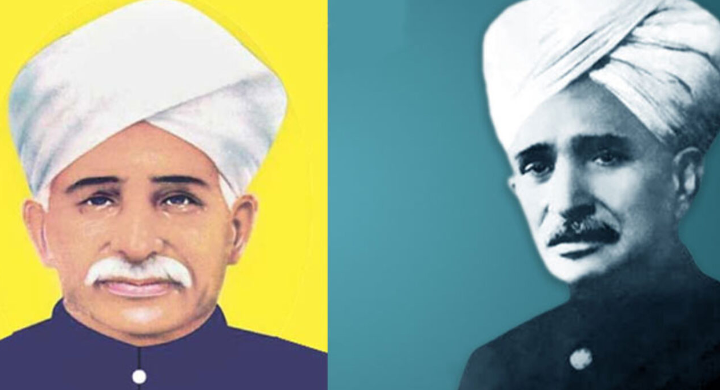
Rahbar-e-Azam, Deenbandhu, Sir Chhotu Ram’s thinking was deeply influenced from a young age by the plight of farmers, their economic condition, poverty, illiteracy, ignorance, backwardness, and religious exploitation. Farmers were born into debt and died in debt. They were unable to repay their loans. Due to their inability to repay debts, farmers were exploited by moneylenders, usurers, and landlords. Their land was confiscated, and their livestock and sources of income were auctioned off. Farmers breathed their last in a life of hunger and poverty. Moreover, crop failures and other natural calamities – floods, droughts, and lack of proper irrigation systems, destruction of crops by wild animals, and cheating in markets and not receiving fair prices for their produce, etc. – made the lives of farmers hellish. Because of the work Sir Chhotu Ram did to free the farmers of Punjab from debt, he is respectfully referred to as ‘Chhote Ram – Small God.’
Expansion:
Who is the real enemy of the farmers?
Studies of peasant movements and Uprisings reveal that the British government and Indian Nawabs, Rajas, and feudal lords inflicted various forms of oppression on Indian farmers. The leaders of the peasant movements had identified their enemies. Sir Chhotu Ram analysed this question in detail. In his books and articles, Sir Chhotu Ram emphasised the need for farmers to identify their enemies. It is essential to understand who is responsible for the economic plight of the farmers. He clearly stated that it is crucial to identify the class that exploits the farmers. This is the same exploitative class that takes advantage of the farmers’ ignorance, illiteracy, and religious fanaticism. He often compared this exploitative class to Shylock, a character from Shakespeare’s play “The Merchant of Venice.” Shylock has many ways of exploiting the farmers and resorts to various kinds of deception. Sir Chhotu Ram believed that farmers must identify their enemy; in fact, the farmer’s enemy is like a chameleon. He also emphasised the need for farmers to identify the supporters of the exploiters. Besides the British government, the rulers of Indian princely states, Nawabs, feudal lords and landlords, moneylenders and usurers, administrative officers, and police officers were also among the main enemies of the farmers.
The main reasons for the exploitation of Indian farmers included the anti-farmer policies and laws of the imperialist government, atrocities and oppressive behaviour by British officials and police against farmers, exploitative policies of landlords, moneylenders, and usurers, increased land revenue and revenue collection in kind, eviction of farmers from their land or confiscation of land for non-payment of revenue, mortgage of land or obtaining court orders by moneylenders and usurers for non-payment of loans, auctioning of movable and immovable property, livestock, etc., atrocities committed by the police, land revenue rates far exceeding legal limits, oppressive policies and methods of landlords in revenue collection, arbitrary actions, extortion, forced labor, and famines .In addition to these, many social evils were prevalent in the then rural society – ignorance, illiteracy, backwardness, blind faith, idol worship, inequality, untouchability, child marriage and others.
Sir Chhotu Ram tried his best to bring public awareness through various platforms including Jat institutions, Arya Samaj and other social and political institutions, and through the Jat Gazette, in speeches from public platforms and other means to eradicate the difficulties that prevent farmers from organising and becoming aware, which consequently pose a major obstacle to their economic prosperity and development. and in speeches from public platforms to eradicate these. However, the Jat Gazette proved to be a powerful weapon for spreading public awareness..
Jat Gazette : A Public Weal Mouth Organ
Rahbar-e-Azam, Deenbandhu, Sir Chhotu Ram, published the weekly The Jat Gazette: A mouthpiece for public welfare:
Rahbar-e-Azam, Deenbandhu, Sir Chhotu Ram, started the weekly newspaper “Jat Gazette” in Urdu in 1916. It was the mouthpiece of the Zamindara League, founded by Sir Chhotu Ram, and later received patronage after the National Unionist Party came to power in Punjab. As a result, it became a symbol of Hindu-Muslim-Sikh unity from Peshawar to Delhi, and its circulation increased manifold. He also started series of articles in the Jat Gazette titled “A Tour of Market Exploitation -बाजार ठगी की सैर’’ and “The Poor Landlord–बेचारा जमींदार’’ .Copies of the “Jat Gazette” were distributed free of charge in villages for awareness and public mobilisation. In this series, he explained how moneylenders exploited common people and created a stir among the public by raising awareness. This newspaper was one of the oldest newspapers in the Haryana region. Editors of other newspapers also prominently published articles on the exploitation of farmers, the excesses of government officials, discriminatory practices, and the struggles of the farmers.
The exploitative shape shifter of farmers:
Those who exploit farmers have many advocates or appear in many forms. Describing these exploiters of farmers, he wrote that they include Pirs, Fakirs, Pandits, Mullahs, Granthis, priests, and moneylenders. In Chhotu Ram’s own words, “Some people exploit you by posing as spiritual guides, some as priests, some as rulers, some through bribery, and sometimes you even get cheated in your accounts. If you are wealthy, the Marasi, Bhat, and Doom communities deceive you. If you are poor, the moneylender sucks you dry like a leech. O farmer, how will you escape these demons?” He raised his voice against those who exploited farmers, against impostors and social evils. But the kind of awareness that Chhotu Ram wanted to create among The farmers did not materialise. He wrote explicitly:
“I tickle the farmers’ feet to break their Kumbhakarna-like slumber. I splash water on their faces. The farmer opens his eyes, blinks, turns over, but then falls asleep again. Because the class that profits from The farmer, possesses a gas that instantly induces unconsciousness in the farmers, and they fall asleep again.”
Farmers : Lion’s traits
In a chapter titled ‘A New Message’ in the book “Bechara Zamindar”, he inspired the farmers to give up their conservative ideas and to gain self-confidence and respect instead of relying on fatalism. Taking forward the thoughts related to farmers, he quoted the words of the then famous Urdu poet Mohammad Iqbal and asked the farmers to ‘acquire the traits of a lion’. He also inspired not to be influenced by moneylenders or government or organizations like the Congress, the Hindu Mahasabha, and the Muslim League. Chhotu Ram advised the farmers, saying:
“Landlords, just listen to one thing, not many:
Learn to speak up, and Identify your enemy.
Landlords, forget the support of a life of oppression,
Cast off this ghost of naivety from your heads.”
Stern and Strong Warning :Explioters Beaware!
On the one hand, Chhotu Ram inspired the farmers to become awakened and organised , while on the other hand, he also challenged the kings, Nawabs, Moneylenders, and the British government by giving them a stern warning.He roared like a lion :
“People call the farmer the provider of food, but no one sees whether he himself gets to eat. That’s the one who earns is the one who remains hungry is the greatest wonder of this world. I Tell the kings, nawabs, and all types of governments of Hindustan not to harass the farmer to such an extent that he rises up. Do not trouble this innocent man so much that he performs the Tandava dance (dance of destruction). When other People are angry with the government, they break the law. When the farmer gets angry, he will not only break the law, but he will also break the government’s back.”
A Golden Opportunity to Improve Farmers’ Welfare and Agriculture: Crafting Golden Laws
Under the Government of India Act of 1935, elections to the provincial assemblies and legislative councils were held in January-February 1937. The results of these elections were declared on February 20, 1937. In Punjab, the government of the National Unionist Party was formed on April 1, 1937, under the leadership of Sir Sikandar Hayat Khan and with Sir Chhotu Ram as the leading minister. Sir Chhotu Ram given the most important portfolios of Agriculture, Revenue, and Development. He continued as minister till his death (9 Jauanuary, 1945 ). The National Unionist Party’s main agenda was centred on agriculture and farmers. This was a golden opportunity for Sir Chhotu Ram to implement his agenda for the welfare of farmers and make improvement in agriculture. He implemented pro-farmer policies, enacted laws against usury, protected debtors, and promoted agricultural reforms, which significantly increased rural economic stability and curbed the exploitation by moneylenders. These laws include important acts such as the Debt Relief Act, the Moneylender Registration Act (1938), the Return of Mortgaged Lands Act (1938), and the Agricultural Produce_ Market Act (1938) , the Punjab Transfer of Property Act, the Punjab Land Acquisition and Consolidation Act (1936, amended 1940 and 1945), the Punjab Accounts Regulations Act, the Punjab General Sales Tax Act (1941), the Punjab Weights and Measures Act (1939), etc. Through these acts, farmers were liberated from moneylenders and the exploitative class. In other words, these laws acted as liberators, ushering in a new era. Scholars have even referred to these laws as “golden laws.” Additionally, relief given farmers the land revenue was reduced to maximum 25% of the previous settlement.
The Fatal Problem of Debt:
The fatal problem of debt has been a matter of concern in the political thinking of the Indian independence movement since the 20th century. To improve the condition of farmers, in 1906, The liberal Congress leader Gopal Krishna Gokhale raised this issue in the Imperial Legislative Council of India, stating that Indian farmers were victims of exploitation by moneylenders. He emphasised freeing Indian farmers from the burden of debt to liberate them from the exploitation of moneylenders.
In 1901, the total agricultural debt in Punjab was Rs. 100 crore, which increased to Rs. 200 crore by 1921. Consequently, in 1923, 80 percent of the farmers in Punjab were in debt. As a result, agricultural debt, in 1901, 43.5 lakh pakka bighas of land were in the possession of moneylenders. For example, the situation was particularly dire in the Rohtak district-Jat region. This is evident from the fact that in Rohtak district, 53,590 acres of land were sold in lieu of debt, and 1,49,823 acres of land were mortgaged to moneylenders for Rs. 4,80,567, including possession. (Dr. Anil Dalal, Administrative Reformer: Chaudhary Chhotu Ram, Arth Vision Publications, Gurugram, 2017, p. 85). In other words, a large number of Jats in the Jat stronghold did not own land. In the society of that time, farmers were exploited because moneylenders charged exorbitant interest rates (up to 18-36 percent), trapping farmers in a cycle of debt and making them unable to repay their loans. Due to their inability to repay debts, farmers were exploited by moneylenders, usurers, and landlords. Their land was confiscated, and their livestock and sources of income were auctioned off. In such a situation, the farmer is crushed under the burden of debt, and this debt is passed down from generation to generation. In his book, “The Punjab Peasant in Prosperity and Debt” (H. Milford, Oxford University Press, 1925), Malcolm Lyall Darling wrote about the indebtedness of Punjabi farmers in 1925, stating that the Punjabi farmer “is born in debt, lives in debt, and dies in debt, and even after death, remains in debt.” In Punjab, farmers’ debt is passed down from one generation to the next. If the grandfather was in debt, the succeeding generations have to struggle their entire lives to repay it. Even 100 years later, in 2026, farmers are still burdened by debt. As of March 31, 2024, the total outstanding debt of farmers in Punjab, Haryana, Himachal Pradesh, and Chandigarh had exceeded ₹2.20 lakh crore. Therefore, it would not be wrong to say that the farmer was in debt 100 years ago, is in debt today, and will remain in debt tomorrow.
When the bill for waiving farmers’ debts was introduced in the Punjab Legislative Council, moneylenders and members of the Hindu Mahasabha strongly opposed it. They argued that it was against the interests of Hindus, as if the farmers were not Hindus. After the execution of the Punjab registration of Money landers Act ,1938 ,the loan of 3 lakh 65 thousand Kisans was waive off and 8 lakh 35 thousand acres of land was restored back to kisans. Jawaharlal Nehru praised Punjab, saying that it had shown the way forward to the whole of India, which was a most significant step in the economic history.
As a Motivator of Green Revolution
As the Minister of Development and Revenue, Sir Chhotu Ram, with his visionary thinking and wisdom, accomplished countless works in undivided Punjab, laying the foundation for the Green Revolution. Among these numerous achievements were providing irrigation facilities, the Mandi Hydroelectric Project, finalising and signing the Bhakra Dam Project on January 8, 1945 (just a few hours before his death on January 9, 1945), constructing the Tajewala Headworks, implementing the Kharif Irrigation Project (1940), promoting the construction of numerous canals and distributaries for irrigation, and implementing the Gurgaon Project. These are significant and invaluable contributions to the promotion of agriculture and the welfare of farmers and agricultural labourers.
The Main Inspiration Behind the Father of the Green Revolution: Dr. Ramdhan Singh Hooda – A Forgotten Agricultural Scientist Hero
Turning the pages of Haryana’s history reveals that the true father of the Green Revolution in India was Dr. Ramdhan Singh Hooda (May 1, 1891 – April 17, 1977). Dr. Ramdhan Singh Hooda, a renowned agricultural scientist in America, was requested by Rahbar-e-Azam Deenbandhu Chhotu Ram to return to India. After returning to his homeland, Dr. Hooda worked in high positions at the Agricultural College and Research Institute in Lyallpur (now in Pakistan). He developed new varieties of crops such as wheat, rice, barley, sugarcane, and pulses, including the Basmati 370 and Wheat 306 varieties, which proved highly beneficial for farmers in the Haryana and Punjab regions. Dr. Ramdhan Singh Hooda, the first and most important pioneer of the Green Revolution in India, received full support from Rahbar-e-Azam Deenbandhu Chhotu Ram (the then Minister of Development and Revenue of Punjab). In the 1937-1938 budget, the Punjab government allocated Rs. 36,24,490 for schemes related to the production of high-quality seeds. Rahbar-e-Azam Deenbandhu Sir Chhotu Ram was a man of his time, a liberator of farmers and the working class
In brief, Sir Chhotu Ram was a towering figure in North – West India, a man of his time, and a liberator of farmers and the working class. As a result of the work done by Sir Chhotu Ram for the welfare of the farmers of Punjab, he is respectfully referred to as “Chhote Ram’—Small God. Through this article, we request the Government of India to confer the Bharat Ratna award upon Deenbandhu Sir Chhotu Ram and Dr. Ram Dhan Singh Hooda, and to include their biographies in the curriculum so that future generations can draw inspiration from their glorious lives and make their own lives beneficial to society.