THE ASIAN INDEPENDENT UK

Dr. Ramjilal, Social Scientist, Former Principal,
Dyal Singh College, Karnal (Haryana – India)
Email: [email protected]
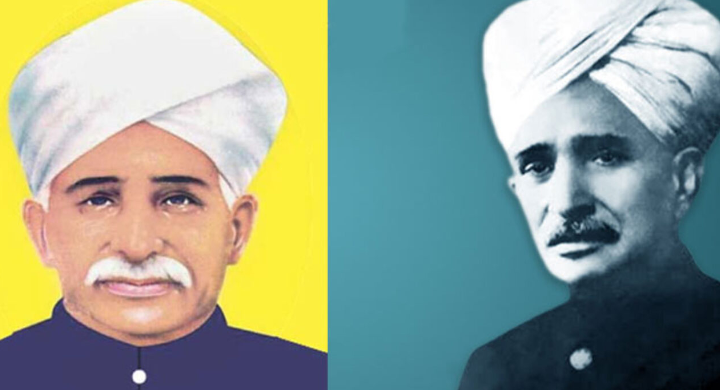
Brief: The primary focus of Sir Chhotu Ram’s philosophy and visionary thinking in pre-independence Punjab was to empower rural farmers, agricultural labourers, women, and underprivileged sections of society. His objective was to improve their social, educational, and economic conditions, thereby enhancing agricultural sustainability and making it self-reliant. He aimed to create an educated rural society free from the exploitation, debt, and oppression of moneylenders. On one hand, he emphasised stable and sustainable development through agricultural reforms and rural industries. On the other hand, he believed in the importance of social harmony, cohesion, brotherhood, scientific thinking, and secularism as essential foundations for sustainable development. Consequently, he opposed communal and divisive policies, criticised the partition of India based on the two-nation theory—an idea that categorised the nation as a “Hindu nation” and a “Muslim nation”—and promoted unity among Hindus, Muslims, and Sikhs. This is why the Muslims of United Punjab regarded Sir Chhotu Ram as the “Prince of their Hearts” and the “Uncrowned King.” On October 23, 1942, at the Kisan Mahasabha conference in Lyallpur (Pakistan), Chaudhary Habibulla Khan passed a resolution to confer the title of Rehbar-e-Azam, or Great Leader, on Sir Chhotu Ram. This Recognition is considered one of the highest honours bestowed by the public. As a result, Muslims in the United Punjab hailed him as a great leader, often comparing him to Quaid-e-Azam Muhammad Ali Jinnah. Today, his thoughts, philosophy, and vision regarding rural life remain relevant.
Expansion:
The following are Sir Chhotu Ram’s primary contributions to enhancing the social and economic conditions of farmers and promoting sustainable development:
A. Mobilizing the Public through Awareness: Sir Chhotu Ram enacted numerous policies, schemes, and laws to improve the social and economic conditions of farmers. He worked to curb the exploitative practices of feudal lords, moneylenders, and the British imperial government, as well as the oppressive behaviour of British officials. As an excellent writer and journalist, he utilised platforms like the weekly newspaper Jat Gazette (Rohtak) and The Tribune (Lahore) to convey his views, raise awareness, and mobilise the public.
B. Infrastructure for Sustainable Development: To promote agriculture and provide the necessary infrastructure, he signed the Bhakra Dam project on the Sutlej River just hours before his death on January 9, 1945. This is why he is often referred to as “the Father of Bhakra Dam.” The purpose of the Bhakra Dam was to transform vast, barren lands into fertile fields. Today, this project is a lifeline for farmers in Punjab, Haryana, and Rajasthan, supplying electricity to Punjab, Haryana, Himachal Pradesh, Chandigarh, and Delhi.
C. Construction of Schemes, Canals, and New Seed Varieties: Sir Chhotu Ram displayed a visionary outlook with his goal of enhancing agriculture through improved irrigation, seed production, and veterinary services. Inspired by his work, the esteemed agricultural scientist Dr. Ramdhan Singh, associated with the College of Agriculture and the Institute of Agriculture (now in Pakistan), developed new varieties of wheat (C-306 and D-518), basmati rice (C-370), as well as other crops like barley, pulses, and sugarcane.
While Dr. M.S. Swaminathan is widely recognised as the father of the Green Revolution in India ,and Norman Ernest Borlaug as the father of the Green Revolution globally, it is important to note that Dr. Ramdhan Singh was a pioneer , the original architect ,and the Father of the Green Revolution in the United Punjab as early as the 1930s. Unfortunately, This significant contribution has often been overlooked by scholars and agronomists. Nevertheless, his advancements played a crucial role in the overall development of the Green Revolution.
The vision of Sir Chhotu Ram, combined with Dr. Ramdhan Singh’s agricultural innovations have inspired agronomists worldwide, including Nobel Prize-winning agronomist Norman Ernest Borlaug and the Government of India. Research on new seed varieties continues to thrive, driven by agronomists in agricultural universities and institutions across India.
D. Enactment of Laws to Liberate Farmers: The Golden Laws of Sir Chhotu Ram: As Minister of Development and Revenue in the Unionist Party government in Punjab, Sir Chhotu Ram enacted several laws designed to liberate farmers. Drawing on his expertise in the English language and legal acumen, he drafted these laws meticulously, ensuring there were no linguistic or legal errors. These laws are often referred to as the “Golden Laws of Sir Chhotu Ram.”
These laws include:
1. The Punjab Restitution of Mortgaged Land Act, 1938 2. The Punjab Alienation of Land Act, 1938, 3. The Punjab Alienation of Land (Amendment) Act, 1938, 4. The Punjab Debtors Protection Act, 1939 ,5. The Punjab Alienation of Land Act, 1939, 6. The Punjab Agriculture Produce Markets (Amendment) Act, 1939, 7. The Punjab Debtors Protection Act, 1939, 8. The Punjab Relief of Indebtedness (Amendment) Act, 1940, 9. The Punjab Weight and Measure Act 12th 1941,10. The Sugarcane Punjab (Amendment) Act 1942, and 11. Punjab Land Consolidation Act (1936, amended 1940, and 1945).
These contributions remain significant to the agricultural and social landscape of India today.
Among the significant laws regarding farmer welfare, the Punjab Relief of Indebtedness (Amendment) Act of 1940 and the Mortgaged Lands Restitution Act of 1938 stand out. In 1938, the total population of the United Punjab was approximately 28.49 million, with a religious composition of 57% Muslims, 28% Hindus, 13% Sikhs, and 2% Christians. Of this population, around 23 million (or 90%) were farmers, and a staggering 80% of them were in debt. Under the Debt Waiver Act that year, loans for 365,000 farmers were waived. Additionally, the Land Mortgage Return Act led to the return of 835,000 acres of land to farmers. This information is not an exaggeration; it is a factual account. The farmers of Punjab and Haryana owe their agricultural land largely to Sir Chhotu Ram (Times of India, November 25, 2024).
Sir Chhotu Ram’s loan waiver schemes were executed by both central and some provincial governments. At the national level, the VP Singh government initiated a loan waiver of ₹10,000 crore for farmers in 1990. Eighteen years later, the Congress-led UPA government, under Prime Minister Manmohan Singh, announced a loan waiver of ₹600 billion in 2008, benefiting 30 million small and marginal farmers. During the financial year 2008-2009, the total amount of loan waivers increased by 20% to ₹716 billion, providing debt relief to 3.6 million farmers in Telangana and 4.9 million farmers in Andhra Pradesh. In 2017, the governments of Uttar Pradesh, Maharashtra, Punjab, and Karnataka collectively waived farmers’ loans amounting to $40-50 billion.
In the 2014 elections, Narendra Modi, then the star campaigner for the Bharatiya Janata Party (BJP), held 437 public meetings. In 219 of these meetings, he promised to implement the Swaminathan Report, provide farmers with a minimum support price (MSP) of C2 + 50% for their crops, and waive their loans. The BJP’s 2014 manifesto also pledged to provide farmers with one and a half times the cost of their produce. However, after assuming power, the government backtracked on this promise, submitting an affidavit to the Supreme Court of India in 2015 stating that it could not fulfill its commitment. Sir Chhotu Ram advocated for remunerative prices for farmers’ produce, which ultimately led to the 2006 Swaminathan Report’s recommendation of a minimum support price (C2 + 50%) for crops. Unfortunately, neither the UPA nor the NDA governments have implemented this formula.
Meanwhile, both theUPA and theNDA governments granted numerous exemptions worth trillions of rupees from income tax, excise, and customs duties to corporations. Additionally, thousands of acres of land were leased to corporations at nominal rates (as low as one rupee) or even free of charge. Simultaneously, substantial rebates were provided to traders in diamonds, gold, and jewellery.
In summary, Ram Nath Thakur, Minister of State for Agriculture and Farmers Welfare, reported in a written response to the Lok Sabha that as of March 31, 2024, 18.74 crore farmers (50.2% of all farmers) were burdened with agricultural debt. According to the Ministry of Finance, the total agricultural debt as of March 31, 2025, stood at ₹28.50 lakh crore (₹28,50,779 crore). Additionally, as of March 31, 2024, the total outstanding debt of farmers in Punjab, Haryana, Himachal Pradesh, and Chandigarh exceeded ₹2.20 lakh crore.
Many believe that to improve the condition of farmers and agricultural labourers, all outstanding loans should be waived at the national level. Farmers argue that if the central government can waive ₹16 lakh crore (16.35 trillion rupees) of non-performing assets (NPAs) for corporations between 2015 and March 2025, the same should be possible for farmers. The farmers are pursuing debt waivers and the Minimum Support Price (MSP) based on the C2+50% formula recommended by the Swaminathan committee in its 2006 report and promised by Narendra Modi in the 2014 Lok Sabha election public meetings.
E. Rural industrialisation and empowerment are critical areas of focus: After developing agriculture, significant steps were taken toward rural industrialisation, aimed at creating small-scale and cottage industries in rural areas to provide sustainable employment. For this purpose, The Punjab Finance Board was established. Subsequently, a laundry and cleaning industry was set up in Panipat, a hosiery industry in Ludhiana, a textile mill in Hisar, and a wool spinning mill in Kullu. This vision of Sir Chhotu Ram runs contrary to the corporatization policies adopted by the Government of India post-1991, which have led to widening income inequality. While Industrialisation has increased in the private sector, employment opportunities have dwindled. By March 2026, approximately 78 million youth aged 15 to 29 are expected to be unemployed.
F. A Glorious Constitutional Revolution: A Visionary Leader: Sir Chhotu Ram was a visionary leader who believed that true gender equality could only be achieved by involving women in the law-making process. This conviction led him, 83 years ago in 1943, to enact a law reserving 50% of seats for women in Panchayati Raj institutions and 20% of seats in the Legislative Assembly. Unfortunately, following the sudden death of the great leader Deenbandhu Sir Chhotu Ram on January 9, 1945, this Act could not be implemented and was ultimately shelved. Nevertheless, his vision continues to influence women’s empowerment through Panchayati Raj Institutions (PRIs).
Regarding Gram Panchayats, Article 40 of the Directive Principles of State Policy (Chapter 4) of the Indian Constitution mandates the establishment of Gram Panchayats by the State. On October 2, 1959, The first Prime Minister of India, Jawaharlal Nehru, laid the foundation stone of Panchayati Raj in Bagdari village, Nagaur district, Rajasthan, coinciding with the birthday of Mahatma Gandhi, the Father of the Nation. Following this significant event, Panchayati Raj was established in various states across India.
The 73rd Constitutional Amendment Act (1992) introduced a 33% reservation for women in Panchayati Raj institutions, while The 74th Constitutional Amendment Act (1992) provided the same reservation for women in urban local self-government institutions. As a result, various states enacted Panchayati Raj Acts based on the 73rd Amendment. On August 27, 2009, The Congress-led UPA government under Dr. Manmohan Singh decided to amend Article 243D of the Constitution to ensure 50% reservation for women in Panchayati Raj institutions.
As a consequence,21 states in India now reserve 50% of seats in Panchayati Raj institutions for women. These states include Andhra Pradesh, Assam, Bihar, Chhattisgarh, Gujarat, Himachal Pradesh, Haryana, Jharkhand, Karnataka, Kerala, Madhya Pradesh, Maharashtra, Odisha, Punjab, Rajasthan, Sikkim, Telangana, Tamil Nadu, Tripura, Uttarakhand, and West Bengal. This remarkable achievement represents a peaceful constitutional revolution to empower women, initiated by Sir Chhotu Ram.
The 106th Constitutional Amendment Act, 2023, also known as the Nari Shakti Vandan Act, amends the Constitution of India to reserve 33% of seats for women in the Lok Sabha, State Legislative Assemblies, and the Delhi Legislative Assembly. This initiative aims to enhance women’s political representation and will be implemented following the next census and the first delimitation. It marks a significant reform to empower women, originally advocated by Sir Chhotu Ram.
G. Liberating the Marginalized Sections of Society: For sustainable development in rural areas, numerous initiatives have been undertaken, benefiting not only farmers, but also various marginalised communities. Notably, Sir Chhotu Ram championed the abolition of the wheel tax (₹5 per year per wheel) on potters in Rajputana and the Katran tax on barbers. He also focused on liberating the Nayak and Bawari castes (sheep and goat herders) in Marwara from the Katran tax on July 26, 1941, and worked for the liberation of weavers (Meghwal caste) across Shekhawati, Marwar, Jaipur, Pali, and Balotra from the weaver tax, leading a four-year movement from 1937 to 1941.
H. Education: The Foundation of Sustainable Development: Sir Chhotu Ram was a prominent social reformer and educationist in undivided Punjab. He recognised that education was essential for rural empowerment, enabling villagers to understand their rights and societal roles. He focused on empowering farmers and rural communities by establishing the Jat Education Committee in 1913, which laid the groundwork for the Anglo-Sanskrit Jat High School and the Jat Heroes Memorial College in Rohtak. He opened schools, implemented the Punjab Primary Education Act, and during his tenure as a minister from 1924 to 1926, and again from 1937 to 1945, He ensured special fee concessions for students from agricultural families. As Punjab’s Revenue Minister, he allocated a significant portion of his salary to support meritorious students from economically disadvantaged rural families through scholarships and financial assistance. He also established the Farmers Welfare Fund, ensuring support regardless of religion or caste. This commitment extended to notable contributions, such as financial assistance to Abdus Salam, Pakistan’s first Nobel laureate. Additionally, he emphasised women’s education by providing unprecedented support for primary schools. After independence, various governments continued to make significant contributions to the field of education.
I. Vision of Social Reforms: untouchability as a grave injustice and an evil: As an Arya Samajist and social reformer, Sir Chhotu Ram regarded untouchability as a grave injustice, and an evil. On July 1, 1940, he enacted the Anti-Untouchability Act and mandated its strict enforcement. He ordered government employees to refrain from imposing forced labour on individuals from Scheduled Castes and Backward Classes, declaring this practice a crime. He prohibited the use of the term “Dalit” to describe Scheduled castes, and ordered that public ,wells be accessible to all castes.
On April 13, 1938, overcoming numerous challenges, He facilitated the allotment of 454,625 acres of cultivable government land to Scheduled Castes, granting them land ownership at an interest-free rate of Rs. 3 per acre for a 12-year period, payable in annual instalments of four Annas (approximately 25 Paise today). This land distribution occurred in the Multan district of Pakistan, marking a historic event celebrated on April 13 (Baisakhi). On that day, thousands from various castes participated in a procession, with Sir Chhotu Ram leading the way on an elephant. During this event, Sir Chhotu Ram was honoured with the title of “Deenbandhu,” an accolade regarded as more significant than any awarded by universities or governments.
In summary, Sir Chhotu Ram’s ideology includes a range of principles and visions that are significant for contemporary society. His commitment to secularism promotes unity among various religious communities, including Hindus, Muslims, and Sikhs. He advocated for scientific thinking and championed social and educational reforms aimed at uplifting Scheduled Castes. Additionally, Sir Chhotu Ram supported women’s reservation in Panchayati Raj institutions and state assemblies, emphasising the critical role of political empowerment through education. His efforts to formulate and implement farmer-friendly laws and loan waivers laid a strong foundation for sustainable development. The initiatives he championed remain relevant to modern governance in the 21st century, reflecting his enduring influence.
The End