THE ASIAN INDEPENDENT UK

Dr. Ramjilal, Social Scientist,
Former Principal, Dyal Singh College,
Karnal (Haryana, India).
Summary:
The Jat community is primarily an agricultural group that predominantly resides in the regions of Punjab (20-35%), Haryana (20-25%), Rajasthan (9%), rural areas of Delhi (5%), Uttar Pradesh (1.2%), as well as Kashmir, Himachal Pradesh, Uttarakhand, Madhya Pradesh, and Chhattisgarh, among other states. In Pakistan, the population of Muslim Jats (Muley Jats) is estimated to be around 40 million, constituting approximately 20-25% of the country’s total population. In Pakistan, Muslim Jats are mainly concentrated in the Punjab and Sindh regions. Religiously, the Jats predominantly follow Hinduism (Hindu Jats), Islam (Muslim Jats), and Sikhism (Jat Sikhs). Among the Jats from all three religions, there have historically been kings, Maharajas, and Nawabs, as well as landowners, poor farmers, and laborers.
Expansion:
A study of India’s history reveals that the Jats have historically been a ruling and warrior class. Among Hindu Jat kings, Maharaja Suraj Mal (February 13, 1707 – December 25, 1763) is a prominent figure in Indian history, revered as the “Plato of the Jat people” and acknowledged as a modern ruler. We believe that the “Jat Odyssey” showcases visionary leaders and notable real-life heroes—like the sun—shining brightly among the galaxy of supreme patriots. The rulers of the Rohilla and Rampur kingdoms were Muslim Jat kings, while Maharaja Ranjit Singh is recognised as the most powerful ruler of the Sikh religion. The Jat soldiers played a crucial role in the security and expansion of these princely states.
Martial Race Theory: A Policy of Divide and Rule
The British East India Company implemented a divide-and-rule policy, exploiting religious, caste, and regional identities to recruit armies that would pit one caste against another, one religious group against another, and people from different regions against each other.
The first militia regiment was established on July 10, 1795, by the British East India Company in Calcutta to protect its garrison and extend its influence. Subsequently, more branches of This regiment was formed, including the first battalion—the 22nd Bengal Battalion—in 1803, followed by a second battalion in 1817 and a third in 1823. British military officers considered educated or uneducated urban youth to be cowardly and unfit for military service, preferring instead to recruit rural, uneducated, and able-bodied young men, whom they deemed ideal for military duty. Consequently, they began to focus on recruiting young men from the Jat community in Uttar Pradesh, Rajasthan, and Haryana, considering them ‘brave and skilled’ in warfare.
Based on this policy of divide and rule, the British East India Company prioritised the recruitment of Jats from Western Uttar Pradesh, Rajasthan, and Haryana into military service, also favouring Rajputs and Gurkhas. British officials believed this strategy would weaken existing loyalties and cultivate new ones towards the British Company. To further deepen this division, they categorised castes into a hierarchical system of “Martial Race” (Marshal Quoms) and “Non-Martial Race” (Non-Marshall Quoms). This effectively rendered a portion of society eligible for military service while excluding the majority. Such a structure was designed to suppress regional rebellions, including peasant movements.
The popular uprising of 1857 illustrated that while the British East India Company’s Martial Race army imposed havoc on the populace, armies from the rulers of Jind, Maharaja of Patiala, and the Nawabs of Karnal and Kunjpura were tasked with suppressing the people of the Karnal district. Some Rajput kings supported the British East India Company, while Nawabs from Jhajjar and Farrukhnagar were executed for leading the revolution against it. In a similar vein, the King of Jind (a Jat) sent an army to quash the people’s revolution in Karnal district, while Raja Nahar Singh of Ballabhgarh was hanged on January 9, 1858, for his rebellion, creating a crisis of loyalty.
As a result, after the 1857 revolt, terms such as “martial race” and “brave community” were used extensively to recruit more Jats into the Indian imperial British army. This increased the enlistment of young men from the Jat community, leading to competition among different clans in villages to join the army. For example, in the villages around Sonipat, a competition for army recruitment emerged between the Dahiya and Malik clans.
Sir Chhotu Ram: A Military Strategist
During the time in question, Farming was the primary occupation of agricultural communities, including the Jats. Due to a lack of irrigation facilities and a complete dependence on rainfall, much cultivable land remained barren and low in fertility. As a result, the economic conditions of farmers were very poor, making it difficult for them to support their families.
In 1901, the total agricultural debt in Punjab was ₹100 crore, which increased to ₹200 crore by 1921. Consequently, by 1923, 80 percent of Punjab’s farmers were in debt. This agricultural debt led to 4.35 million acres of land being in the possession of moneylenders. The situation was particularly dire in the Rohtak-Jat region, where 53,590 acres of land were sold for debt, and 149,823 acres were mortgaged to moneylenders for ₹480,567 (Dr. Anil Dalal, Administrative Reformer: Chaudhary Chhotu Ram, Earth Vision Publications, Gurugram, 2017, p. 85). This meant many Jats in their stronghold did not own land. Farmers were exploited due to excessively high interest rates charged by moneylenders, which ranged from 18% to 36%. Falling into a debt trap, farmers struggled to repay their loans, leading to the confiscation of their land, livestock, and sources of income. This created a cycle of debt that burdened families across generations.
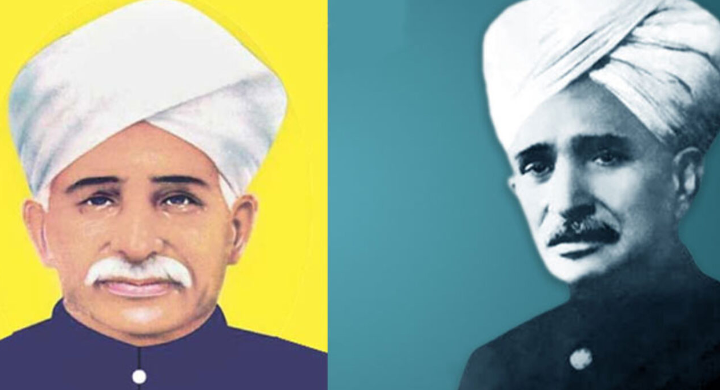
The dire economic conditions and the burdens of debt deeply influenced the thinking of Deenbandhu Sir Chhotu Ram, prompting him to consider ways in which farmers could overcome their predicament. Although he did not hold any official military command, he devised a comprehensive military strategy to organise agricultural communities and make them politically and economically powerful. His strategy emphasised the role of farmers as a heroic class , and recognised the significance of the tillers.
Sir Chhotu Ram did not harbour personal animosities but viewed the system of ‘compound interest’ as a grave enemy of farmers. He enacted land reform laws and debt relief legislation in United Punjab to dismantle the exploitative power of moneylenders and usurers for the welfare of farmers. Through his agricultural initiatives and reforms, he emerged as a unique leader advocating Hindu-Muslim-Sikh unity among agricultural communities from Peshawar to Delhi.
Inspiring farmers with his strategy, he emphasised that they could not achieve social, economic, educational, and political development merely by relying on agriculture. He urged them to cultivate self-confidence, courage, and self-respect while also encouraging engagement in occupations beyond farming, including military service, to strengthen their economic standing.
To mobilise support, Sir Chhotu Ram published articles, poems, speeches, and hymns in the Jat Gazette, The Tribune (Lahore), and other newspapers to motivate young people from farming communities to join the military. Additionally, he collaborated with the Arya Samaj, Jat organisations, the Zamindara League, the National Unionist Party, and other forums to inspire enlistment.
In short, he transcended narrow prejudices linked to caste and religion, with a singular objective: the economic empowerment of farmers from all agricultural communities, regardless of their background.
To rally peasants, Sir Chhotu Ram launched an extensive campaign from Peshawar to Gurgaon, grounded in the National Unionist Party’s commitment to Hindu-Muslim-Sikh unity.
World War I (1914–1918) :
During both World Wars, Sir Chhotu Ram mobilised young men from peasant communities to join the army. Between August 4, 1914, and November 30, 1918, 79,932 soldiers were recruited from the Haryana region. Here’s the district-wise breakdown:
1. Hisar District: 15,461
2. Rohtak District: 22,144
3. Gurgaon District: 18,867
4. Karnal District: 6,553
5. Ambala District: 8,341
6. Princely States: 8,566
Total: 79,932
In addition to soldiers, non-combatant positions (including bakers, blacksmiths, butchers, carpenters, cooks, cobblers, sweepers, tailors, washer men, etc.) were also filled.
During World War I, the British imperial government solicited donations from the Indian public, both voluntarily and forcibly. The Haryana region contributed ₹8,433,666 to the war fund, with the Karnal district alone contributing ₹2,445,226. Prominent leaders from Haryana who made voluntary donations included Choudhary Lalchand (Rohtak), Sir Chhotu Ram (Rohtak), Choudhary Chhaju Ram (Alakhpura – ₹140,000), Choudhary Sher Singh (Hansi – ₹135,000), and the other Key Figures are- Pandit Prabhu Dyal (Gurgaon), Rao Balveer Singh (Gurgaon), Choudhary Lajpat Rai (Hisar), Seth Sukhlal (Hisar) Choudhary Bansgopal (Hisar), and Pandit Janaki Prasad (Hisar).
World War II:
During World War II, Sir Chhotu Ram actively supported the war efforts by encouraging the youth to join the Army and by raising funds for the cause. Despite facing strong criticism from Indian nationalists and urban residents, he remained steadfast in his belief that supporting the British war efforts would ultimately benefit Indian rural communities and farmers. While he backed the war effort, he also prioritised the interests of farmers, advocating for fair prices and compensation.
An important true story illustrates his dedication. In 1942, during a meeting convened by the Viceroy of India, Lord Wavell, Sir Chhotu Ram warned that farmers would not sell wheat for less than ₹10 per maund when Lord Wavell proposed a price of only ₹6 per maund. The Viceroy remained firm in his stance, leading Sir Chhotu Ram to leave the meeting with a warning that if the price fell below ₹10, the farmers of Punjab would set fire to their standing wheat crops. Alarmed, Lord Wavell sought the counsel of Sir Sikandar Hayat Khan, the Prime Minister of Punjab, who advised that Sir Chhotu Ram was very stubborn and that it would be better to bring him back respectfully and reach a compromise.
Ultimately, Viceroy Lord Wavell had to call Sir Chhotu Ram back, and he agreed to pay ₹10 per maund. However, Sir Chhotu Ram stated that the farmers were now unwilling to sell for anything less than ₹11 per maund. In the end, Lord Wavell had no choice but to relent and offer ₹11 per maund. For his unwavering defence of farmers’ interests during World War II, he became known as “Khuda” (God) of Muslim farmers, “Chhote Ram” of Jat farmers, and “Jat Devta” of non-Jat farmers.
A couplet from Allama Iqbal’s The poem “Tulu-e-Islam” (The Rise of Islam) perfectly captures the spirit of this great leader:
“For thousands of years, The narcissus weeps over its lack of light,
With great difficulty, a lover is born in the garden.”
(हज़ारों साल नरगिस अपनी बे-नूरी पे रोती है,
बड़ी मुश्किल से होता है चमन में दीदावर पैदा.)
After Independence (1947):
The sacrifices made by Jat soldiers and officers during the Indo-Pak wars (Jammu & Kashmir in 1948, 1965, 1971, and Kargil War in 1999) and the Indo-China war in 1962 are significant chapters in Indian history. The Jat Regiment has also played a vital role in maintaining internal peace in terrorism-affected areas of India and in United Nations peacekeeping operations globally.
Over its 200-year service history, the Jat Regiment has achieved notable successes, receiving recognition from both the British Imperial Government and the Government of India in the post-independence era. The Jat Regiment, which is an infantry regiment of the Indian Army, has been awarded 19 Battle Honours from 1839 to 1947. In the Post-independence period, it has earned five additional Battle Honours, including two Ashoka Chakras, one Victoria Cross, two George Crosses, eleven Kirti Chakras, eight Mahavir Chakras, three Military Medals, fifty-three Shaurya Chakras, thirty-eight Vir Chakras, and three hundred forty-three Sena Medals.
It is essential to note that the Jat Regiment comprises 21 regular battalions, four National Rifles battalions, and two Territorial Army battalions. Soldiers from all religions, Castes, and regions are recruited into these battalions. Currently, there is no regiment based specifically on caste, nor should there be. The motto of the Jat Regiment is “Jat Balwan, Jai Bhagwan”—The Jat is Powerful, Victory to the Lord. Nonetheless, estimates suggest that the Jat Regiment has a majority of Indian Jats. Even today, the Jat community views military service not merely as a job but as a matter of honor and prestige..
Sir Chhotu RaCastesm’s military strategy continues to inspire the youth of Haryana. The Ministry of Defence, Government of India, informed the Parliament on 20 November 2019 that there were a total of 1,341,944 soldiers, junior commissioned officers (JCOs), airmen, and sailors in the Indian Armed Forces. In Haryana, there were 7,294 JCOs and 58,897 other ranks in the Army, 727 officers and 6,164 sailors in the Navy, and 1,040 officers and 13,524 airmen in the Air Force. Despite Haryana’s population being only 2.5% of India’s total population, its representation in The military is significantly higher than its population ratio.
Social, Economic, and Political Impacts:
The Haryanvi soldiers, many of whom served in the British Indian Army—particularly in units such as the Jat Regiment, the 13th Frontier Force Rifles, and various Rajput regiments—fought for the British in at least 15 to 20 different Countries, and territories during both World Wars, as well as in the campaigns of the 19th and early 20th centuries. It is estimated that about 180,000 residents of the Haryana region made the ultimate sacrifice in various wars over two centuries. While Haryanvi Youth initially joined the British Army as soldiers, this had profound social, economic, and political impacts on Haryanvi society.
Firstly, military service greatly improved the economic conditions of military families, leading to significant lifestyle changes.
Secondly, the soldiers who served abroad during both pre- and post-independence eras had a transformative effect on the thinking of their fellow villagers, who came to respect them greatly. This respect particularly affected farming communities, especially the Jats, and heightened their awareness. Economic and educational empowerment among the Jats led to an increased sense of martial identity ,and a consciousness of public awareness in pursuit of Sir Chhotu Ram’s mission.
As a result,this growing consciousness, political awareness began to flourish. In independent India, Many Jats came to dominate the political landscape in Haryana, Rajasthan, Western Uttar Pradesh, and Punjab. For example, Chaudhary Charan Singh from Western Uttar Pradesh reached high political office, becoming the first farmer Prime Minister. Tau Devi Lal, a Jat from Haryana, served as Deputy Prime Minister in the central governments led by V.P. Singh and Chandrashekhar twice. Jagdeep Dhankhar, a Jat leader from Rajasthan, became the 14th Vice President of India. The pioneering influence behind this political pathway was undoubtedly Sir Chhotu Ram.
In summary, Chhotu Ram’s ability to unite the peasant castes during the First and Second World Wars had a profound impact on United Punjab. The consciousness he fostered, especially among the Jat as well as non-Jat communities, continues to thrive today in various sectors, including the military, education, sports, business, the film industry, and politics. Indeed, he was the most popular farmer leader in the South Asian Sub-continent, and his military strategy remains relevant in the present century as well.
Continue—