SR Darapuri I.P.S.(Retd)
Introduction

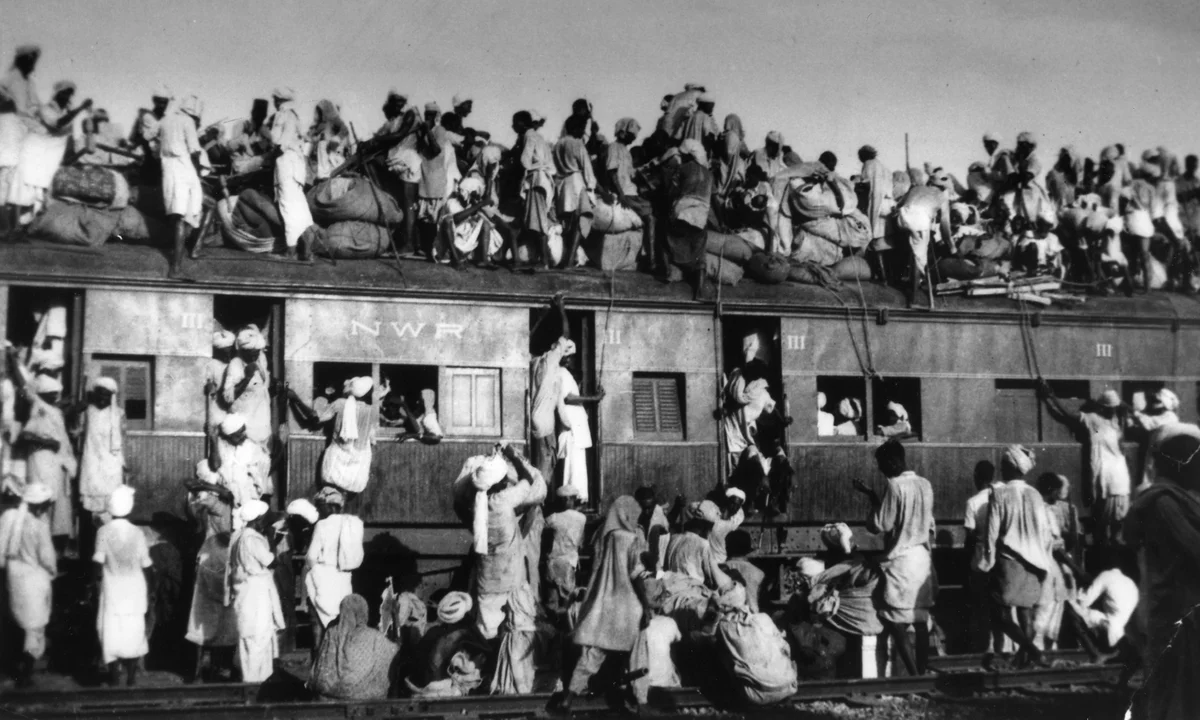
(Asian independent) The Partition of the Indian subcontinent in 1947 remains one of the most traumatic and consequential events in modern South Asian history. The division of British India into the independent states of India and Pakistan triggered one of the largest forced migrations in human history and resulted in widespread communal violence. Conventional historiography has largely interpreted Partition through the prism of Hindu–Muslim political conflict, focusing on the rivalry between leaders such as Jawaharlal Nehru and Muhammad Ali Jinnah and the policies of the British colonial state.
However, such interpretations often neglect a crucial dimension of Indian society: the entrenched caste hierarchy and the political struggles of Dalits and other marginalized communities. An Ambedkarite historiographical perspective—grounded in the ideas of B. R. Ambedkar—offers an alternative framework for understanding Partition. Rather than viewing the event solely as a clash between religious nationalisms, Ambedkarite analysis situates Partition within the broader crisis of social democracy, minority representation, and caste domination in colonial India.
Ambedkar himself was among the few thinkers of the time who examined the demand for Pakistan with intellectual rigor. His book Pakistan or the Partition of India remains one of the most systematic analyses of the issue written before independence. By situating Partition within the wider structure of Indian society, Ambedkar highlighted the limitations of nationalist narratives that assumed the existence of a unified Indian nation. His perspective reveals that the crisis of 1947 was not merely the product of communal hostility but also the consequence of unresolved questions about social hierarchy, minority rights, and democratic representation.
This essay examines the Partition of India through an Ambedkarite historiographical lens. It argues that the dominant narratives of Partition—both nationalist and colonial—have marginalized the role of caste and Dalit political thought. By revisiting Ambedkar’s insights, we can reinterpret Partition as a deeper crisis of social democracy and representation in a hierarchical society.
The Limits of Conventional Partition Historiography
Most historical accounts of Partition emphasize the political rivalry between the Indian National Congress and the All-India Muslim League. These narratives focus on high politics: negotiations between leaders, constitutional proposals, and the final decision of the British government to transfer power in 1947.
In such accounts, Partition appears primarily as the result of three factors:t he rise of Muslim separatism under the leadership of Jinnah, the refusal of Congress leaders to accept a decentralized political structure and the hurried withdrawal of British colonial rule.
While these explanations highlight important political developments, they often remain elite-centered narratives. They treat the subcontinent as a battlefield of competing nationalisms while overlooking the internal inequalities that structured Indian society.
Ambedkar challenged the assumption that India constituted a unified nation. In Annihilation of Caste he famously argued that Indian society was fundamentally divided by caste hierarchies. According to him, the caste system created a “graded inequality” in which each group considered itself superior to those below it. Such a society lacked the moral foundation necessary for genuine national unity.
From an Ambedkarite perspective, therefore, the conventional historiography of Partition suffers from a major limitation: it assumes the existence of cohesive religious communities—Hindus and Muslims—while ignoring the deep internal divisions within these communities, particularly caste.
Ambedkar’s Analysis of the Pakistan Demand
Ambedkar approached the question of Pakistan with a rare combination of sociological insight and political realism. In Pakistan or the Partition of India he examined the historical roots of Hindu–Muslim conflict and analyzed the arguments for and against the creation of a separate Muslim state.
Unlike many Congress leaders who dismissed the Pakistan demand as irrational or temporary, Ambedkar treated it as a serious political problem. He argued that the conflict between Hindus and Muslims had been intensified by competing nationalisms and by fears of political domination.
Ambedkar acknowledged that Muslims feared becoming a permanent minority in a democratic India dominated by a Hindu majority. While he did not necessarily endorse Partition as the ideal solution, he recognized that the demand reflected genuine concerns about political representation.
This analysis differed sharply from the Congress narrative, which portrayed the demand for Pakistan as the product of British manipulation or communal propaganda. Ambedkar insisted that the issue must be examined in structural terms rather than dismissed as an emotional aberration.
More importantly, Ambedkar’s analysis implicitly raised a question that nationalist leaders often avoided: if minorities feared domination by the majority, what mechanisms could guarantee their political security?
The Question of Minority Representation
One of the central themes in Ambedkar’s political thought was the protection of minority rights. For him, democracy could not function merely as majority rule. Instead, it required institutional safeguards to prevent the domination of minorities.
Ambedkar’s own political struggles illustrate this concern. As the leader of the Depressed Classes, he demanded separate electorates for Dalits in order to ensure independent political representation. This demand led to the historic conflict with Mahatma Gandhi during the negotiations that produced the Poona Pact of 1932.
The debate over separate electorates revealed a fundamental tension within Indian nationalism. While Congress leaders emphasized national unity, Ambedkar argued that unity could not be achieved by suppressing the political autonomy of marginalized groups.
The same tension was visible in the negotiations with the Muslim League. Muslims demanded constitutional safeguards that would protect them from majority domination. When these demands were not satisfactorily resolved, the demand for Pakistan gained increasing support.
From an Ambedkarite perspective, Partition can thus be interpreted as a failure of constitutional negotiations over minority representation.
Caste and the Myth of Hindu Unity
Nationalist narratives often describe the struggle for independence as a conflict between Hindus and Muslims. However, Ambedkar repeatedly emphasized that Hindu society itself was deeply divided by caste hierarchies.
Upper-caste leaders frequently claimed to represent the entire Hindu community. Yet Dalits and other marginalized groups were often excluded from political leadership and social power. For Ambedkar, the idea of a unified Hindu political identity was therefore deeply problematic.
He argued that caste prevented the emergence of genuine fraternity within Hindu society. Without fraternity, democracy would remain fragile and incomplete.
This critique has important implications for the historiography of Partition. If Hindu society itself was fragmented by caste divisions, then the narrative of a united Hindu nationalism confronting Muslim separatism becomes overly simplistic.
Instead, Partition must be understood within a broader context in which multiple marginalized groups struggled for recognition and political rights.
Dalits and the Experience of Partition
Another limitation of mainstream Partition historiography is its neglect of Dalit experiences during the violence and migration of 1947.
Most historical narratives focus on the suffering of Hindus, Muslims, and Sikhs as religious communities. However, Dalits often occupied a complex and precarious position within this landscape of violence.
In several regions, Dalits were marginalized within both Hindu and Muslim communities. Their social position sometimes left them excluded from the protection networks that other groups relied upon during communal conflict.
Moreover, the rehabilitation policies of the post-independence state often reproduced caste hierarchies. Access to land, employment, and political influence remained unevenly distributed.
An Ambedkarite historiography therefore calls for a deeper exploration of how caste shaped the experiences of refugees, migrants, and survivors during Partition.
Partition as a Crisis of Social Democracy
Ambedkar believed that political democracy could survive only if it was supported by social democracy. By social democracy he meant a society based on liberty, equality, and fraternity.
In one of his most famous warnings delivered to the Constituent Assembly in 1949, he argued that India was entering a life of contradictions: political equality would coexist with deep social and economic inequality.
From this perspective, Partition can be interpreted as part of a broader crisis of social democracy in South Asia. The subcontinent was attempting to establish democratic institutions in societies marked by entrenched hierarchies and mutual distrust.
Communal conflict, caste discrimination, and economic inequality all undermined the possibility of building a shared national identity.
Ambedkar’s insights suggest that the tragedy of Partition cannot be explained solely by the ambitions of political leaders or the mistakes of colonial administrators. It must also be understood as the consequence of deeper social structures that limited the development of democratic solidarity.
Reinterpreting Partition Through an Ambedkarite Lens
An Ambedkarite historiographical framework leads to several important reinterpretations of Partition.
First, it challenges the assumption that the crisis of 1947 was purely a religious conflict. Instead, it highlights the intersection of religion, caste, and political representation.
Second, it emphasizes the importance of minority rights in democratic systems. The failure to create effective safeguards for minorities contributed to the polarization that eventually produced Partition.
Third, it foregrounds the experiences and perspectives of marginalized communities whose voices have often been absent from mainstream historical narratives.
Finally, it situates Partition within the broader struggle to transform a hierarchical society into a democratic one.
Conclusion
The Partition of India remains a defining event in the history of South Asia. While conventional historiography has interpreted it primarily as the outcome of communal nationalism and colonial mismanagement, an Ambedkarite perspective reveals a deeper and more complex story.
Through his writings and political struggles, B. R. Ambedkar offered a powerful critique of the social structures that shaped Indian politics. His analysis of the Pakistan demand and his broader reflections on caste and democracy provide essential tools for rethinking the origins and consequences of Partition.
By incorporating caste and Dalit political thought into the historiography of Partition, scholars can move beyond elite-centered narratives and develop a more inclusive understanding of this transformative event.
Ultimately, the Ambedkarite lens reminds us that the tragedy of Partition was not only the division of territory but also the failure to build a democratic society grounded in social equality and fraternity. The challenge that Ambedkar identified—reconciling political democracy with social justice—remains one of the central tasks of South Asian societies today.