THE ASIAN INDEPENDENT UK
Special Article on Haryana Day: November 1, 2025
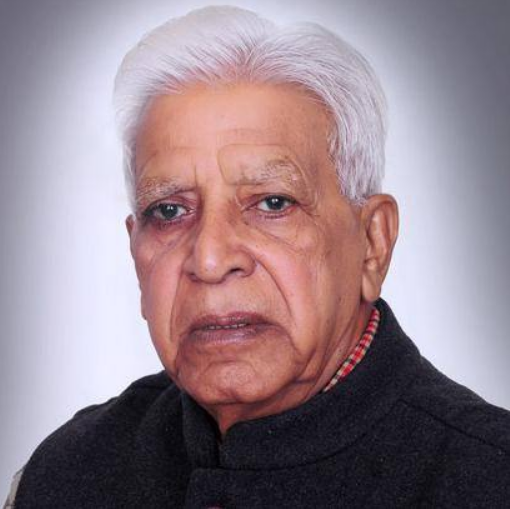
Dr. RamjiLal, Social Scientist and Former Principal,
Dayal Singh College, Karnal (Haryana, India)
On November 1, 1966, the reorganisation of Punjab established the states of Punjab, Haryana, and Himachal Pradesh. For nearly six decades, the people of Haryana have been vocal in their demand for a separate capital and a distinct High Court. It is time to put an end to this prolonged neglect.
A Separate Capital for Haryana
Chandigarh was declared the capital of Punjab in 1950. Following the bifurcation of Punjab in 1966, Shimla became the capital of Himachal Pradesh, while Chandigarh remains a shared capital for Haryana and Punjab. This outdated arrangement must be re-evaluated. Numerous states, including Chhattisgarh, Himachal Pradesh, Jharkhand, and others, enjoy their own capitals; Haryana deserves no less.
The Mentality of Haryana and Punjab Leaders
Leaders from Haryana and Punjab continually assert their dominance over Chandigarh, prioritising regional interests and ‘Vote bank politics’ over the welfare of the people they represent. This divisive mindset illustrates a glaring inconsistency among leaders from the same political parties at the Centre and within the states, effectively stalling any progress toward a solution. We cannot accept this status quo any longer.
A Centralised Capital: The Path Forward
Establishing a separate capital for Haryana along the GT Road is not just desirable; it is essential for effective governance. A central capital would lead to greater administrative efficiency, equitable resource distribution for economic development, the creation of a distinct cultural identity, and substantial savings in time and money for the public. It is unacceptable for citizens to travel 325 kilometres from Rewari to Chandigarh only to find their representatives absent, leaving their critical concerns unresolved. Our bureaucratic systems must prioritise the people they serve, not perpetuate indifference.
Separate High Court for Haryana: A Constitutional Obligation
Article 214 of the Constitution of India mandates that each state should possess its own High Court. Smaller states like Chhattisgarh, Himachal Pradesh, and others already have separate High Courts; Haryana should be no different. The shared Punjab and Haryana High Court, a temporary arrangement since 1966, has outlived its relevance. The time for Haryana and Punjab to have separate High Courts is now.
The proposals for a separate High Court: Ignored
The Haryana Assembly passed unanimous resolutions on March 14, 2002, December 15, 2005 and May 4, 2017, for the establishment of a separate High Court in Chandigarh. But whether the NDA or the UPA government was in power at the Centre, the Haryana Assembly’s proposals were not accepted. Former Chief Minister of Haryana Manohar Lal Khattar publicly raised the demand for a separate High Court for Haryana on April 5, 2015. After this, he reiterated this demand on April 17, 2015, and May 26, 2022.
The Punjab and Haryana High Court: An Overburdened System
Manohar Lal exposed the pressing need for a separate High Court, noting that 140,359 of the 279,699 pending cases in the Punjab and Haryana High Court were from Haryana—more than Punjab’s 124,575. Today, as of September 30, 2025, there are 25,666,616 main civil cases and 158,138 main criminal cases pending, totalling a staggering 4,14,754 unresolved cases. With over 1.4 million cases pending in Haryana courts—70% of which have been stagnant for over a year—it is clear that our judicial system is in crisis. These delays affect the lives of 4.5 million Haryana residents ensnared in litigation, and this is simply intolerable.
Main Reasons for the Increase in the Number of Cases:
The increase in the number of cases can be clearly attributed to several pressing factors:
1. The unavailability of defendants and plaintiffs has resulted in a staggering number of pending cases (40,655).
2. The continuous filing of new cases only adds to the overwhelming backlog.
3. The current number of judges is inadequate relative to the population, crippling our judicial system.
4. Judges have adopted a concerning culture of adjournment, frequently pushing cases to further dates and often being on leave, which has resulted in an alarming number of pending cases (84,386).
5. Expedited hearings are only granted for cases of utmost public interest, neglecting many others.
6. Lawyers repeatedly request further dates, exacerbating the issue with a staggering number of pending cases (272,558).
7. Witnesses fail to appear in court on time, further complicating the situation.
8. Collusion between plaintiff and defendant lawyers undermines the integrity of the justice system.
Suggestions to Resolve the Problem:
1. It is imperative that separate High Courts be established for Haryana and Punjab. This action will significantly reduce the number of cases and ensure that the public receives swift and affordable justice. Once a separate High Court for Haryana is created, a dedicated bench must be set up in Gurugram to effectively serve the districts of Gurugram, Faridabad, Rewari, Mahendragarh, Sirsa, Fatehabad, and others.
2. Given the increasing population, we must urgently increase the number of judges in district-level and subordinate courts to facilitate timely decision-making.
3. Strict time limits must be enforced for courts, tribunals, commissions, and revenue department officials to resolve cases without undue delay.
4. If decisions are not rendered within the stipulated timeframe, higher officials must issue show-cause notices to the subordinate officials responsible. Failure to provide a satisfactory response should result in disciplinary action. In a democratic system, public servants must remember that they serve the people; their primary duty is to deliver justice, not to obstruct it.
5. To restore and enhance the reputation of our judicial system, we must prioritise transparency and uphold corruption-free governance. We will not tolerate corruption; strict actions must be taken against corrupt individuals, including the confiscation of their assets. This requires unequivocal commitment and determination from the government, which has been sorely lacking.
In summary, we must take decisive action by forming a state-level organisation to launch an assertive movement for the establishment of a separate capital and a separate High Court for Haryana. Furthermore, we need to galvanise public awareness through print and electronic media to exert pressure on political parties and the central, Haryana, and Punjab state governments to take action.