THE ASIAN INDEPENDENT UK

Bal Ram Sampla
Geopolitics
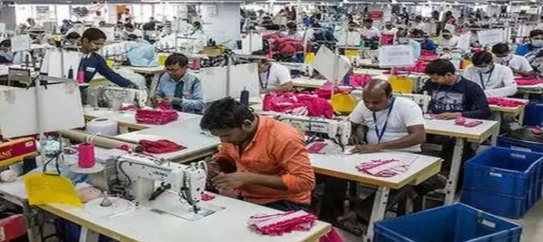
India’s textile industry is experiencing a historic shift. Major international brands like Zara, Marks & Spencer, Primark, Next and other UK and EU retailers are moving their sourcing from Bangladesh to India, bringing an estimated ₹60,000 crore in new investment. This massive influx creates hundreds of thousands of jobs and business opportunities across the country.
For Dalit communities, this represents a rare moment—a chance to claim a fair share of India’s economic growth. But opportunity alone is not enough. Without intentional action, these jobs and business prospects may pass by, benefiting only those who already have connections and capital.
Employment Opportunities in the Textile Sector
The textile industry is expanding rapidly in states like Tamil Nadu, Gujarat, Maharashtra, Karnataka, and Telangana. New factories need workers at every level: machine operators, quality controllers, packers, supervisors, designers, and maintenance staff.
1.What makes this accessible:
Unlike many industries, textile work often doesn’t require advanced degrees. What matters more is skill, reliability, and willingness to learn. Many positions offer on-the-job training.
2.How to access these jobs:
(I)Skill development programs:
Enrol in textile-focused courses at Industrial Training Institutes (ITIs) or through schemes like Pradhan Mantri Kaushal Vikas Yojana (PMKVY). Look specifically for programs in garment making, textile machinery operation, or quality control.
(II) Direct factory applications:
Don’t wait for job postings alone. Visit factory areas in your region and submit applications directly. Bring any certificates from skill training programs.
(III) Use reservation provisions:
If factories are receiving government subsidies or operating in Special Economic Zones, they may have SC/ST hiring requirements. Find out about these provisions when applying.
(IV) Connect with placement agencies: Many skill development programs have placement cells. Use them actively and follow up regularly.
Starting Your Own Garment Business
The ₹60,000 crore investment isn’t just going into large factories. It’s creating a whole ecosystem of smaller opportunities—businesses that supply, service, and support the big manufacturers.
1.Small business opportunities include:
(I) Garment stitching units (even starting with 2-3 tailors)
(Il) Embroidery and embellishment work
(III) Packaging and labelling services
(IV) Button, zipper, and trim supply
(V) Quality checking services
(VI) Ironing and finishing units
(VII) Transportation and logistics for factories
2. Steps to start:
1. Learn the trade:
If you don’t already have garment-making skills, invest time in learning. Excellent opportunity for woman. Dalit women can learn from how Bangladeshi women became empowered due to cottage industry.
Seek out experienced tailors for apprenticeship or attend short-term courses. Quality matters more than speed initially.
2. Start small, think big:
You don’t need a large factory to begin. Many successful garment businesses started with one or two sewing machines operating from home, taking small orders and building reputation.
3. Access finance:
Several schemes exist specifically for SC/ST entrepreneurs:
(I) Stand-Up India Scheme:
Loans between ₹10 lakh to ₹1 crore for SC/ST entrepreneurs
(II)National Scheduled Castes Finance and Development Corporation (NSFDC): Provides loans at concessional rates
(III) State SC/ST Development Corporations:
Each state has its own corporation offering credit
Visit your nearest bank with a simple business plan. Don’t be discouraged by initial rejections—try multiple banks and government schemes.
4. Find your customers:
Start by approaching small garment shops, boutiques, or even larger factories that outsource simple work. Build relationships through reliable delivery and good quality. Word of mouth is powerful in this industry.
5. Form collectives:
Consider joining with other Dalit entrepreneurs to form a cooperative or collective. This gives you more bargaining power with buyers and makes it easier to access larger orders and government schemes.
Overcoming Barriers
Let’s be honest about the challenges. Caste discrimination in hiring and business remains real. You may face rejection, unfair treatment, or denial of opportunities that others receive easily.
1. Strategies to navigate discrimination:
(I) Document everything:
Keep records of applications, interactions, and any instances of clear discrimination. This creates accountability.
(II) Seek allies:
Connect with Dalit rights organizations, progressive unions, and advocacy groups. You don’t have to fight alone.
(III) Know your rights:
Familiarize yourself with SC/ST anti-discrimination laws, reservation policies, and schemes meant for your community. Information is power.
(IV) Build networks:
Connect with other Dalit entrepreneurs and workers in the textile sector. Share information about which factories hire fairly, which banks are more supportive, which training programs deliver results.
Pressure from UK and Europe
British and European companies sourcing from India claim to have strong Corporate Social Responsibility (CSR) policies. Now is the time to test whether these commitments are real or just marketing.
Dalit organizations in the UK can play a powerful role:
1. Lobby major retailers:
Marks & Spencer, Tesco, ASOS, Next, and other British companies moving production to India should be directly questioned:
(I) Do your supplier audits include caste as a protected category?
(II) What percentage of your Indian suppliers workforce is Dalit (SC/ST)?
(III) Have you adopted the Ambedkar Principles in your supply chain policies?
((IV) Will you require suppliers to report caste-disaggregated employment data?
2. The Ambedkar Principles:
Similar to the Sullivan Principles that fought apartheid in South Africa, the Ambedkar Principles provide a framework for businesses to combat caste discrimination. International Dalit Solidarity Network produced this historic document. These include non-discrimination in employment, equal pay for equal work, training and advancement opportunities for Dalits, and regular monitoring and reporting. UK-based Dalit organizations should demand British companies formally adopt these principles for their Indian operations.
International Solidarity Network is the only organisation at present doing the advocacy work.
3. Why UK pressure works:
British companies are highly sensitive to reputational risk in their home market.
4. Coordination:
Dalit advocacy groups in India and the UK should work together – Indian groups document discrimination in supplier factories, UK groups use this evidence to pressure brands in London. This joint movement is far more effective than either working alone.
5. Use existing frameworks:
The UK Modern Slavery Act and upcoming EU supply chain legislation require companies to identify and address human rights risks in their supply chains. Caste discrimination qualifies as a human rights risk. Advocacy can demand companies comply with these laws by addressing caste in India.
The Bigger Picture
This textile boom is happening now. Factories are being built, orders are flowing in, businesses are forming. If Dalit communities don’t claim space in this growth now, the patterns will set and become harder to change.
This isn’t about charity or handouts. Dalit communities have skills, work ethic, and entrepreneurial spirit. What’s needed is access to the same opportunities, capital, and networks that others take for granted.
The ₹60,000 crore coming into India’s textile sector can either reproduce old inequalities or become a tool for genuine economic empowerment. The difference lies in whether Dalit communities—and those who support caste justice—actively claim this moment.
Action starts with information, continues with skill-building, and succeeds through persistence. The opportunity is real. The question is whether we’ll seize it collectively and strategically, or let it pass by like so many before.
For more information on schemes and support:
(I) NSFDC: www.nsfdc.nic.in
(II) Stand-Up India: www.standupmitra.in
(III)PMKVY Skill Training: www.pmkvyofficial.org
References
1.https://youtu.be/xE68gL6q6_k?si=3x697zfQYb7-FPvD