

THE ASIAN INDEPENDENT UK

Bal Ram Sampla
Geopolitics
Nepal’s current crisis didn’t happen overnight. It has been building up for many years due to several problems that made young people very angry with their government.
The main issues that caused this crisis were:
1. Youth Unemployment
Many young people in Nepal couldn’t find jobs. About 20 out of every 100 young people were unemployed in 2024. This made them frustrated and angry about their future.
2. Corruption
The government officials were seen as corrupt and only caring about making money for themselves. People felt that politicians were stealing from the country while ordinary citizens struggled.
3.The “Nepo Kids” Problem
A social media movement started showing how politicians’ children lived like rich people while most young Nepalis had no opportunities. This made people very angry about the unfairness in their society.
4. Social Media Ban
The government banned popular social media apps that young people used to communicate. This was the final spark that made protests explode across the country.
How the Protests Grew
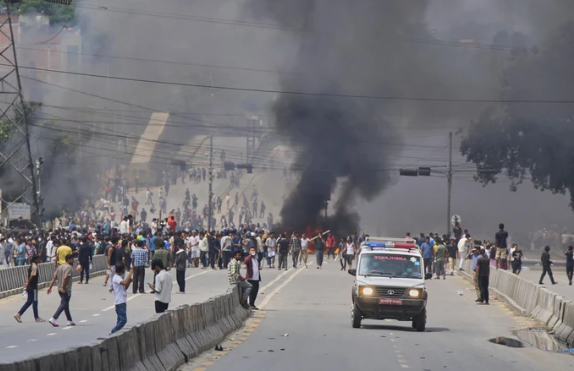
What started as small protests by young people quickly became much bigger. The government tried to stop the protests by using force, but this only made more people angry. When security forces killed 19 protesters, the situation became much worse.
The protesters became so angry that they broke into the parliament building and set it on fire. They also took control of other government buildings. This forced both the President and Prime Minister to resign, leaving Nepal without a proper government.
Impact on India
Nepal’s crisis affects India in many important ways because the two countries are very close neighbours with strong ties.
Border Security Problems
India and Nepal share a very long border that is easy to cross. When Nepal became unstable, India had to:
a. Close all border crossings to control who enters and leaves
b. Send more security forces to patrol the border
c. Watch for people trying to cross illegally
This makes it harder for normal trade and travel between the two countries.
Economic Effects
Nepal depends on India for many things like fuel, medicines, and food. The crisis has disrupted this trade because:
a. Trucks carrying goods cannot cross the border easily
b. Security checks are taking longer
c. Some supply chains have been broken
This affects both countries’ economies, especially areas near the border where people depend on cross-border trade for their livelihood.
Security Concerns for India
India is worried about several security issues:
(1) Refugees
If the situation gets worse in Nepal, many people might try to cross into India looking for safety. India would need to provide help and shelter for these people.
(2) Criminal Activities
When a country has no stable government, criminals often take advantage. This could mean more smuggling, drug trafficking, and other illegal activities across the border.
(3). Terrorism Risks
Empty spaces and weak government control can sometimes be used by terrorist groups or other dangerous organizations.
China Factor
India is also worried about China’s influence in Nepal. China has been trying to build stronger relationships with Nepal through investments and projects. If Nepal’s government becomes very weak, China might try to gain more control in the region. This would be bad for India’s security interests.
What India is Doing
India’s response has been careful and measured:
a. Increasing border security without being too aggressive
b. Avoiding direct interference in Nepal’s internal politics
c. Preparing to help with humanitarian issues if needed
d. Watching the situation closely to protect its interests
Looking Forward
The crisis in Nepal shows how problems in one country can quickly affect its neighbours. For India, this situation is a reminder of how important it is to have stable, friendly relationships with neighbouring countries.
India will likely continue to:
a. Monitor the border situation carefully
b. Be ready to help Nepal if asked
c. Work to prevent other countries from taking advantage of the crisis
d. Support whatever legitimate government emerges in Nepal
The crisis also shows young people’s power when they unite against corruption and unfairness. Both Nepal and India can learn from this about the importance of giving young people opportunities and listening to their concerns.
Conclusion
Nepal’s crisis started with young people’s frustration about unemployment, corruption, and unfairness in their society. A social media ban was the spark that made these feelings explode into massive protests that brought down the government.
The situation reminds us that in today’s connected world, problems in one country quickly become problems for its neighbors, especially when countries share long borders and close economic ties like India and Nepal do.
There are conspiracy theories from geopolitics analysts that outside forces are making Nepal unstable. Just like Bangladesh. But at the moment there is no direct evidence.
References
1. https://edition.cnn.com/2025/09/09/asia/nepal-protests-social-media-ban-explainer-intl-hnk
2.https://www.washingtonpost.com/world/2025/09/09/nepal-social-media-protests-prime-minister-resigns/
3. https://www.newsweek.com/china-nepal-gen-z-protests-2127419
4. https://asiasociety.org/policy-institute/nepals-geopolitical-crossroads-balancing-china-india-and-united-states