

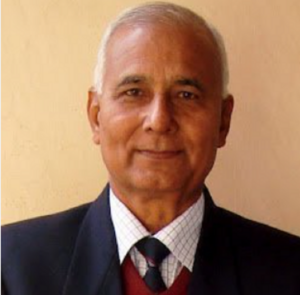
SR Darapuri, National President, All India peoples Front
Successes of Narendra Modi as Prime Minister of India
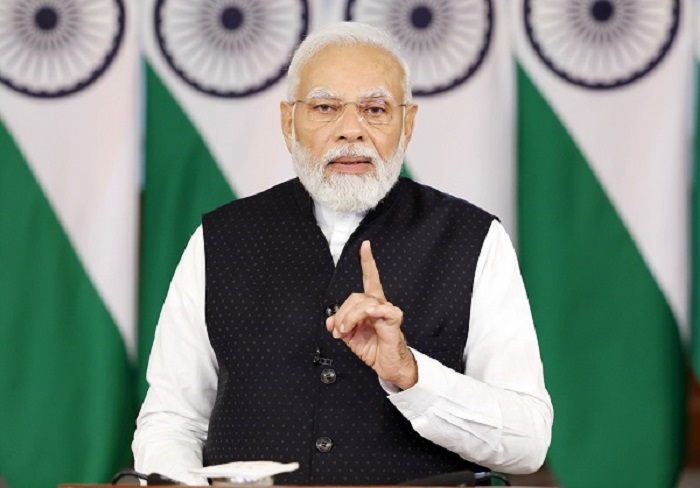
(Asian independent) Narendra Modi has served as India’s Prime Minister since 2014, securing a third term in 2024 despite a reduced majority for his Bharatiya Janata Party (BJP). His tenure has seen notable advancements in infrastructure, economic reforms, and foreign policy, often credited with elevating India’s global standing and implementing large-scale welfare programs. Below are key successes, drawn from various sources representing government achievements and independent analyses.
Economic and Infrastructure Development
– Modi’s government has prioritized infrastructure, laying more roads per day than any previous administration, thanks to initiatives like the Bharatmala project, which has expanded highway networks significantly. This has contributed to India becoming the fastest-growing large economy under his NDA government, with reforms like the Goods and Services Tax (GST) unifying the tax system as “One Nation, One Tax” in 2017, streamlining business operations.
– Liberalization efforts include easing foreign direct investment (FDI) in sectors like defense and railways, attracting investments such as agreements with General Electric for locomotives and Japan’s high-speed rail project between Mumbai and Ahmedabad. The “Make in India” and “Digital India” campaigns have boosted manufacturing and digital infrastructure, with 22 new schemes enhancing connectivity and reducing bureaucratic hurdles by scrapping over 1,000 obsolete laws.
– Rural electrification through schemes like Jyotigram Yojana (extended from his Gujarat tenure) provided 24/7 electricity to villages, while the Smart Cities and Smart Villages initiatives aimed to develop 100 cities and 2,500 villages with internet access and sanitation by 2019.
Social and Welfare Reforms
– Welfare programs have reached millions: Over 81 crore people receive free food grains under PM Garib Kalyan Anna Yojana, and more than 12 crore toilets have been built under Swachh Bharat Abhiyan to eliminate open defecation. Pradhan Mantri Ujjwala Yojana distributed 58 million LPG connections by 2018, increasing consumption by 56%, while Pradhan Mantri Jan Dhan Yojana opened 125 million bank accounts by 2015.
– Skill development via Pradhan Mantri Kaushal Vikas Yojana trained nearly 18 lakh candidates by 2016, and the New Education Policy 2020 introduced major changes to school and higher education. Ayushman Bharat, hailed as the world’s largest healthcare program, provided insurance to over 1 lakh beneficiaries in its first month.
– Social policies include a 2019 law for 10% reservation for economically weaker sections and the abrogation of Article 370 in Jammu and Kashmir, which integrated the region more closely with India and was seen as a bold move to address long-standing issues.
Foreign Policy and National Security
– Modi has pursued “multialignment,” strengthening ties with the US, Middle East, and Israel, adding five bilateral strategic partnerships and launching the International Solar Alliance. He made 51 trips to 42 countries by 2016, inviting SAARC leaders to his inauguration—a first for an Indian PM—and enhancing relations with Myanmar under the “Act East Policy.”
– National security successes include surgical strikes against Pakistan after the 2016 Uri attack and anti-Naxal operations like “Operation Kagar,” which have reduced leftist insurgency. Space exploration commitment persists despite setbacks, positioning India for future leadership in missions.
– His leadership has maintained high approval ratings, engineering a political realignment toward right-wing policies and shaping India’s global posture.
These achievements have been praised by supporters for transforming India into a more assertive and developed nation, though some, like GST and welfare schemes, have mixed outcomes.
Failures and Criticisms of Narendra Modi as Prime Minister of India
While Modi’s tenure has high points, it has faced substantial criticism for economic slowdowns, social divisions, and policy mishandlings. Opposition parties and analysts point to aggravated issues like unemployment and democratic backsliding, with his BJP failing to secure an outright majority in the 2024 elections, forcing a coalition government. Critics, including Congress, label his 11 years a “shining example of failures and anti-people policies.”
Economic and Employment Issues
– Unemployment doubled to over 6% before 2019 and hit a 45-year high in 2017, with 29% of college-educated youth under 30 jobless, eroding the demographic dividend. Policies like 2016 demonetization and GST disrupted the economy, leading to job losses for 12 crore people and reduced incomes for 84% of the population.
– GDP growth averaged 5.5% in the first eight years (lower than the previous 7.03%), dipping negative in 2020 due to COVID lockdowns, with inflation exceeding RBI limits and petrol prices hitting Rs 100 per litre. Income inequality rose, and key data like unemployment rates were allegedly hidden.
– Farm laws passed in 2020 sparked massive protests and were withdrawn in 2022, failing to double farmers’ incomes as promised, amid ongoing distress.
Social and Governance Challenges
– COVID-19 management was a major failure: India suffered the highest global mortality per Lancet studies, with undercounted deaths potentially 10x higher; Modi vanished from public view for 20 days during the 2021 second wave. Healthcare funding cuts (15% in 2015) and inadequate public spending exacerbated issues.
– Social policies like CAA and NRC triggered protests, remaining unimplemented due to backlash, while minority persecution rose through anti-conversion laws, beef bans, and attacks on churches. India’s press freedom and democracy rankings declined, labeled an “electoral autocracy” with sedition cases surging.
– Welfare schemes had flaws: 30% of Jan Dhan accounts were dormant, and environmental performance ranked last in the 2022 index due to growth-over-sustainability priorities. Kashmir’s demotion to union territories lacks a democracy restoration plan, with heavy militarization.
Foreign Policy and Security Setbacks
– Border tensions with China in Ladakh (2020 Galwan clash) and Doklam (2017) highlight failures, with unclear patrol rights and troop deployments. Relations with neighbors like Nepal and Bangladesh soured over borders and trade.
– Recent events like Operation Sindoor (2025) ended in humiliation due to US intervention, seen as a diplomatic failure and distraction tactic. UN Security Council permanent seat bids stalled, and trade deals like RCEP were missed.
– The 2002 Gujarat riots (during his chief ministership) remain a stain, with ongoing controversies over minority rights and Hindu nationalism.
These criticisms, from opposition and international observers, argue Modi’s policies have deepened divisions and economic woes, though supporters view them as necessary for long-term growth. Overall, his leadership is polarizing, with successes in scale often offset by implementation gaps and social costs.