THE ASIAN INDEPENDENT UK

Bal Ram Sampla
Geopolitics
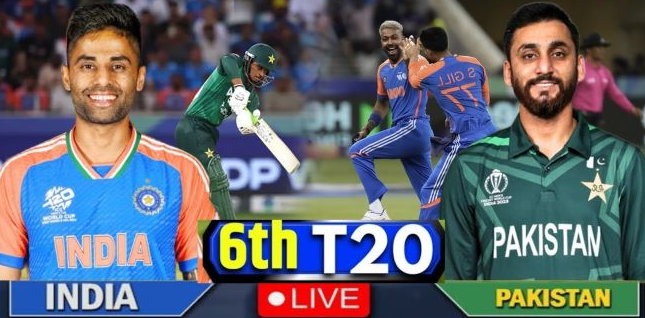
The Dubai International Stadium witnessed an unusual sight on September 14, 2025 – a match between cricket’s most storied rivals, India and Pakistan, played before a significantly reduced crowd with the stadium only about 70% full. Yet despite the politically charged atmosphere, boycott calls, and Pakistan’s pre-match confidence, India delivered a commanding 7-wicket victory that underscored their cricketing superiority over their neighbours.
The Backdrop of Controversy
The lead-up to this Asia Cup encounter was unlike any other India-Pakistan match in recent memory. Following the Pahalgam terror attack, a significant portion of Indian fans called for a boycott of the fixture. Social media campaigns gained momentum, with reports indicating that majority of Indian fans were not intending to watch the game. The controversy reached such heights that it even affected the Indian dressing room, with players reportedly “shaken” by the boycott calls before head coach Gautam Gambhir stepped in to manage the situation.
The impact was visible in the stands. Hundreds of tickets remained unsold on the morning of the match – a rare occurrence for any India-Pakistan encounter. The Dubai International Stadium, which has previously witnessed sold-out crowds for this fixture, appeared hollow with empty patches throughout. The usual electric atmosphere that defines these matches was notably subdued, replaced by an undercurrent of political tension.
Former cricketer and West Bengal Sports Minister Manoj Tiwary publicly announced his boycott of the game, while social media buzzed with trending hashtags like “No Asia Cup.” Even promotional content featuring former Indian opener Virender Sehwag faced backlash from furious fans who felt the match should not proceed under the current circumstances.
Pakistan’s Misplaced Confidence
Despite the off-field controversy, Pakistan entered the match with characteristic bravado. Their players and supporters had been vocal about their chances, with many claiming they would “smash” India in this needle match. This confidence seemed rooted in the belief that the political distractions would affect India’s focus and preparation.
However, Pakistan’s pre-match posturing proved to be nothing more than hollow rhetoric. Their assessment of the situation was fundamentally flawed – they mistook India’s off-field challenges for on-field weakness. The assumption that boycott calls and reduced fan support would translate into poor performance on the pitch demonstrated a misunderstanding of professional cricket at the highest level.
India’s Clinical Performance
What transpired on the field was a masterclass in professional cricket. Despite the external noise and pressure, the Indian team, led by Suryakumar Yadav, delivered a performance that was both composed and ruthless. The 7-wicket victory margin spoke volumes about India’s dominance across all departments.
India’s bowlers first restricted Pakistan to a below-par total, exploiting their opponents’ inability to handle pressure in the big moment. The Pakistani batting lineup, which had talked a big game before the match, crumbled when confronted with disciplined bowling and sharp fielding. Their shot selection appeared hurried and desperate, suggesting that the weight of expectation and the rivalry’s history had gotten to them.
When it came to the chase, India’s batsmen showed remarkable composure. They approached the target with calculated aggression, never allowing Pakistan’s bowlers to build pressure or create doubt. The comfortable nature of the victory – achieved with 7 wickets in hand – highlighted the gulf in class between the two sides on the day.
Lessons from the Empty Stands
The reduced attendance and boycott calls, rather than weakening India’s resolve, seemed to galvanize the team. Playing in front of a subdued crowd removed some of the external pressure and allowed the players to focus purely on cricket. The absence of the usual partisan crowd noise may have actually helped India maintain their concentration and execute their game plan more effectively.
Pakistan, meanwhile, appeared to feed off negative energy. Their pre-match confidence seemed hollow when they couldn’t capitalize on what they perceived as India’s vulnerability. The empty seats served as a metaphor for Pakistan’s own empty promises – lots of noise beforehand, but little substance when it mattered.
The Bigger Picture
This victory continued India’s historical dominance over Pakistan in T20 matches. It demonstrated the team’s mental fortitude and ability to perform under extraordinary circumstances. The professional manner in which they handled both the on-field challenge and off-field controversy speaks well of the team culture built by coach Gautam Gambhir.
For Pakistan, the defeat was a harsh reminder that cricket matches are won on the field, not in press conferences or social media posts. Their pre-match bragging looked particularly hollow in hindsight, serving only to provide additional motivation for an already determined Indian side.
Conclusion
India’s comprehensive 7-wicket victory in Dubai will be remembered not just for the clinical performance, but for the way it was achieved despite unprecedented off-field challenges. While Pakistan focused on external factors and indulged in premature celebrations, India demonstrated that champions rise above noise and deliver when it matters most. The empty stands may have diminished the spectacle, but they couldn’t diminish the quality of cricket that India produced when the stakes were highest.
In the end, Pakistan’s bragging rights lasted only until the first ball was bowled. India’s response on the field was the most emphatic answer to all the pre-match chatter – letting their cricket do the talking in the most convincing way possible.
Pakistan 127-9 20 overs
India 132-3 15.5 overs