
THE ASIAN INDEPENDENT UK
By Staff Reporter
The Indian Workers Association (Great Britain) has written to senior UK ministers and the Prime Minister calling for a legal ban on social media use for children under the age of 16, warning that existing online safety measures are failing to protect young people from serious and growing harm.
Letters have been sent to Peter Kyle MP, Secretary of State for Science, Innovation and Technology, and Kanishka Narayan MP, Minister for AI and Online Safety, with a copy sent to the Prime Minister. The Association has urged the Government to consider adopting an Australia-style ban, which was introduced following evidence of widespread online harm to children.
UK evidence behind the call
The Indian Workers Association said its intervention was based on a growing body of UK evidence linking social media exposure to criminal exploitation, substance misuse and mental health harm.
UK research shows that one in nine teenagers has been approached by criminal networks to move drugs, weapons or money, often through contact initiated online or via social media platforms.
The organisation also highlighted official government figures showing a sharp rise in drug and alcohol harm among children and young people. According to data published by the Department of Health and Social Care, 14,352 children and young people under the age of 18 were in contact with drug and alcohol treatment services in England between April 2023 and March 2024, representing a 16% increase on the previous year.
The same figures show that four in five young people in treatment first began using substances before the age of 15, while more than half reported using multiple substances. Nearly half said they also required mental health support, underlining the close connection between addiction, psychological distress and wider social influences.
The Association said these statistics demonstrate that harm is starting at an increasingly young age and that current approaches focus too heavily on crisis response rather than prevention.
Online abuse and exploitation concerns
In addition to health and crime data, the Association pointed to the UK Government’s own policy updates on tackling child sexual abuse and exploitation, which recognise the growing risks children face online.
Recent government statements highlight the role of digital platforms in facilitating grooming, abuse and exploitation, and confirm that online safety has become a central part of national child protection policy. While new duties have been placed on technology companies under the Online Safety Act, the Indian Workers Association argues that these measures do not go far enough in preventing exposure in the first place.
Australia cited as international precedent
The organisation has urged ministers to look closely at Australia’s decision to ban children under 16 from using major social media platforms, including TikTok, Instagram, Facebook, Snapchat, X and YouTube.
Australia acted after a government-commissioned study found that 96% of children aged 10 to 15 were using social media, with seven in ten exposed to harmful content such as violence, misogyny, eating-disorder promotion and suicide-related material. One in seven reported grooming-type behaviour, while more than half experienced cyberbullying.
Under Australia’s approach, responsibility lies with technology companies rather than parents or children, with fines of up to A$49.5 million for serious or repeated breaches.
“A child protection issue”
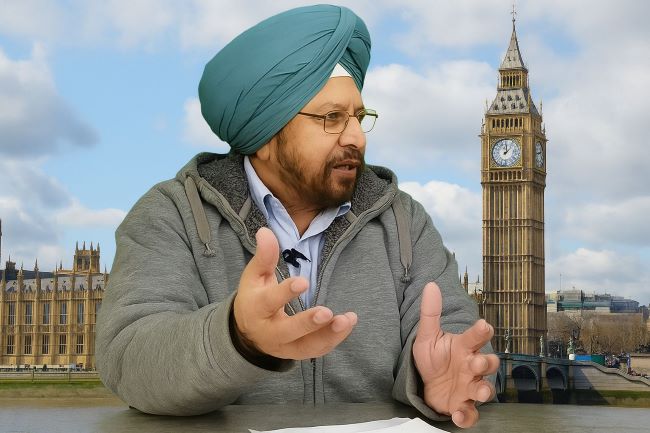
Sital Singh Gill, General Secretary of the Indian Workers Association (GB), said the issue should be treated as one of child safety rather than free speech.
“This is not about censorship or taking away young people’s voices,” he said.
“It is about protecting children from online harm, criminal exploitation and serious damage to their mental health.”
Referring to the UK treatment figures, he added:
“When government data shows more than 14,000 children needing drug or alcohol treatment in a single year, many starting before the age of 15, it is clear that prevention must start much earlier.”
A wider debate
While the UK has introduced new online safety rules and expanded efforts to tackle online abuse and exploitation, it has not imposed an outright ban on social media use by under-16s. Ministers have said they are monitoring international developments.
Other countries, including Denmark, Norway and France, are also exploring age-based restrictions.
The Indian Workers Association said the UK should act decisively, warning that further delay risks exposing more children to harm.
“Our children are not test subjects for technology companies,” Mr Gill said. “They are the future of our society.”