THE ASIAN INDEPENDENT UK
The Indian Workers Association (Great Britain) has issued a formal statement in response to recent national media reports and official statistical data highlighting a growing imbalance in the number of boys and girls being born to Indian-origin families in the United Kingdom.
Figures published by the UK Office for National Statistics (ONS) and reported widely in the national press show that the natural birth ratio in the UK stands at approximately 105 boys for every 100 girls, with the Government’s accepted upper limit set at 107 boys per 100 girls. However, data covering the period 2021 to 2025 indicates that among Indian mothers this ratio has risen significantly, reaching approximately 118 boys for every 100 girls, particularly in cases involving third children.
Experts and statisticians have warned that birth ratios above the accepted upper limit may point to the use of sex-selective practices, including abortions or medical interventions based on the gender of the unborn child. These findings have raised serious concerns that some women may be facing pressure, coercion, or cultural and family expectations to terminate pregnancies solely because the child is female.
The Association also noted that this issue has been raised previously in major UK media investigations, including reporting by the BBC, which highlighted cases in which pregnant women from the UK were alleged to have travelled abroad — including to India — to access abortion services, sometimes in circumstances linked to gender-based terminations. This is despite the fact that prenatal sex determination and sex-selective abortion are illegal in both the United Kingdom and India.
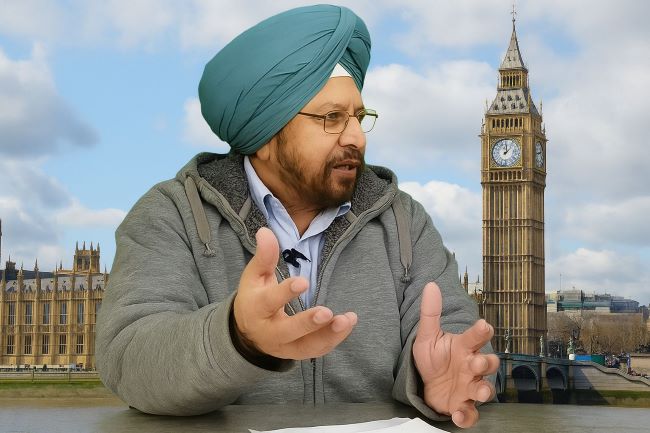
Sital Singh Gill, General Secretary of the Indian Workers Association (G.B), said:
“These figures are deeply alarming and raise serious questions about the pressure and discrimination that some women may be facing behind closed doors. Discrimination against a child before birth is a violation of human dignity and goes against the fundamental values of equality and justice that our society stands for.
We believe that the law must be strengthened and enforced to ensure that anyone who pressures or coerces a pregnant woman into terminating a pregnancy based on the gender of the child is held fully accountable. At the same time, we must work together as a community to challenge harmful attitudes and ensure that every child — girl or boy — is welcomed, protected, and valued equally.”
The Association reaffirmed that, under UK law, abortion on the grounds of gender alone is illegal, and that government guidance to medical professionals makes clear that sex is not a lawful basis for the termination of a pregnancy.
In its statement, the Indian Workers Association (Great Britain) called for:
• Stricter legal safeguards and stronger enforcement mechanisms to prevent sex-selective abortion and the misuse of medical or overseas services to bypass UK law.
• Clear legal accountability and punishment for any individual — including family members, intermediaries, or others — found to be pressuring, coercing, or influencing a pregnant woman to terminate a pregnancy based on the gender of the child.
• Robust, confidential support and reporting systems for women who may be at risk of family or social pressure, enabling them to seek help safely and without fear.
The Association stressed that the issue cannot be addressed through legal measures alone, describing it as a wider social and cultural challenge that requires education, awareness, and unity within communities.
It called on community organisations, religious and cultural institutions, educators, and local leaders to work collectively to promote gender equality, respect for women’s rights, and the equal value of every child.
The Indian Workers Association (Great Britain) said it stands in solidarity with women who may feel vulnerable, pressured, or unsupported when making decisions about their pregnancies, and reaffirmed its commitment to working with civil society, public bodies, and community partners to build a society in which every child — girl or boy — is welcomed, protected, and valued equally.