

THE ASIAN INDEPENDENT UK

Bal Ram Sampla
Geopolitics
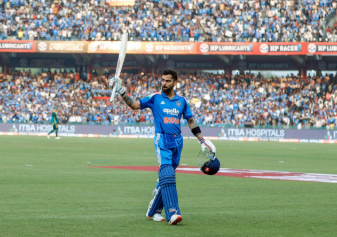
The 2nd ODI between India and South Africa in Raipur on December 3, 2025, had all the ingredients of a classic cricket match. Virat Kohli scored his second century in a row, combining with Ruturaj Gaikwad to put up a massive total of 358 runs. Yet, India still lost the match. How did this happen?
Kohli and Gaikwad’s Partnership
Virat Kohli was in wonderful form, scoring 102 runs with his trademark class and precision. His partner Ruturaj Gaikwad also played brilliantly, making 105 runs. Together, they added 195 runs for the third wicket, giving India a strong foundation. KL Rahul finished the innings with an unbeaten 66, and India posted 358 for 5 wickets. It looked like more than enough to win.
The Toss That Changed Everything
The real problem for India started before the match even began. India lost the toss for the 20th time in a row in ODI matches. South Africa captain chose to bowl first, knowing that dew would fall in the evening and make bowling very difficult. This decision proved to be the game-changer.
The Dew Factor
As the evening progressed, heavy dew settled on the ground in Raipur. The ball became wet and slippery, making it extremely hard for Indian bowlers to grip and control it. The umpires had to change the ball several times because it was so wet. Indian spinners couldn’t turn the ball, and fast bowlers struggled to make it swing or seam. What should have been a tough chase of 359 runs became much easier for South Africa.
In fact, the dew was so bad that India had to cancel their fielding practice the day before the match. KL Rahul later admitted that he was “kicking himself” for losing the toss, knowing how big a role it would play.
South Africa’s Response
Aiden Markram played the innings of his life for South Africa. He scored 110 runs, his first century while chasing in an ODI. He took advantage of the wet ball and the struggling Indian bowlers. Matthew Breetzke added 68 runs and Dewald Brevis contributed 54, keeping the momentum going throughout the chase.
South Africa reached 362 for 6 in just 49.2 overs, winning by four wickets. This was the joint-highest successful chase against India in ODI cricket history.
What Went Wrong for India?
Despite the heroics from Kohli, several things went wrong for India:
1.Not Enough Runs
While 358 seemed like a huge total, experts believe India needed at least 370-380 to defend on this ground with the dew factor. They managed only 56 runs between overs 39 and 49, which cost them valuable runs.
2. Dropped Catch
Yashasvi Jaiswal dropped Aiden Markram when he was on 53 runs. The ball slipped through his hands and went over the boundary for six runs. Markram went on to score 110, making this drop very costly.
3. Helpless Bowlers
Indian bowlers tried their best, but they simply couldn’t control the wet ball. The spinners couldn’t grip it properly, and the fast bowlers couldn’t make it move. South Africa’s batsmen took full advantage.
4.Soft Boundaries
KL Rahul admitted that India gave away some easy boundaries in the field, which added to their problems.
The Bitter Truth
In modern cricket, especially in India during winter months, the toss has become almost as important as batting and bowling skills. Winning the toss and choosing to bowl first gives a team a huge advantage because of the dew. No matter how well you bat in the first innings, defending a total with a wet ball is extremely difficult.
Virat Kohli’s back-to-back centuries showed he is still one of the world’s best batsmen. Gaikwad’s century proved India has talented young players. But all their hard work was undone by factors beyond their control – the toss and the weather.
Conclusion
India’s loss in the 2nd ODI shows that cricket is not just about individual brilliance. Even when your star players perform magnificently, other factors like the toss, weather conditions, and team execution matter just as much. Kohli and Gaikwad gave India a fighting chance with their centuries, but Markram’s counter-century and the heavy dew proved too much to overcome.
The series now stands at 1-1, with the decider to be played in Visakhapatnam. India will hope that the toss finally goes their way, because as this match showed, even 358 runs might not be enough if you have to defend with a wet ball in your hands.