THE ASIAN INDEPENDENT UK

Bal Ram Sampla
Geopolitics
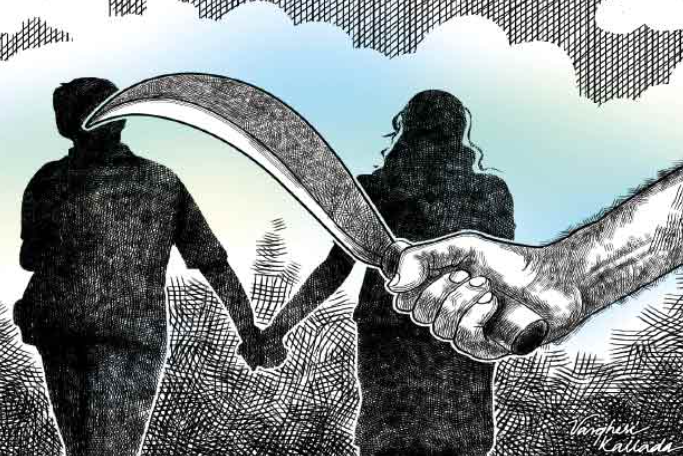
Honour killings happen when family members or community members kill someone. This because they think the person brought shame to the family or community. In India, this often happens when young people marry someone from a different caste.
How Does the Caste System Support Honour Killings?
1. Creating the Idea of “Honour”
The caste system teaches that keeping caste boundaries is very important. When someone marries outside their caste, families feel this brings shame. They believe their “honour” is damaged.
2. Traditional Courts (Khap Panchayats)
In some areas, there are traditional councils called Khap Panchayats. These groups:
(I). Have no legal authority
(II). But many people still respect them
(III). Often order punishments for inter-caste marriages
(IV). Sometimes support or order honours killings
3. Social Pressure
The caste system creates strong social pressure. Communities may:
(I) Reject families who allow inter-caste marriage
(II) Boycott their businesses
(III) Exclude them from social events
(IV) Support violence to “restore honour”
4. Protection of Hierarchy
Honour killings often happen when someone from a lower caste marries someone from a higher caste. This threatens the power structure that benefits higher castes.
Where Do These Killings Happen Most?
Northern States (Traditional Pattern)
Honour killings were traditionally most common in northern Indian states like:
Haryana, Punjab, Uttar Pradesh, Rajasthan
These areas have stronger caste traditions and more active traditional councils.
Southern States (New Pattern)
However, there is a surprising new trend. States with more Dalit empowerment now also have high rates of honour killings:
1.Tamil Nadu
400 dishonour crimes in 5 years, including many killings
2.Kerala
Higher inter-caste marriage rates, but also more honour killings
3.Maharashtra
Similar pattern of increased inter-caste marriages and violence
4.Telangana
Growing incidents despite social progress
The Paradox Explained
This creates a sad irony:
1.These states have better education and more equal laws
2. Dalit communities have more rights and opportunities
3.More people feel confident to marry across caste lines
4.But this progress makes traditional communities angry
5. They respond with more violence to “protect” their caste status
The data shows that Tamil Nadu alone had 192-400 cases of honour killings, with most involving marriages where women marry men from lower castes. This is seen as especially “dishonourable” because women are considered responsible for maintaining caste “purity.”
The Legal Reality
1.Honour killings are illegal in India
2.The Indian constitution guarantees equality
3.Courts have spoken against these killings
4. But enforcement is often weak
5.Local police sometimes sympathize with the killers
Why This Problem Continues
The caste system makes honour killings seem normal and necessary to some people because:
1. Cultural Beliefs
Many people truly believe caste mixing is wrong
2. Social Support
Communities often support the killers
3.Weak Law Enforcement Police and courts don’t always act strongly
4. Economic Interests
Caste hierarchies benefit some groups economically
The “Progress Backlash” Problem
In states with more social progress, a new problem appears:
1. Increased Confidence
More people from lower castes feel empowered to marry across caste lines
2. Traditional Resistance
Upper caste communities feel threatened by this change
3. Violence as Response
They use honours killings to “send a message” and maintain control
4. Status Protection
Killing becomes a way to show other communities that caste boundaries still matter
This means that as society tries to become more equal, some groups become more violent to protect their traditional advantages.
The Impact
Honour killings affect:
1. Victims
Young people lose their lives
2. Families
Families are torn apart
3. Society
Fear prevents social progress
4. Women
Women face extra restrictions and violence
Conclusion
Honour killings in India are supported by the caste system in many ways. The caste system provides the ideas, institutions, and social pressure that make these killings seem acceptable to some communities.
Until the caste system’s influence weakens and law enforcement becomes stronger, honour killings will likely continue. Education, legal reforms, and changing social attitudes are needed to protect young people’s right to choose their own partners.
References
- https://www.thehindu.com/news/national/how-honour-killings-in-india-are-reinforced-and-legitimised/article69943781.ece
2. https://ohrh.law.ox.ac.uk/addressing-honour-killings-in-india-the-need-for-new-legislation/
3. https://www.researchgate.net/publication/383712626_Honour_Killing_in_India_and_role_of_Khap_Panchayats
4. https://forumias.com/blog/honor-killing-in-india/
5. https://newcollege.asu.edu/global-human-rights-hub/fellows-program/ghr-fellows-blog/namrata