
(Asian independent)
 By Gurbhinder Guri
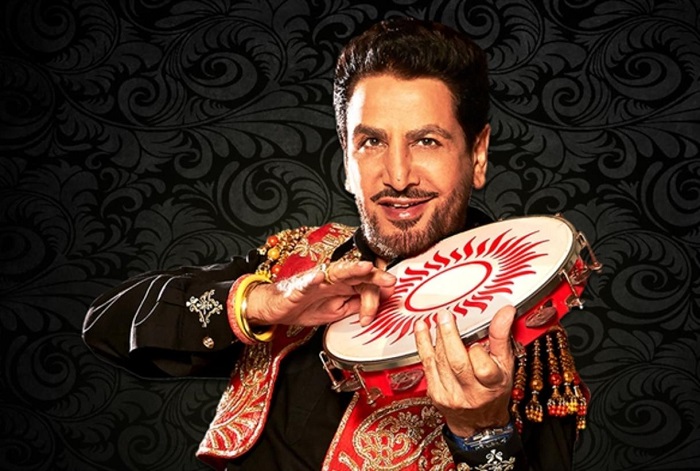
Some names are not merely spoken—they are felt.
Gurdas Maan is one such name.
He is not just a singer, but a philosophy.
Not merely an artist, but an institution.
Not only an entertainer, but a living reflection of society.
In the global story of music and culture, there are rare voices that rise from the dust of small villages and echo across continents without losing their essence. Gurdas Maan’s voice did exactly that. Emerging from rural Punjab, he did not leave Punjab behind—instead, he carried Punjab with him and transformed the world into his homeland.
A Cultural Ambassador Beyond Borders
When an artist’s voice crosses borders and becomes the heartbeat of distant lands, he ceases to be only a performer. He becomes a cultural ambassador. The second phase of Gurdas Maan’s career marked this transformation—when Punjabi folk sensibility met global consciousness.
For more than four decades, Gurdas Maan has represented Punjabi language, folk traditions, and social truth with unmatched sincerity. In the history of Punjabi culture, very few names transcend time to become historical documents themselves. Gurdas Maan is one of them.
Roots That Shaped a Legend
Born on 4 January 1957 in Giddarbaha, a small town in Punjab’s Muktsar district, Gurdas Maan was raised in a farming household. His father, Sardar Gurdev Singh Maan, was a farmer, and his mother, Tej Kaur, a homemaker. These humble roots deeply influenced his artistic consciousness.
 He completed his early education in Giddarbaha and later studied in Malout and at the National Institute of Sports, Patiala. A lesser-known fact is that Maan was also a gifted athlete and earned a black belt in Judo—a reflection of the discipline that would later define his artistic journey.
Music entered his life early. Practicing with his younger brother Gurpanth Maan and friend Hakam Sufi, young Gurdas sang while Gurpanth played the banjo. Those modest rehearsals would eventually shape one of the most powerful voices in Indian music history.
From Government Desk to Musical Destiny
Gurdas Maan began his professional career with the Punjab State Electricity Department. But destiny had other plans. Listening to the call of music, he left the security of a government job and stepped into the uncertain world of Punjabi music.
His defining breakthrough came in 1980 with the release of “Dil Da Mamla”. The song became an instant classic, turning him into a household name overnight. By 1981, with the album’s official release, Punjabi music found a new voice—authentic, fearless, and deeply rooted.
What followed was extraordinary:
Nearly 300 iconic songs, around 36 albums, and more than 350 recorded tracks that shaped generations. Albums like Boot Polishan, Jogiya, Punjab, Ibadat, and Ki Banu Duniya Da are not just musical works—they are cultural milestones.
A Voice Across Languages and Screens
Though synonymous with Punjabi music, Gurdas Maan’s artistry transcended language barriers. He sang in Hindi, Bengali, Tamil, Haryanvi, and Rajasthani, proving that authenticity speaks a universal language.
His transition to cinema was not experimentation—it was assertion. In the 1980s, when Punjabi cinema struggled for credibility, Gurdas Maan’s entry restored audience faith. Beginning with Ucha Dar Babe Nanak Da (1982), he went on to act in nearly 35 films across Punjabi, Hindi, and Tamil cinema.
His portrayal of Waris Shah in Waris Shah: Ishq Da Waris remains legendary, while his appearance in Bollywood’s Veer-Zaara placed Punjabi emotion on a global cinematic canvas.
Life, Loss, and Survival
Twice, fate pushed Gurdas Maan to the edge of death.
In 2001, a tragic road accident near Ropar claimed the life of his driver and close friend Tejpal. Deeply shaken, Maan later immortalized the pain through a song dedicated to him.
In 2007, another near-fatal accident near Karnal left him critically injured. Once again, he survived—an outcome his admirers attribute to collective prayers.
These experiences deepened the spiritual undertone of his art.
Honors That Followed Humility
Despite countless accolades, Gurdas Maan remained grounded. Among his most prestigious honors are:
National Film Award for Best Male Playback Singer
Doctorate in World Music – University of Wolverhampton (2010)
Doctorate of Literature – Punjabi University, Patiala (2012)
His MTV Coke Studio track “Ki Banu Duniya Da” crossed 3 million views in a week, reaffirming his relevance across generations.
Controversy, Clarity, and Character
In later years, misinterpretations of his passionate defense of Punjabi language led to controversies. Yet, his willingness to apologize and clarify revealed a larger truth—greatness lies not in being flawless, but in being accountable.
Even during moments of public opposition, including the farmers’ protest, Gurdas Maan spoke with humility, reminding audiences of his lifelong service to Punjabi culture.
A Legacy Still Alive
Despite global fame, Gurdas Maan continues to sing at village fairs, religious gatherings, and cultural events. He serves as Chairman of Dera Baba Murad Shah Trust, actively contributing to humanitarian causes.
Married to Manjit Maan, he is also a father to Gurikk Maan, who is now contributing to Punjabi cinema, carrying the legacy forward.
The Unanswered Question
As time moves on, one question quietly echoes across Punjab:
Who will carry the torch after Gurdas Maan?
Until that answer arrives, we pray for his health and long life—so that the voice that turned Punjab into a global emotion continues to sing.
Ameen
Gurbhinder Guri
±00447951590424