
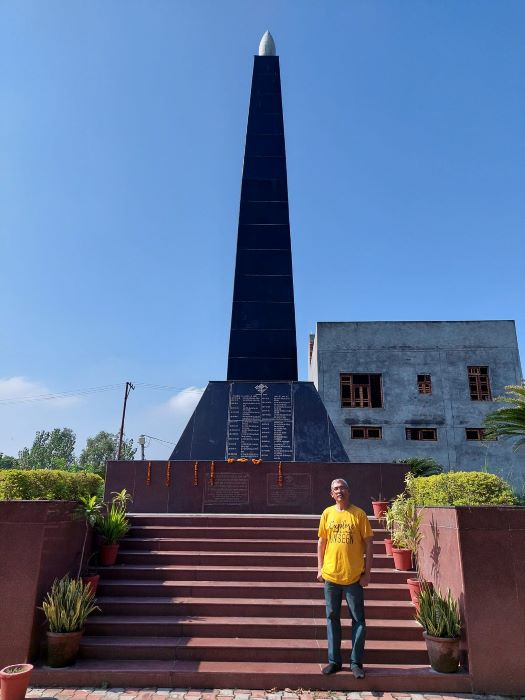
Uttarakhand people will never forget the horrific violence on them on October 2nd, 1994
-Vidya Bhushan Rawat
THE ASIAN INDEPENDENT UK- – In the aftermath of Babari demolition in 1992, the subsequent elections brought a coalition government under SP-BSP combine headed by Mr Mulayam Singh Yadav in 1993. Things were not comfortable between the two alliance partners on various issues. It was a strained relationship as Mr Yadav was not really comfortable playing with the Mandal card. He was not keen on implementing that as in August 1990 when V P Singh had decided to accept Mandal Commission Report, both SP BSP were out of it though Manwyar Kanshiram and BSP had a public position of demanding Mandal Commission report and its implementation.
The pressure built by Janta Dal under VP Singh, Sharad Yadav, Lalu Yadav and Ram Vilas Paswan compelled Mualayam Singh Yadav to ask for its implementation in Uttar Pradesh. Hence an order by the state government regarding 27% quota for OBCs was signed by governor Moti Lal Vora.
Now, the decision to implement this order everywhere caused unrest in the entire hill region of Uttarakhand. Actually, there have been demand for the separate state but this issue gave it a new dimension. The protests were otherwise peaceful as people would sit on Dharna. There was no effort to speak to them. The agitationists gave a call for a big rally at the Lal Quila Grounds in Delhi on October 2nd, 1994. The call was supported by most of the karmchari unions, student groups, political parties too. The Uttar Pradesh police became hyper active to stop the peaceful protesters. So, the areas from Roorkee onwards were surrounded by the police. The police brutalities increased. It fired at buses taking peaceful protesters at a place called Rampur ka Tiraha near Mujaffarnagar killing young peaceful protesters in the mid night. There were reports of many women activists being abused and physically violated. People had to run in the sugarcane fields to save themselves. This was massive. Mulayam Singh Yadav became one of the most hateful figures in Uttarakhand region. After the 1990 Ayodhya incident, Mulayam Singh Yadav’s rough handling of the situation was highly criticised by political parties but it never harmed him politically. He knew it well that the more the Uttarakhand people would agitate against the Mandal report, the better for him to get support from the OBCs. It was the internal dynamics that he wanted to consolidate his position and get rid of dependence from BSP.
The October 2nd, 1994 killing and dishonouring of women by the Uttar Pradesh police spread like wild fire in the entire hill region. People came out in protests everywhere. It gave rise to the feeling of complete distrust in the political leadership of Mr Mulayam Singh Yadav and Samajwadi Party. Rightly or wrongly, Mr Yadav never ever thought of issuing a statement or expressing sadness on the entire situation.
 The incident gave an unprecedented boost to the separate state movement. The peaceful region had never seen curfew even in smaller town before that.
The BJP government under Atal Bihari Vajpayee got the resolution passed for the separate state at the centre as well as by Mr Kalyan Singh as Chief minister of Uttar Pradesh.
Today, it is nearly 31 years of this incident but no police official or district magistrate was made responsible for the gory incident. The inquiry reports are just never made public. And the favorite officers have won the confidence of the BJP leadership. More than 42 state agitationists were killed in various incidents of violence and police firing in the state including that in Rampur ka Tiraha, Muzaffarnagar in Octob er 1994.
 The incident at Rampur ka Tiraha reminds us that political leadership need to understand and respect the local dynamics of the region. Uttarakhand has emotionally broken with Uttar Pradesh though frankly speaking it was never part of it but was merged by the British for purely administrative purposes. The hill people and their issues never matter for Uttar Pradesh because their protest hardly mattered for the vast state of uttar Pradesh. Uttarakhand had merely 22 assembly seats in the massive crowd of 422 seats. The politicians always felt that the region does not matter for them. Even if Mandal Commission report giving 27% quota was being implemented, it was always good to assuage the local feeling or form a separate commission to find out the real status of SC-ST-OBCs in the hill regions. A state can always make laws as par specific needs of a region but then political leadership in India rarely believed in democratic negotiations and most of their actions are aimed at getting political mileage even if means antagonising others.
It is equally important that our administration and police must be made accountable but it wont be possible unless the guilty officers get punished. It won’t happen because political leaders have found police and administration their best protector by targeting the opponents..
My tribute to all the victims of the state violence on October 2, 1994. All guilty officers must be prosecuted and punished.