

THE ASIAN INDEPENDENT UK

Bal Ram Sampla
Geopolitics
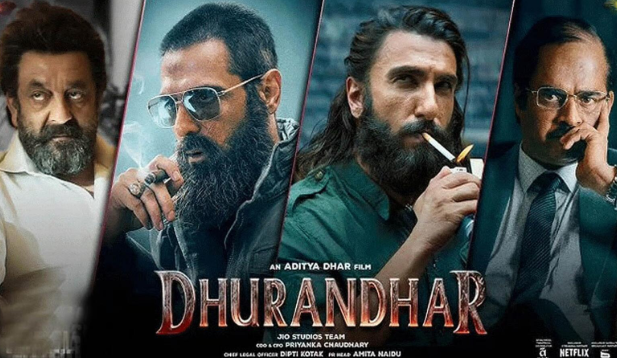
Dhurandhar and its sequel, Dhurandhar: The Revenge, are spy action thrillers. They are not documentaries. They are not government broadcasts. They are not textbooks. They are films — made to entertain, to thrill, to make you grip your armrest.
Audiences across India and around the world — from Mumbai multiplexes to packed theatres in New York, Melbourne, and London — sat through nearly four hours and didn’t want to leave. Some of them booked tickets again the next day. They called their friends. They posted on social media.
This is not what happens when people feel lectured at. This is what happens when people are genuinely moved by great cinema.
Yet somehow, a loud chorus of critics decided that this enormously popular, emotionally powerful film is just propaganda. It is worth asking — is it?
And more importantly, where were these same critics for the last thirty years?
It Is Based on Real Events. That Is Not a Crime.
The attacks that inspired Dhurandhar actually happened. The IC-814 hijacking happened. The 2001 Parliament attack happened. The 2008 Mumbai attacks happened. Nearly 200 people died in a single night in Mumbai. Hundreds of families were destroyed.
These are not invented grievances. These are documented, internationally verified, historically recorded events. Depicting them in a film is not propaganda. It is storytelling rooted in reality — which is precisely what the greatest films in history have always done.
Steven Spielberg made Schindler’s List about the Holocaust. Clint Eastwood made American Sniper about the Iraq War. Britain has produced dozens of films glorifying its wartime past. America’s entire superhero industry is built on the fantasy of national invincibility. Nobody calls those propaganda. Nobody demands that Hollywood balance every war film with a sympathetic portrayal of the opposing side.
So why is India uniquely expected to apologise for telling its own story?
The Emperor Who Loved John Wayne
Before we go any further, consider this remarkable moment in history.
In 1975, Emperor Hirohito of Japan made an official state visit to the United States. He had lived through the Second World War — not as a distant observer but as the Emperor of a nation that fought America in the most brutal conflict the Pacific had ever seen. His country had been bombed. His people had suffered unimaginable losses. Japan had been defeated and occupied.
Yet when asked if there was anyone he particularly wished to meet during his American visit, Emperor Hirohito had a specific and personal request — he wanted to meet John Wayne.
John Wayne! The actor who had spent decades on screen as the all-American hero, fighting and defeating Japanese soldiers against impossible odds. Films like The Sands of Iwo Jima and Flying Leathernecks were unapologetically, gloriously pro-American. The Japanese were the enemy. America always prevailed. By the standards that today’s critics apply to Dhurandhar, these films would be condemned as the most blatant and dangerous propaganda ever committed.
Yet the Emperor of Japan simply wanted to shake the man’s hand. He had watched those films and admired them — not despite their patriotism, but while being fully aware of it. He was sophisticated enough, wise enough, and mature enough to separate the art from the politics. He did not need a film critic to warn him about agenda. He had lived through the actual war and he still chose to enjoy the cinema.
This single historical moment dismantles the propaganda argument against Dhurandhar more completely than any intellectual analysis ever could. If Emperor Hirohito could watch John Wayne defeat Japanese soldiers on screen and still consider him worth crossing an ocean to meet, perhaps Indian critics can allow their own countrymen to enjoy a thriller about real attacks on their own soil — without screaming propaganda.
John Wayne never apologised for his films. He didn’t need to. And neither does Dhurandhar.
The Feel-Good Factor is a Feature, Not a Bug
When you walk out of a James Bond film, you feel good. When you finish a Marvel movie, you feel excited. When the credits roll on a Rocky film, you want to stand up and cheer. That is the entire point of cinema — to make you feel something larger than your everyday life.
Dhurandhar does exactly this for Indian audiences. It makes them feel proud, seen, and emotionally connected to their own history. That is not manipulation. That is what good films do. The idea that Indian audiences are somehow too simple to enjoy a patriotic thriller without being brainwashed into hatred is not just wrong — it is deeply condescending.
Ordinary people who buy a ticket, eat their popcorn, watch the film, and go home are perfectly capable of separating a cinematic experience from a political ideology. They have been doing it for a hundred years. Emperor Hirohito understood this. It is a shame that some modern Indian critics apparently do not.
The Critics
Here is where the conversation gets uncomfortable. And it should.
For decades, Bollywood produced a very specific and very consistent kind of love story. Hindu girl meets Muslim boy. Families object. Love conquers all. The audience is invited to root for the couple, celebrate their union, and feel uplifted by the breaking of barriers. Films built on this formula won awards, received glowing reviews, and were celebrated by the very same critics who are today worried about the “agenda” in Dhurandhar.
Nobody called those films propaganda. So why are Pakistani critics shedding crocodile tears! Nobody asked whether they were pushing a particular cultural narrative. Nobody worried about whether young Hindu girls watching those films were being subtly influenced. The critics applauded. The awards were handed out. And everyone moved on.
But then something interesting happened.
When the dynamic was reversed — when a Hindu boy fell in love with a Muslim or Pakistani girl — the reaction was very different. There was discomfort. There was outrage in certain corners. Films were protested. The same people who had celebrated barrier-breaking love stories suddenly found reasons to be uneasy when the barriers being broken ran in the other direction.
The most striking example is Henna, released in 1991. This was a Raj Kapoor project — one of the most beloved filmmakers in Indian history — completed after his death by his son Randhir Kapoor. The film told the story of a Hindu Indian man who loses his memory near the Pakistani border, is sheltered by a Pakistani Kashmiri family, and falls in love with their daughter, played by Pakistani actress Zeba Bakhtiar. It was a genuine, tender love story across the most painful border in the world.
The outrage it caused was real. A Pakistani actress as the romantic lead. A Hindu boy humanising a Pakistani Muslim family. Partly shot across the border. For those who had championed cross-cultural love stories for years, this particular version seemed to go too far.
Another example is 1942: Love Story that caused a storm. The double standard was plain to see then. It is still plain to see now.
The Real Agenda — And Who Really Has One
Let us be direct. The critics calling Dhurandhar propaganda are not worried about cinema’s influence on society. If they were, they would have raised those concerns consistently across decades, across all types of films, across all directions of cultural messaging.
They didn’t. They raised them selectively — only when the story being told was one they were uncomfortable with.
This tells us something important. The objection to Dhurandhar is not really about propaganda. It is about the fact that the cultural conversation has shifted. For a long time, mainstream Indian cinema told stories that flattered one particular worldview and one particular set of sensibilities. The people who benefited from that are now unsettled to find that different stories, told from a different perspective, are drawing the biggest audiences in Indian cinema history.
That discomfort is understandable. But dressing it up as principled concern about propaganda, while staying completely silent about the narrative agenda embedded in thirty years of earlier Bollywood output, is not honest criticism.
What Dhurandhar Actually Is
Dhurandhar is a brilliantly made, emotionally powerful, commercially successful piece of entertainment. It is long — and it earns every minute. It is intense — because the real events it draws from were intense. It makes you feel proud to be Indian — and there is absolutely nothing wrong with that.
It is the kind of film that reminds you why cinema exists. Not to lecture. Not to correct. But to take you somewhere you have never been, make you feel something you have never felt, and send you home changed in some small way.
Seventy-four countries watched it.
Audiences sat for four hours and asked for more. Records fell one after another. And millions of ordinary people — not politicians, not critics — voted with their feet and their wallets and said: this story matters to us.
That is not propaganda. That is cinema doing its job perfectly.
And the critics would do their job far better if they applied their principles consistently — to every film, every era, every narrative — rather than discovering the dangers of agenda only when the agenda is not their own.
Emperor Hirohito understood the difference between a great film and a political weapon. He travelled across the world to honour an actor whose films had made his own people the enemy — because he recognised genius, craft, and the pure power of storytelling when he saw it.
Our critics would do well to learn from his example.
The most powerful stories are always the ones somebody doesn’t want told. Dhurandhar got told. The world listened. That is worth celebrating.
The John Wayne and Hirohito story is a genuinely powerful and unexpected moment — because it is the kind of real life example that no critic can easily dismiss. It is history making your argument for you.
References
1.https://m.imdb.com/title/tt33014583/
2.https://www.hollywoodreporterindia.com/features/insight/top-10-highest-grossing-indian-films-of-2025-from-dhurandhar-and-kantara-chapter-1-to-saiyaara
3.https://www.bollywoodshaadis.com/articles/dhurandhar-2-plot-review-dhurandhar-the-revenge-76430
4.https://sundayguardianlive.com/entertainment-news/dhurandhar-2-release-check-runtime-cast-pre-booking-release-languages-countries-cameos-paid-preview-collection-expected-box-office-collection-all-you-need-to-know-177125/
5.https://www.india.com/entertainment/dhurandhar-2-worldwide-box-office-collection-day-3-ranveer-singhs-spy-thriller-creates-history-becomes-highest-grossing-of-2026-after-beating-sunny-deol-varun-dhawan-s-border-2-8352458/