

THE ASIAN INDEPENDENT UK

Bal Ram Sampla
Geopolitics
Two British politicians have made controversial comments about race and representation. Sarah Pochin, a Reform UK MP, complained about seeing too many Black and Asian people in adverts. Humza Yousaf, former Scottish First Minister, pointed out that senior positions in Scotland were all held by white people. Both faced criticism, but were treated very differently by the public and media. This raises questions about consistency and what we consider racist.
I have taken two different controversial comments and analysed it in depth.
What Sarah Pochin Said
In 2025, Sarah Pochin appeared on Talk TV and said it “drives me mad” when she sees adverts “full of black people, full of Asian people.” She claimed that white families are “not represented anymore” in advertising. She argued that adverts don’t reflect what British society actually looks like.
She later apologized for how she worded her comments but stood by her main point. She said the advertising industry had gone “DEI mad” (meaning diversity, equity and inclusion programs had gone too far).
What Humza Yousaf Said
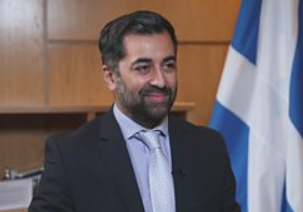
In 2020, after George Floyd’s murder, Humza Yousaf gave a speech about racism in Scotland. He listed many powerful positions and pointed out they were all held by white people. This included judges, police chiefs, prison governors, and other senior roles.
His point was that ethnic minorities were locked out of positions of power in Scotland. He was highlighting what he saw as structural inequality and lack of diversity in leadership.
The Different Reactions
Sarah Pochin faced widespread condemnation. Politicians called her comments racist and a disgrace. Many said her frustration at simply seeing Black and Asian people revealed racial prejudice.
Humza Yousaf also faced criticism. Thousands of people reported his speech to police when Scotland’s hate crime law came into effect. Critics, including Elon Musk, called him racist against white people. However, police confirmed no crime was committed, and many defended the speech as legitimate commentary on inequality.
Why Were They Treated Differently?
The key difference is the direction of their concerns:
(1) Pochin was arguing for less visibility.
She wanted to see fewer Black and Asian people in adverts. She was complaining that minorities were too present in public spaces.
(2) Yousaf was arguing for more inclusion.
He wanted ethnic minorities to have access to powerful positions they were excluded from. He was complaining that minorities were absent from leadership roles.
One was asking for less representation of minorities. The other was asking for more. This is why many people see them completely differently, even though both mentioned race extensively.
Are These Labels Fair?
This brings up difficult questions about how we use words like “racist”:
(1) Those who call Pochin racist argue: Being angry at seeing Black and Asian faces in everyday life reveals racial hostility. Wanting less visibility for minorities in public spaces is racism, regardless of how it’s phrased.
(2) Those who defend Pochin argue:
She was expressing an opinion about advertising demographics, not hatred of other races. She might be prejudiced, but having preferences about representation isn’t the same as believing races are superior or inferior. Labels like “racist” should be reserved for more serious beliefs and actions.
(3) Those who call Yousaf racist argue: Listing positions held by white people and framing it negatively is anti-white racism. Imagine if someone listed positions held by ethnic minorities and complained about it.
(4) Those who defend Yousaf argue: Pointing out lack of diversity in power structures is not racist. He was highlighting inequality, not attacking white people. There’s a difference between advocating for inclusion and attacking a racial group.
The Broader Issue: Labels and Debate
This comparison reveals a bigger problem in modern political debate. Terms like “racist,” “Islamophobic,” and “bigot” are used very loosely. This creates several problems:
(1) Labels can shut down legitimate debate.
If any criticism of immigration policy is called racist, or any criticism of Islamic practices is called Islamophobic, people stop engaging with the actual arguments.
(2) Overuse weakens the words.
When everything is called racist, nothing is. Serious cases of actual racism get lost in the noise.
(3)But some criticism genuinely is prejudiced.
There’s a real difference between policy discussions and prejudice. The challenge is distinguishing between them.
Conclusion
Sarah Pochin and Humza Yousaf both made controversial comments about race and representation. They were treated very differently because one advocated for less minority visibility while the other advocated for more minority inclusion in power structures.
Whether either is “racist” depends on how you define the term. Some reserve it for beliefs in racial superiority or deliberate discrimination. Others use it more broadly for any racial prejudice or hostility.
Finding ways to discuss race, representation, and identity without immediately resorting to the harshest labels might help us actually address the concerns people have on all sides.
References
1.https://www.itv.com/news/2025-10-25/reforms-pochin-apologises-after-hitting-out-at-adverts-full-of-black-people
2.https://azat.tv/en/reform-uk-sarah-pochin-apologises-diversity-tv-advertising/
3.https://leftfootforward.org/2025/10/reform-mp-sarah-pochin-slammed-for-racist-comments-about-diversity-in-adverts/
4.https://www.newsletter.co.uk/news/politics/watch-in-full-humza-yousafs-white-people-speech-that-has-sparked-racism-complaints-under-scotlands-new-hate-crime-law-4578704
5.https://www.scottishdailyexpress.co.uk/comment/humza-yousafs-controversial-white-speech-32575111
6.https://www.scottishdailyexpress.co.uk/comment/holyrood-admits-changing-official-record-32618006