THE ASIAN INDEPENDENT UK

Bal Ram Sampla
Geopolitics
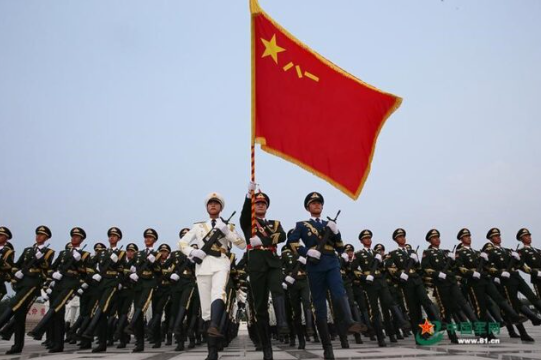
On September 3, 2025, China held its biggest military parade in years. Thousands of soldiers marched through Beijing while President Xi Jinping watched alongside leaders from Russia, North Korea, and 20 other countries. The parade showed off China’s newest weapons—missiles that can hit targets anywhere in the world and advanced military technology. This wasn’t just a celebration. It was China sending a message: we are now a superpower.
The West’s Big Mistake
For 30 years, Western leaders believed one simple idea: if we do business with China, they will become more like us. They thought that making money and trading goods would make China more democratic and peaceful. This belief shaped everything—trade deals, technology sharing, and investment policies.
The plan backfired completely. China used Western help to become powerful, but they never became democratic. Instead, they built their own system and now challenge the West directly.
The Price of Economic Integration
Western nations, particularly the United States and European Union, facilitated China’s rise through several critical decisions:
1. Technology Transfer
In exchange for market access, Western companies shared advanced technologies that accelerated China’s industrial development. What was intended as mutual benefit became one-sided advantage as China absorbed, improved upon, and eventually competed with Western innovations.
2. Manufacturing Dependency
The pursuit of lower costs led to the wholesale migration of manufacturing to China, creating supply chain dependencies that now represent strategic vulnerabilities. From pharmaceuticals to electronics, the West finds itself reliant on a potential adversary for critical goods.
3. Financial Integration
Western investment banks and pension funds poured capital into China’s development, essentially financing the rise of their own strategic competitor. Meanwhile, Chinese investments in Western infrastructure, technology companies, and institutions grew with little reciprocal access.
4. Educational Exchange
Western universities welcomed hundreds of thousands of Chinese students, many in sensitive fields like engineering and computer science, while Chinese institutions remained largely closed to meaningful Western academic presence.
The New Reality
Today’s China is not the reform-minded partner the West anticipated. Instead, it has emerged as a confident authoritarian power with its own vision for global order. The military parade featuring advanced weaponry alongside diplomatic gatherings with like-minded authoritarian leaders demonstrates China’s alternative approach to international relations—one that explicitly challenges Western liberal democratic norms.
China’s Belt and Road Initiative now spans continents, creating economic dependencies that translate into political influence. Its technological capabilities in areas like artificial intelligence, quantum computing, and military systems increasingly match or exceed Western equivalents. Most concerning, China has shown little interest in adopting Western values or integrating peacefully into existing international institutions, instead seeking to reshape them according to its own preferences.
The Challenge Ahead
The West now faces a competitor it helped create. China’s economic rise was not inevitable—it was facilitated by Western policies that prioritized short-term economic gains over long-term strategic considerations. The result is a more complex and potentially dangerous international environment.
This is not to argue that engagement was entirely wrong, but rather that it was pursued without adequate safeguards or realistic expectations about China’s ultimate intentions. The West assumed that economic development would naturally lead to political liberalization, failing to recognize that authoritarian systems could also modernize while maintaining centralized control.
Lessons for the Future
As China continues to assert itself on the global stage, Western nations must grapple with the consequences of their past decisions. The challenge is no longer how to integrate China into the existing order, but how to compete with a peer competitor that seeks to establish its own sphere of influence.
This requires acknowledging that the era of unconstrained economic engagement has ended. Future relationships with rising powers must balance economic opportunities against strategic risks, ensuring that mutual benefit does not become one-sided advantage.
The military parade in Beijing serves as a stark reminder that good intentions and economic incentives alone cannot guarantee peaceful outcomes in international relations. Sometimes, helping others rise can mean creating your own greatest challenge.
References
1.China’s Military Parade Is a Powerful Diplomatic Display – Xi Jinping is trying to link past, present, and future. https://foreignpolicy.com/2025/08/28/china-ww2-military-parade-putin-xi/
2.https://thediplomat.com/2025/08/whos-coming-to-chinas-2025-victory-day-military-parade/
3.https://edition.cnn.com/world/live-news/china-military-parade-xi-jinping-09-03-25-intl-hnk
4.https://www.cnbc.com/2025/09/03/china-military-day-parade-xi-trump-beijing-us.html
5.https://www.washingtonpost.com/world/2025/09/02/china-xi-jinping-military-purge/