By: Surjit Singh Flora
(Asian independent) Terrorists have been able to hide out in Canada for years. India has always asked Canada to take the problem seriously.The Canadian government finally branded the Bishnoi gang a terrorist group on Monday. This means that any of its members’ actions and crimes will now be subject to a severe legal framework. The Conservative Party, which is the primary opposition party, and the NDP have been pushing for this for a long time.
Last year, the RCMP accused the Bishnoi gang, which is based in India, of being behind a campaign of violence and intimidation against Sikh activists in Canada. Indeed! Not every Sikh is a terrorist, and not every terrorist is a Sikh.
Last year, during Thanksgiving weekend, the Bishnoi gang made headlines throughout Canada when the RCMP accused them of perpetrating violent crimes against Canadian Sikhs to promote the creation of Khalistan, an independent Sikh state in India.
Since at least 2023, police in Ontario, Alberta, and British Columbia have made similar assertions.
Indian diplomats also reportedly told New Delhi authorities about Khalistan sympathizers in Canada, who then gave this information to the Bishnoi gang.
The Canadian government has officially called Lawrence Bishnoi’s gang a terrorist group. Anyone who gives them money will now be in legal danger. The gang is said to have given illegal orders over the phone from jail. The Canadian Federal Police said last year that the Bishnoi gang was responsible for a number of killings and other violent crimes in Canada, which they said were ordered by Indian intelligence services. The Indian government has been refuting similar claims in Canada.
In truth, in September 2023, Former PM Justin Trudeau, informed the House of Commons that Canada had “credible” proof that New Delhi was engaged in the assassination of Hardeep Singh Nijjar, a Sikh activist. His death is still a mystery. For India he’s nothing more than just a terrorist.
A lot of people assume that this is Trudeau’s fight with Modi since Prime Minister Justin Trudeau’s trip to India in 2018 was a total political catastrophe.
The trip started off on a very bad note when a minister of state, not a member of Modi’s cabinet, met the Trudeau team at the airport.
International and local observers said that Trudeau was being disregarded since he didn’t seem to be very visible, which was thought to be because of his ties to separatists and radicals.
Even though a lot of work went into convincing former Punjab Chief Minister Amarinder Singh that his government wasn’t connected to radicals, one of the people who travelled with him to India turned out to be one of them.
The scenario changed only hours before his meeting with Prime Minister Narendra Modi when the Canadian High Commissioner invited Jaspal Atwal, a Sikh fanatic with a history of trying to kill people and ties to terrorist groups, to a banquet in Trudeau’s honour in Delhi.
In 1986, Atwal was found guilty of trying to kill an Indian minister. He was also engaged in the assault on Ujjal Dosanjh, a former premier of British Columbia.
Atwal had previously been pictured with Trudeau’s wife, Sophie, in Mumbai, along with other members of his entourage, before Trudeau said he was “unfortunate” that Atwal’s offer was turned down.
The problem is that many are unhappy with Canada’s apparent backing for India’s pro-Khalistani Sikhs. Trudeau has been very quiet about it and has never publicly addressed the issue or taken it seriously.
In October 2024, the Royal Canadian Mounted Police stated they had uncovered strong evidence tying “high levels” of the Indian government to a campaign of violence and intimidation against Canadians by the Bishnoi gang. This changed the relationship between the two countries again.
After this, Canada kicked out six Indian diplomats, including the High Commissioner. India then kicked out the same number of Canadians in response.
India says that Canada is letting Sikh extremists make threats and do violent crimes in both nations. They say that Ottawa didn’t take the 1984 Air India assault seriously enough to stop it, which might have been avoided and lives saved.
An Air India aircraft from Canada to India via London blew up off the coast of Ireland on June 23, 1985, killing all 329 persons on board. There was a bomb in a suitcase on the aircraft, even though the individual who bought the ticket hadn’t gotten on yet. There were 268 Canadians who died, and most of them were of Indian descent. 24 of them were Indians. There were just 131 corpses found in the water.
Talwinder Singh Parmar, the leader of a radical group named Babbar Khalsa that is now outlawed in Canada and India, and Inderjit Singh Rayat, an electrician, were detained by the Royal Canadian Mounted Police (RCMP) on various counts of firearms, explosives, and conspiracy.
India sought to get Parmar back from Canada in the early 1980s, but the case against him was poorly handled, and he was let go.
Canada has also helped Khalistani insurgents and criminals in the past, even when it meant putting the lives of other “native” citizens at danger. The Indian government handed Canada a number of papers on these terrorists and thugs, including Nijjar. Canada, however, did not pay attention to them.
There is a Khalistani gang battle going on in Canada right now that has killed a number of Khalistani criminals. Rayat was also killed by the Nijjar gang.
In reality, Canada’s new Prime Minister Mark Carney, who took over from Trudeau, has been working to slowly rebuild relations with India. Talks between law enforcement are very vital for creating confidence between the two nations.
The Canadian government may freeze the bank accounts of persons who are connected to the Lawrence Bishnoi gang, take their property, and any crimes they commit will be punished by the police and courts under stronger regulations than normal. It’s important to remember that the Lawrence Bishnoi gang has been behind a number of killings, ransom demands, and other violent crimes in Canada in the past. The opposition party, certain state chief ministers, and some municipal mayors have all made the same request: to lower the crime rate.
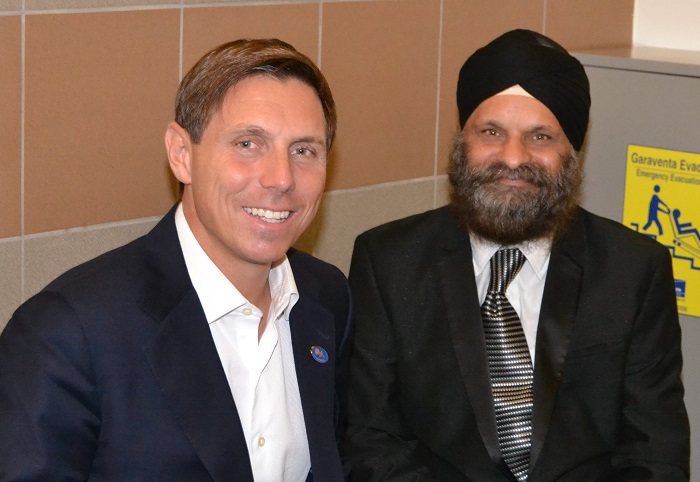
Also, Brampton City Mayor Patrick Brown is praising the Canadian government’s move to officially call the Bishnoi gang a terrorist group under the Criminal Code. The designation comes after months of lobbying from city officials, law enforcement, and community groups. For example, in June 2025, Mayor Brown wrote to Prime Minister Mark Carney and Public Safety Minister Gary Anandsangri asking for prompt action.
Mayor Brown spoke in a strong voice, adding, “The Bishnoi gang is smart, global, and ruthless.” “We need to match or go beyond the intelligence that law enforcement has if they want to break up their networks.” We also aim to cut off the transportation and communication linkages that make their work possible.
Mayor Brown also thanks the federal government for responding quickly to calls for help from Peel Regional Police, British Columbia Premier David Eby, the World Sikh Organization, and municipal leaders across the country. These leaders include Brenda Locke, the mayor of Surrey; Amarjit Sohi, the mayor of Edmonton; and Daniel Smith, the premier of Alberta. All of them urged the federal government to take action right away, even though the government of Canada insisted on making these important decisions.
Bishnoi is a well-known crook. He has threatened to kill famous Indian politicians, business leaders, and entertainers. In 2022, he was suspected of being the one who shot and killed Punjabi singer Sidhu Moose Wala, who was only residing in Canada for a short time.