THE ASIAN INDEPENDENT UK
Amarjeet-singh Bhamra the Secretariat of All Party Parliamentary Group Indian Traditional Sciences organised this year’s Ayurveda Day celebrations in line with its annual tradition for the past eleven years. He said it was delightful to receive all British Ayurveda Associations supporting the work of our Parliamentary Group.
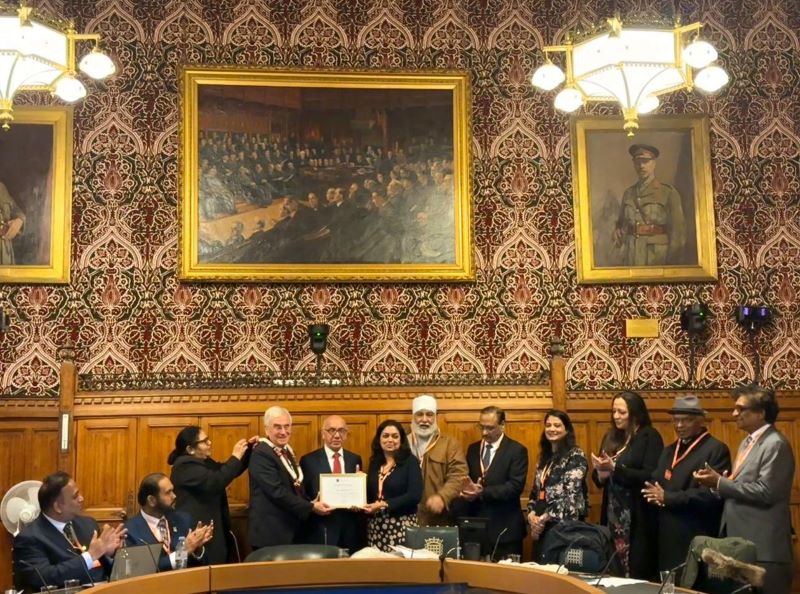
 The Rt Hon John McDonnell, a long-term British Labour Politician and Member of Parliament for Hayes & Harlington who also served as Opposition Chancellor of the Exchequer 2015-2020 welcomed all the specially invited guests to celebrate Ayurveda Day in the British Houses of Parliament on 15th December 2025.
Idealistic, pragmatic, committed and outspoken, John was warmly welcomed as our newly appointed Chairman of the All Party Parliamentary Group Indian Traditional Sciences. The connection with MP McDonnell goes back over two decades, during his commitment to standing firm to our cause with the saveherbalmedicine.com campaign and recognising traditional rights for all medicine systems.
Dr. Bhushan Patwardhan Former Vice Chairman University Grants Commission of India was our guest at last year’s Ayurveda Day and sent his message on this occasion:
“I thank the All-Party Parliamentary Group Indian Traditional Sciences in the United Kingdom for this opportunity, and I appreciate Shri Amarjeet Singh Bhamra for his sustained efforts in advancing a constructive policy dialogue on Yoga and Ayurveda. Both systems offer strengths that align with NHS priorities to find innovative, affordable, and evidence-informed approaches for improving population health. My perspective is grounded in biomedical research alongside an understanding that modern healthcare continues to face persistent gaps in primary prevention, long-term management of non-communicable diseases, and mental health. These are precisely the areas where evidence for Yoga and Ayurveda has expanded significantly.
Ayurveda emphasises personalised prevention through diet, digestion, circadian biology, sleep, behaviour, and mental balance. Contemporary science increasingly recognises these domains through research on the microbiome, immune modulation, metabolic regulation, and neuroendocrine stability. During the Covid-19 pandemic, India conducted over 100 controlled clinical and preclinical studies on Ayurvedic formulations and practices. Many reported faster symptom resolution, lower inflammatory markers, and reassuring safety when used as adjuncts to standard care. These findings do not replace vaccination or biomedical treatment, but they show the potential of traditional knowledge to contribute to supportive care in public health emergencies. The UK’s collaboration with the World Health Organization on a clinical trial evaluating Ashwagandha further reflects rising scientific interest in evidence-based applications for stress regulation, immune resilience, and metabolic balance.
Yoga, widely practiced in the UK, has an increasingly robust research foundation. Studies demonstrate benefits for autonomic function, inflammation, glycaemic control, musculoskeletal health, anxiety, depression, and overall well-being. These outcomes speak directly to several NHS challenges, including multimorbidity, chronic pain, and widespread mental health concerns. Yoga also promotes self-care, which is indispensable for sustainable health systems.
Integrating rigorously validated components of Ayurveda and Yoga does not replace existing medical practice. It offers complementary, safe, and affordable strategies that can strengthen resilience, reduce preventable disease burden, and enhance quality of life. With appropriate scientific oversight, professional standards, and strong research partnerships, the UK can shape a model of integrative care that is evidence-based, culturally aligned, and responsive to population needs.
I remain available for continued dialogue on how these approaches may be responsibly and effectively incorporated within the NHS to present an evidence-based integrative healthcare model for the world.”
Message from our overseas guests were also read on this occasion from: Dr Tony Nader World Head of Transcendental Meditation The Netherlands, Prof Darshan Shankar Vice Chancellor The University of Trans-Disciplinary Health Sciences and Technology India, Dr. Manoj Nesari, BAMS, MD PhD Former Advisor Ministry of AYUSH and Dr Arvind Chopra AYUSH Distinguished Chair for Public health and Epidemiology India.
Guest speakers in attendance:
Dr U. A. Tanvir Alam M.S.(Orth), MRCGP, DFSEM, MACadMEd, FRCGP Deputy Medical Director for North East Essex ICB elaborated on the co-existence of Allopathy and Ayurveda Traditional Medical systems in the NHS.
Antoni Przechrzta, a healer and educator, and President of the Polish Association of Spiritual Healers. Antoni spoke of his extensive experience in cooperation with legislative and medical institutions and has been actively engaged in initiatives aimed at integrating complementary medicine with mainstream healthcare systems.
Dr Sunil Kumar MBBS MRCA FCAI FRSA FBSLM DipIBLM MAcadMEd
An Anaesthesiologist and Foundation Year Doctors Programme Director at University Hospitals of Morecambe Bay NHS Trust reiterated the importance of Ayurveda as Lifestyle Medicine is already established in the US & UK.
Kuldeep Shekhawat Currently director of MATV UK and Swagat TV Network USA and was appointed President of Overseas Friends of BJP UK (OFBJP UK) in 2018. The organization continues to strengthen ties between India and its global community while promoting the values and vision of the Bhartiya Janata Party (BJP).
Dr Shantha Godagama MBAcC DAMS
Founder British Ayurvedic Medical Association, Former member
Herbal Medicine Advisory Committee, Independent Review Panel, Borderline Products Medicines & Healthcare Regulatory Authority UK.
Dr (Ayur) Kanchan Sharma President of Ayurvedic Professionals (APA). Founder/Director of Ayurveda Heaven Academy. Currently working with NHS Trust and running a pharmacy business.
Romany Rix, Vice-Chair of the British Association of Accredited Ayurvedic
Practitioners (BAAAP). She also serves on the Executive Committee of the British Ayurvedic Medical Council (BAMC). Her work focuses on maintaining high standards in practice and advancing the recognition of Ayurveda’s role in prevention and long-term wellness.
Dr Palitha Serasinghe Registrar at British Ayurvedic Medical Council (BAMC). Former Ayurveda Program Leader, Middlesex University. Currently Dean – Director, London College of Ayurvedic Medicine.
In this year’s APPG Indian Traditional Sciences recognition list of outstanding contribution to Ayurveda, Dr Rupinder Singh and Dr Anjali Joshi were awarded the prestigious Ayurveda Ratna. Krishna Sedani of Quality Foods was presented the Ambassador for Ayurveda honour.
Hon. Virendra Sharma, a distinguished former British Member of Parliament, widely respected for his decades of public service and leadership in promoting equality, education, and community cohesion. Throughout his parliamentary career, he has been a steadfast advocate for women’s empowerment, health, traditional medicines and human rights. Hon Sharma offered his continued support to the APPG Indian Traditional Sciences and offered vote of thanks.