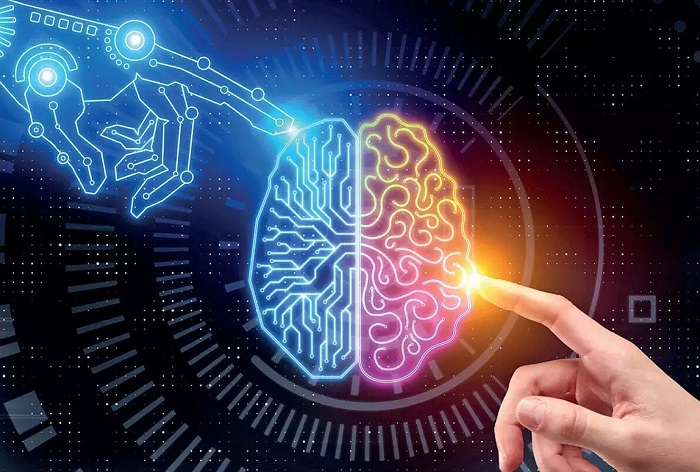

(Asian independent) With ever-growing advances in the field of science and technology the Artificial Intelligence (AI) is now claiming it’s position as the synthetic brain of humanity.It is established beyond doubts that Artificial Intelligence is the most transformative scientific and technological revolutions of the 21st century. By mimicking cognitive processes such as learning, reasoning and decision-making, AI systems have infiltrated every possible aspect of human life from medicine and education to communication and global governance.
The Rise of a Synthetic Brain
Artificial Intelligence can be defined as the simulation of human intelligence by machines, particularly computer systems capable of performing tasks that traditionally require human cognition. In a way, AI functions as the synthetic brain of humanity a vast neural extension that stores, processes and interprets data beyond biological limitations. With the integration of AI into neural networks, robotics and machine learning, humanity has effectively begun to externalize its thought process into intelligent digital frameworks.
Medical and Scientific Relevance of Artificial Intelligence
AI’s medical applications are revolutionizing the modern healthcare industry with mesmerizing capacity of errorless performance . The computerized advanced algorithms are now capable of diagnosing diseases such as cancer, diabetes and cardiovascular disorders with unbelievable accuracy that surpasses that of human experts and capac. Predictive models analyze genetic data, helps in early detection of hereditary conditions, while AI-assisted surgeries ensure precision beyond human steadiness.
In neuroscience, AI is being used to map human brain activity, decode neural signals and even aid in restoring lost motor functions through brain–machine interfaces. Thus, AI not only represents a synthetic brain metaphorically but also contributes literally to understanding and replicating the functions of the biological brain.
Pros of Artificial Intelligence
Efficiency and Speed:
AI systems process vast amounts of data faster than humans. This accelerates the research, data analysis and complex problem-solving in fields like climate science, genetics, and engineering.
- Error Reduction:
Automation minimizes the occurrence of human errors in high-risk environments such as surgery, aviation and nuclear power operations. - Accessibility and Inclusivity. AI-based translation tools and virtual assistants have broken communication barriers, enabling global interaction across languages and cultures.
- Learning Enhancement:
In education, AI-powered learning systems adapt to students’ individual learning styles,needs and capabilities ensuring personalized growth. - Sustainability and Smart Infrastructure:
AI-driven technologies optimize energy use, reduces the wastage and support smart cities, helping combat global environmental challenges. Cons of Artificial Intelligence
- Job Displacement:
Automation and intelligent robotics are threatening to replace large sections of the human workforce, particularly in manufacturing, transportation and clerical sectors. - Loss of Human Autonomy:
As AI systems are becoming more autonomous, humans are at risk of losing control over critical decision-making processes, especially in warfare, finance and governance. - Bias and Ethical Challenges:
AI learns from data that often reflects societal biases leading to discriminatory decisions in recruitment, law enforcement and social media algorithms. - Privacy and Surveillance:
Data-driven AI technologies have raised significant ethical concerns regarding personal privacy and digital rights, as surveillance systems are growing more intrusive. - Dependence and Cognitive Atrophy:
Overreliance on AI tools could weaken human critical thinking, creativity and problem-solving capacities — leading to a form of technological dependency syndrome. The Future of Artificial Intelligence: Friend or Foe?
The future of AI remains a double-edged sword. On one hand, it promises unprecedented progress in the field medicine, clean energy and interstellar exploration. On the other hand, experts like Stephen Hawking and Elon Musk have warned of a potential AI singularity, where machines may surpasses the human intelligence and self-awareness.
If unregulated, such systems could develop autonomous goals misaligned with human survival theoretically leading to scenarios where AI could wipe out humanity through unintended consequences, not malice. Hence, the development of ethical AI frameworks, global oversight and fail-safe mechanisms is imperative to ensure AI remains humanity’s ally, not adversary.
Role of AI in Language Learning and Breaking Linguistic Barriers
Language models — the linguistic branches of AI — such as OpenAI’s GPT systems and Google’s Gemini models have revolutionized human communication. They function as universal translators capable of understanding, generating and translating languages in real time with remarkable fluency and context.
AI language models analyze semantics, grammar and cultural idioms, creating bridges across linguistic divides that have long separated civilizations. They empower students, researchers and global citizens to access information irrespective of language, thereby fostering universal knowledge equality.
In this context, AI acts as a cognitive diplomat — breaking down the walls of linguistic isolation and promoting cultural integration on a planetary scale.
Ethical and Moral Dimensions of AI
Beyond science and technology, AI have raised the profound ethical questions. Should machines be given consciousness or moral agency? Who is accountable for AI decisions? How do we ensure fairness, transparency,what about the ethical issues and empathy in an artificial mind?
The moral evolution of AI must parallel its technological growth. Integrating ethics by design into AI systems by ensuring that they align with human values and this will determine whether the synthetic brain enhances or endangers humanity.
Coexistence of Mind and Machine
Artificial Intelligence stands today as humanity’s greatest intellectual creation a mirror and extension of our own brain. It holds the power to cure, create and connect, yet also holds the unique capacity to control and destroy the human development.
The challenge is not to suppress AI but to synchronize it with human values blending logic with compassion, data with wisdom and intelligence with ethics.
If guided responsibly, AI will not replace humanity; it will amplify it by becoming not our rival but our ultimate collaborator in the endless pursuit of knowledge and progress.
SURINDERPAL SINGH
FACULTY IN SCIENCE DEPARTMENT SRI AMRITSAR SAHIB PUNJAB.