

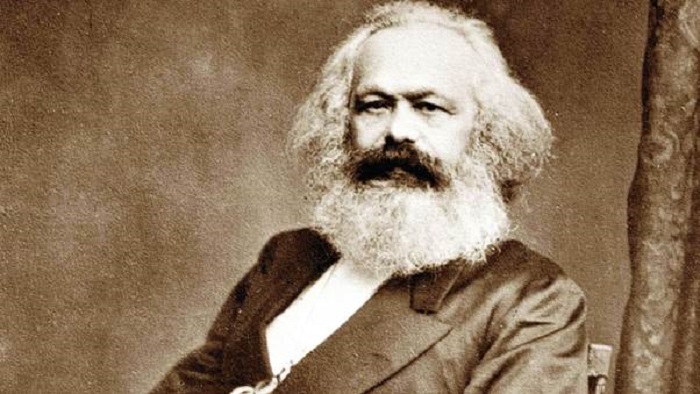
(Asian independent) In his article “An imaginary letter from Karl Marx to Communist parties” Manoj Kumar Jha, RJD Member of Rajya Sabha flags certain symptoms afflicting Indian Communist Parties – particularly their theoretical – ideological stagnation, inability to engage living social realities and mechanical treatment of caste. In his first para he holds Marxist categories – class, labour, surplus exploitation is not intelligible in India. These concepts are neither foreign nor abstract in India, they are embedded in everyday experience and common political language. Workers, peasants, informal labourers and even rural poor articulate exploitation, dispossession and labour extraction in terms that directly correspond to these categories. The problem is how to develop these categories into a political force against global finance capital.
Second point he raises is that Marxism was never meant to be doctrine. Here is a problem with his doctrine of posing method and doctrine against each other. Doctrine without method is blind and dead, method without doctrine is empty They operate in praxis, in dialectical relation. This is true that the current doctrinal position of different political thoughts is built for the 20th century problem of the industrial world. It is failing to meet the challenges of 21first century posed by majoritarian politics and finance capital. Now a return to critical method is needed for a new analysis which may require doctrinal update.
Third point he holds separation of class from caste. Here he is in the old mode of polemics when structure and superstructure dichotomy was discussed. Kausambi, a known Marxist held caste is in a nascent form of class. Vinod Mishra who worked at the praxis of theory and practice in Bihar particularly in Bhojpuri said caste is an undifferentiated class. Moreover, EMS Namboodripad’s central thesis was caste as a social relation of production through which surplus is extracted. Though Ambedkar’s view on caste is as an autonomous entity which cannot be reduced to class. However, enduring debate between class and caste remains a central theoretical political divide in understanding Indian reality. The concrete task is to fight corporate Hindutva nexus and it requires a struggle that is simultaneously against exploitation and social oppression. For this, democratic coalition is needed where different schools of thought work to save the constitution, livelihood, and sovereignty of the nation as an organic whole.
Lastly, the article holds far from dismissing the Indian constitution as a mere bourgeois compromise, suggesting defending constitutional rights is a crucial battle ground for material struggle since it embodies anti-colonial, anti-caste aspiration. I fail to understand why this suggestion where all are one in defence of the constitution. I expect that the writer of the article will explain why caste politics of identity detached itself from political economy. Is it the politics of caste annihilation?
Akhilendra Pratap Singh
Founder Member of
All India Peoples Front.