

By: Surjit Singh Flora

(Asian independent) Three teenagers are facing hate-motivated charges after a 22-year-old Sikh man had his turban forcibly removed and beer poured on him aboard a public transit bus in Barrie, Ontario. The incident has drawn widespread condemnation from community leaders and politicians, and it has reopened a conversation many Sikhs know all too well: what the turban means to those who wear it—and why removing one by force is never a joke, a prank, or a comment on fashion.
The turban has been a sacred expression of faith, symbol of personal honour, and mark of duty for the Sikh community and beyond. While customs vary, and not all Sikhs wear them, their significance is tied to Sikh doctrine. The act of donning a turban each morning is a discipline of care and a daily reminder of a vow to live out humility and to be proud in faith. For many, it also covers uncut hair, which is paramount in the Sikh faith.
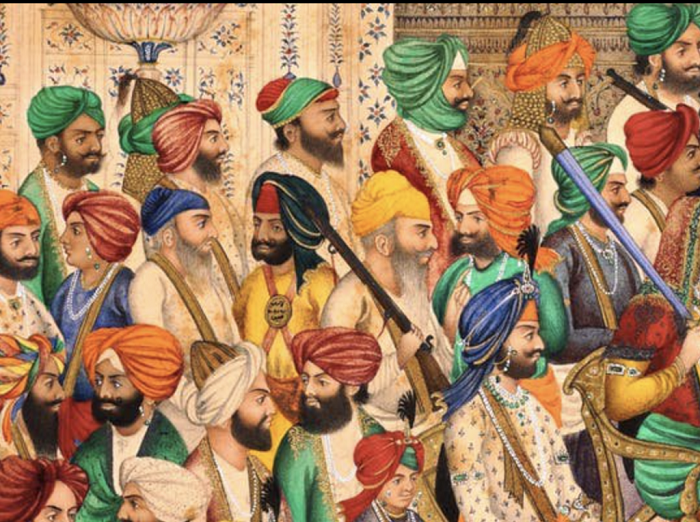
Historically, the turban in South Asia was reserved for royalty and a sign of social rank. In the time of the Sikh Gurus, the turban was a claim to equality and sovereignty for all, regardless of social class, and is a dignity enshrined in the teachings of Guru Gobind Singh Ji. The turban also makes Sikh identity public, an identity that for many wrappers brings with it a commitment to service and social justice and a commitment to support the harmed.
But that visibility also carries a danger when it encounters prejudice. That’s the risk highlighted by enduring Barrie allegations. As some commentators have noted, yanking off a turban is not only assaulting an article of clothing but attacking the man’s person, faith, and identity. Such allegations are yet to be proved in courts, and coverage of the incident should not be conflated with findings of guilt. The Barrie case is not isolated. Even I, as a Sikh immigrant, recalled having my turban torn off at White Oaks Secondary School in Oakville in 1990. New to Canada and with limited English, I felt unable to respond—and later cut my hair. I eventually regrew my hair and returned to wearing a turban, but my account offers one window into how such incidents can reshape a person’s relationship with a visible expression of their faith. No single experience speaks for every victim.
Public officials were quick to respond. Brampton Councillor Navjit Kaur Brar condemned the Barrie incident as a hate crime. Ontario MPP and Minister of Citizenship and Multiculturalism Graham McGregor called the targeting an attack on dignity and religious freedom. The World Sikh Organization urged serious attention and action, stating, “The Turban Is An Integral Part Of The Sikh Identity.”
The WSO has also emphasized that in the Sikh faith, men and women are equal, and wearing a turban is the choice of both. A Sikh woman who wears one may attach the same religious significance to it as a man does, while other Sikh women express their faith in different ways. Sikh teachings affirm the equal spiritual standing of women and men—and a person’s faith should never be judged by whether they wear a turban.
Community leaders say the path forward requires both accountability and education. Schools and transit agencies can teach staff about Sikh articles of faith and why a turban should never be touched or removed without permission—education that should include Sikh voices and reflect the diversity within the community. Police and transit agencies can make reporting options easy to find, explain what happens after a complaint, and ensure that people who report harassment are treated with respect, including when language barriers make the process harder.
Nor does respect require deep theological knowledge. It begins with a simple principle: a turban’s color or style gives no stranger permission to touch it. It belongs to the person wearing it.
For many Sikhs, the turban expresses faith, dignity, and responsibility to others. It is not a fashion accessory to be pulled away for someone else’s amusement. The Barrie allegations show why that distinction matters—and why a multicultural society depends on protecting the freedom of everyone in Canada to practise their faith openly, safely, and with their head held high.