
Balram Sampla

Geopolitics
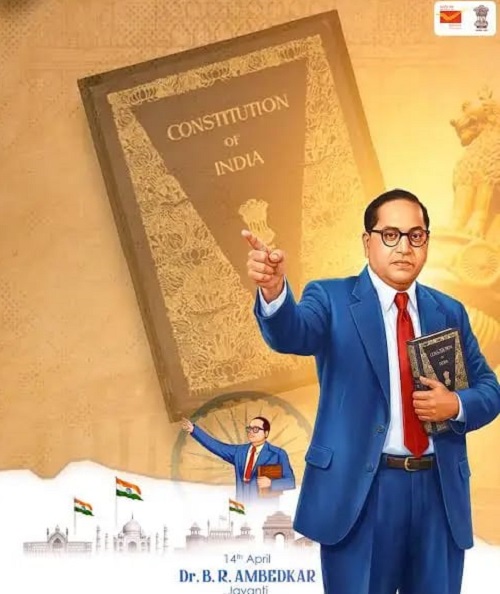
(Asian independent) When India adopted its Constitution on January 26, 1950, Dr. B.R. Ambedkar was celebrated as its chief architect. As Chairman of the Drafting Committee, he had successfully embedded essential safeguards into the nation’s legal bedrock, abolishing untouchability, banning forced labour, guaranteeing fundamental rights, and securing reservations for marginalized communities.
Yet, only a few years later, Dr. Ambedkar expressed deep frustration with how the constitution was being implemented, famously declaring in Parliament that he would be “the first person to burn it out.”
Dr. Ambedkar’s disillusionment did not stem from a flaw in constitutionalism itself, but from how the ruling upper-caste political establishment operated the system in practice.
1. The Collapse of Social Reform: The Hindu Code Bill (1951)
Ambedkar believed that political democracy was meaningless without radical social reform. To dismantle the internal hierarchies of traditional Hindu society, he drafted the Hindu Code Bill, which sought to grant women equal rights to property, inheritance, and divorce while ending polygamy and caste-restricted marriage customs.
However, when conservative elements within the ruling Congress Party strongly resisted these reforms, Prime Minister Jawaharlal Nehru stalled and got ” cold feet” eventually withdrew the bill ahead of the 1952 general elections.
Disillusioned that a Parliament governed by the new Constitution refused to pass basic social protections for women and lower castes, Ambedkar resigned as Law Minister in September 1951. He argued that passing economic laws while leaving social inequality untouched made a farce of the Constitution.
2. The Dominance of the Majority and the “Demon in the Temple”
On September 2, 1953, during a Rajya Sabha debate, Ambedkar voiced his famous outrage about burning the Constitution. Clarifying his remarks in 1955, he explained that a constitution is only an instrument:
”We built a temple for a god to come in, and if the demon comes and occupies it, what option have we got but to destroy the temple? We did not intend that it should be occupied by the Asuras [demons]. We intended it to be occupied by the Devas (gods).”
Ambedkar realized that despite legal guarantees on paper, the state apparatus remained overwhelmingly controlled by dominant upper-caste elites. If the ruling majority used constitutional mechanisms to consolidate power while ignoring minority rights and lower-caste emancipation, the document lost its moral authority.
3. The Unresolved Contradiction: Political vs. Social Democracy
Ambedkar’s frustration realized the exact warning he had delivered in his final speech to the Constituent Assembly on November 25, 1949. He had cautioned that India was entering a life of contradictions:
In politics, Indians would have equality through “one man, one vote.”
In social and economic life, Indians would continue to suffer inequality through “one man, one value” due to the unyielding caste structure.
In his final years, Ambedkar observed that elections operated smoothly, but social oppression, caste violence, and economic marginalization remained largely unchallenged by the political class. The Constitution had created a political democracy, but the social democracy required to sustain it was continually blocked.
Conclusion
Dr. Ambedkar’s late-life disillusionment was not a rejection of constitutional democracy, but a “stern critique of its execution”. He saw that the political establishment treated the Constitution as an “administrative shell”, using it to maintain executive power while failing to dismantle social hierarchies or grant true equality to women and minority communities. This was Nehru’s India.
This profound frustration ultimately led Ambedkar to embrace Buddhism in October 1956, seeking the social liberation and human dignity outside the Hindu fold that politics and law had failed to secure.
References
1.Ambedkar, B. R. (1949). Final Speech to the Constituent Assembly (November 25, 1949).
Ambedkar’s famous “Grammar of Anarchy” speech delivered the day before the Constitution was adopted, warning about entering a “life of contradictions” with political equality alongside social inequality.
2. Ambedkar, B. R. (1951). Resignation Statement from the Cabinet (October 1951).
Dr. Ambedkar’s official statement detailing his resignation as India’s first Law Minister over the stalling of the Hindu Code Bill and foreign policy differences.
3.Ambedkar, B. R. (1953 & 1955). Rajya Sabha Debates: September 2, 1953 & March 19, 1955.
Official parliamentary records containing Ambedkar’s “I would be the first person to burn it out” remark and his subsequent “Demon in the Temple” explanation.
4.Guha, Ramachandra. (2007). India After Gandhi: The History of the World’s Largest Democracy.
Chapters 7 and 8 detail the intense debate surrounding the Hindu Code Bill, Nehru’s retreat under pressure from conservative Congress elements, and Ambedkar’s subsequent resignation.
5.Keer, Dhananjay. Dr. Ambedkar: Life and Mission.
6.Dr. Babasaheb Ambedkar Writings and Speeches (BAWS).
7.https://www.constitutionofindia.net/?hl=en-GB