Birth Anniversary: 6 October
Dr. Ramjilal, Social Scientist and Former Principal, Dyal Singh College, Karnal (Haryana, India)
Email: [email protected]
(Asian independent) Brief: India is fundamentally an agrarian civilization. Agriculture is not just one economic sector among many; it is deeply interconnected with food security, employment, rural livelihoods, social structure, and the purchasing power of a significant portion of the population. Recent official estimates highlight this ongoing importance. In 2023-24, agriculture and allied activities accounted for about 18 percent of India’s Gross Value Added, and the Economic Survey described the sector as the backbone of the Indian economy, supporting roughly 46 percent of the population. Therefore, it is impossible to understand modern India without recognising its Kisan movements. From colonial struggles against revenue extraction to post-Independence efforts for fair prices, irrigation, electricity, land rights, debt relief, and protection from harmful agricultural policies, farmers have consistently engaged in the political arena.
Details:
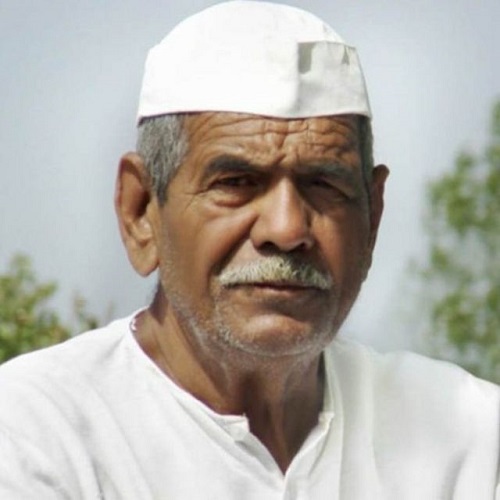
Mahendra Singh Tikait holds a unique position in this historical context, having transformed the Mahapanchayat into a powerful tool for mass agrarian mobilisation. His political approach did not primarily rely on elections or legislative office; rather, he aimed to make the collective economic strength of farmers visible to the government. His core message was that the farmers who produce food for the nation should have a significant voice in determining the economic conditions under which agriculture thrives.
Early Life and Formation as a Farmer Leader:
Mahendra Singh Tikait was born on 6 October 1935 in Sisauli, Muzaffarnagar district, Uttar Pradesh. He lost his father, Chaudhary Chohal Singh, when he was just eight years old, and at that young age, he inherited the chaudharyship of the Baliyan Khap. The official history of Muzaffarnagar district records this early succession. This experience played a crucial role in shaping Tikait’s later leadership. He grew up in a rural environment where the panchayat was an established institution for discussion, mediation, and collective decision-making. While he did not create the village assembly, he transformed its traditional social authority into a modern instrument of economic protest.
Scholarly research has demonstrated that the Bharatiya Kisan Union (BKU) mobilised significantly in western Uttar Pradesh between 1987 and 1989, with deep connections to local institutions of caste, clan, and panchayat. Gaurang Sahay argues that these traditional institutions and cultural practices established the organisational foundation for large-scale agrarian mobilisation. This context is essential for understanding why such mobilisation arose during the Green Revolution, as western Uttar Pradesh became an economically important agricultural region, particularly due to wheat and sugarcane cultivation. Farmers transitioned from being mere subsistence cultivators to relying heavily on electricity, irrigation, fertilisers, machinery, credit, procurement systems, and sugar mills. Consequently, the central question of farmer politics shifted from simply gaining access to land to addressing the economic terms that would allow farmers to continue engaging in commercial agriculture.
Birth of the Bharatiya Kisan Union:
A decisive turning point occurred in the mid-1980s when the Bharatiya Kisan Union (BKU), under the leadership of Mahendra Singh Tikait, evolved into a major non-party farmers’ organisation. The BKU’s institutional history identifies Sisauli as the site of its reorganisation and recognises Tikait as its founding president. The first significant confrontation under his leadership revolved around agricultural electricity. In 1987, farmers protested against rising electricity tariffs. Thousands of farmers gathered at Karmukheri in Shamli; reports from that time describe the agitation as involving hundreds of thousands of cultivators, which ultimately pressured the Uttar Pradesh government to reverse the rate increase.
The issue of electricity was not trivial; it represented a broader agrarian principle. If the state promoted modern, irrigated, and mechanised agriculture, the costs of essential inputs should not become economically prohibitive. Tikait effectively connected the issue of electricity charges to the larger question of the viability of farming.
Baba Mahendra Singh Tikait’s Movements from 1986 to 2011:
Baba Mahendra Singh Tikait played a prominent role in farmer politics from 1986 to 2011. His first major movement took place at the Kamru Kheda Power House in 1987, where he protested against electricity rates. His victory in this movement quickly brought him fame. Following this, Tikait led numerous significant movements, including the Meerut Farmers’ March (February 1988), the Rajbhar Satyagraha (March-June 1988), the Delhi Boat Club Farmers’ Panchayat (October 25, 1988), the Fertilizer Subsidy Panchayat (October 2, 1991), and multiple Lucknow Panchayats spanning from July 1990 to June 1992. Other notable movements he led included the Ghaziabad Farmers’ Land Acquisition Compensation Movement (September-October 1993) and the Dakkal Dak-Seed Movement (1993). Tikait managed to mobilise large numbers of farmers without relying on the organisational machinery of a political party. Over the 25 years from 1986 to 2011, Baba Mahendra Singh Tikait fought fiercely for farmers, enduring imprisonment 37 times and facing 40 legal cases.
Detailed Study of Major Movements Led by Tikait:
A. The Meerut Movement, 1988: A Symbol of Hindu-Muslim Unity:
The Meerut Commissionerate agitation began on January 27, 1988, when farmers surrounded the divisional commissioner’s office. Initially expected to be a short protest, it continued for approximately 25 days. Both contemporary accounts and later scholarly research highlight the extraordinary scale of this mobilisation.
The agitation revealed Tikait’s unique method: utilising panchayats, encouraging mass participation, maintaining a prolonged peaceful occupation, and engaging in direct negotiations with the administration. Importantly, women from farming families also participated in the agitation, and a Muslim farmer, Hafiz Khalil Ahmad, was invited to preside over the large gathering. These details complicate any simplistic view of the BKU as merely a sectional movement; they illustrate that, at its strongest moments, Tikait aimed to foster a broader kisan identity and promote Hindu-Muslim unity.
B. Delhi Boat Club Kisan Panchayat: Buggy-to-Buggy Movement from Sisauli to Delhi (October 25, 1988 – October 30, 1988):
The Delhi Boat Club Kisan Panchayat represents the most significant movement among Baba Mahendra Singh Tikait’s farmer mobilisations from 1986 to 2011. Initially, the movement aimed to press for the acceptance of a 35-point demand, which included calls for increased electricity and water prices as well as a minimum support price for agricultural produce. To achieve this, farmers blocked key locations in Delhi, including Rashtrapati Bhavan, Parliament House, North Block, South Block, Vijay Chowk, Rajpath, India Gate, and Connaught Place for seven days. Lakhs of farmers gathered at the Boat Club in Delhi to voice their demands. During this period, the Congress-led Rajiv Gandhi government was in power at the Centre. Anger and discontent among farmers were at an all-time high due to the injustices they faced. When the issue remained unresolved, Prime Minister Rajiv Gandhi was compelled to reschedule a planned event on the anniversary of Indira Gandhi’s death. Eventually, Rajiv Gandhi’s government acquiesced to the farmers’ anger and opposition, leading to the agitation’s conclusion on October 30, 1988, with the government’s assurance to address their demands. This marked a historic moment in India’s capital for the farmer’s movement.
The visual imagery during this mobilisation was remarkable, with farmers arriving in tractors and bullock carts and bringing along animals, hookahs, and household provisions. The essence of the countryside flooded the national capital.
A Cambridge study characterises the mobilisation in October 1988 as a major demonstration of the political power of the post-Green Revolution peasantry. It views the movement as indicative of a transformation in agrarian politics, shifting from traditional struggles over land and landlordism to issues such as state-set prices, subsidised inputs, and the economic terms of commodity production.
Thus, the significance of the Boat Club movement exceeded the concessions achieved at that time. It showcased the ability of farmers, despite their geographical distance from Delhi, to confront the national political establishment with their rural economic demands.
C. Lucknow Kisan Panchayat of 1990:
Tikait’s activism did not conclude with the Boat Club movement. A significant event was the Lucknow Kisan Panchayat in 1990, during which a massive mobilization sought higher sugarcane prices and relief from electricity dues. The government was forced to engage with these demands.
D. Delhi Farmers’ Panchayat of 1991 and Lucknow Movement of 1992:
In 1991, the Bharatiya Kisan Union (BKU) organised a Delhi farmers’ panchayat focusing on fertiliser subsidies. In 1992, Tikait led further mobilisations in Lucknow against the rising prices of fertilizers and electricity rates, culminating in a prolonged panchayat. Additionally, a land compensation movement was organised in the Ghaziabad region. These movements illustrate how Tikait’s agenda expanded from concerns about electricity to encompass the entire economics of agricultural production.
Main Features of His Leadership and Activism:
Tikait’s activism revolved around issues such as sugarcane prices and payments, agricultural indebtedness, and the costs of electricity, water, and fertilisers, as well as land compensation. He maintained a cautious stance regarding the BKU’s absorption into electoral politics. This non-party orientation became a defining characteristic of his leadership.
It is important to note that Tikait’s approach should not be romanticised. Scholarly research indicates that the BKU’s mobilisation was largely rooted in the social strength of the Jat-dominated agrarian society of western Uttar Pradesh. Yet, the organisation was also able to transcend caste and religious boundaries when economic issues became central. Research by Sahay notes that the organisation weakened when it shifted towards more explicitly political forms of mobilisation.
This tension—between a broad Kisan identity and the social structures from which mobilisation emerged—is crucial for a scholarly assessment of Tikait’s political philosophy.
Tikait’s greatest contribution was perhaps conceptual rather than legislative. He made the farmer conscious of his collective bargaining power.
His political beliefs were based on several key principles: farmer unity, prioritising economic issues over party politics, ensuring remunerative agricultural prices, providing affordable inputs, offering debt relief, improving irrigation and electricity, and advocating for direct negotiations with the government.
His style was intentionally straightforward. The hookah, village panchayat, simple attire, and rustic speech became symbols of his political identity. He did not strive to reinvent himself as an urban politician; instead, his authority stemmed from the villages.
This is why his death in 2011, following a prolonged illness, was perceived as the end of an important era in the farmer politics of western Uttar Pradesh. The official district history marks his death on May 15, 2011, in Muzaffarnagar, at the age of 76.
Mahapanchayat and in the collective strength of farmers across regions, as they pursue justice, dignity, and their rightful place in India’s democracy.
The Legacy: From Mahendra Singh Tikait to Rakesh Tikait
Tikait’s most significant legacy is not merely the memory of a charismatic leader but the enduring political language of the Indian farmer, which includes terms like MSP (Minimum Support Price=c2+50%), sugarcane prices, electricity, debt, land, irrigation, input costs, and dignity.
After his passing, his sons, Naresh Tikait and Rakesh Tikait, continued various facets of the Bharatiya Kisan Union’s (BKU) work. Rakesh Tikait emerged as the most nationally recognisable successor during subsequent farmer struggles. He initially worked in the Delhi Police, but left the government service to actively participate in his father’s farmers’ movement.
The pivotal test of his leadership occurred during the 2020–21 farmers’ movement against three central farm laws. This movement initially saw participation from numerous farmer organisations, particularly those from Punjab, Haryana, and western Uttar Pradesh. Rakesh Tikait became a significant figure at the Ghazipur border in Delhi.
Following the violence on January 26, 2021, the movement faced a serious threat. However, Tikait’s emotional appeal on January 28 dramatically shifted the situation. Farmers returned to Ghazipur, revitalising mobilisation in the countryside of western Uttar Pradesh. By November 2021, the Union government announced the repeal of the three farm laws.
Academic analysis has interpreted the 2020–21 movement as a revival of agrarian political identity. Satendra Kumar argues that the protests revitalised the kisan identity in western Uttar Pradesh and fostered alliances among various groups of farmers and agricultural laborers. Similarly, Jens Lerche examines the movement through the lenses of class, caste, gender, and the structural transformation of Indian agriculture.
Thus, the connection between Mahendra Singh Tikait and Rakesh Tikait extends beyond mere family ties; it is historical. The father’s generation faced the state regarding issues like electricity, sugarcane prices, and agricultural dues, while the son’s generation navigated questions surrounding agricultural markets, corporate involvement, MSP, and the future of farming.
From Tikait’s Legacy to the Future of the Kisan Movement:
Mahendra Singh Tikait taught us that farmers gain political power when economic interests unite them beyond narrow divisions. Today’s farmers face challenges like climate change, rising costs, indebtedness, and corporate concentration, making agricultural issues national, not just rural.
The future Kisan movement must unite small and large farmers, tenants, labourers, and women, advocating for fair prices, ecological sustainability, rural employment, and access to technology. Tikait showed that farmers can be organised political actors, not just passive recipients of policy.
On his birth anniversary, we should honour Tikait by addressing his challenge to democracy: if farmers are vital to the economy, why don’t they have a strong voice in economic policy? His legacy lives on in every
References :
1.Lal, Ramji, Dr. (23 March 2021). ‘Legacies of Farmers’ Movements through the Window of History’, Jag Marg (Chandigarh and Kurukshetra Editions), 23 March 2021, p. 6
2.Ramji, Lal, Dr. (May 16, 2021). From the window of farmer history, the messiah of farmers, Baba Mahendra Singh Tikait, Arth Prakash, Chandigarh, May 16, 2021, p. 6
3.Indian Express. (2021, February 6). At Ghazipur border, recalling 1988 Boat Club siege and Tikait Senior’s resolve.
4.Indian Express. (2022). Explained: A short history of BKU, the Jat-led farmers’ movement based in western UP.
5.Kumar, S. (2022). Rise and fall of the Bharatiya Kisan Union: The farmers’ protests of 2020–2021 in the making of new rural politics. Sociological Bulletin. 6.https://doi.org/10.1177/
7.Lerche, J. (2021). The farm laws struggle 2020–2021: Class-caste alliances and bypassed agrarian transition in neoliberal India. The Journal of Peasant Studies, 48(7), 1380–1396. 8.https://doi.org/10.1080/
9.Ministry of Finance, Government of India. (2025). Economic Survey 2024–25: Agriculture and food management.
10.Ministry of Agriculture & Farmers Welfare, Government of India. (2026, March 10). 11Agriculture & allied sector GVA more than doubles to ₹48.77 lakh crore in 2023–24.
11.Sahay, G. (2004). Traditional institutions and cultural practices vis-à-vis agrarian mobilisation: The case of Bhartiya Kisan Union. Sociological Bulletin, 53(3), 396–418. 12.https://doi.org/10.1177/
13.Muzaffarnagar District Administration. (n.d.). Culture and heritage: Chaudhary Mahendra Singh Tikait. Government of Uttar Pradesh.
14.Bharatiya Kisan Union. (n.d.). Movement history.