Balram Sampla
Geopolitics

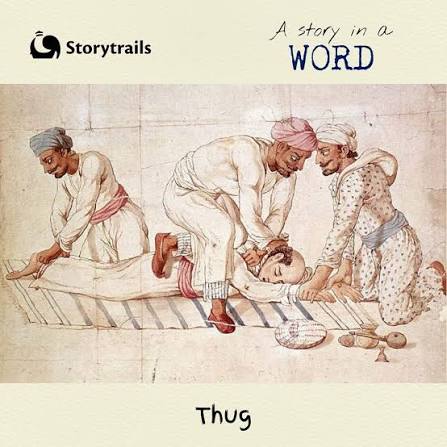
(Asian independent) For centuries, travelers in India feared a danger that looked like friendship. The Thugs (Thuggee) were organized gangs of robber-murderers active across northern and central India, chiefly in the late 1700s and early 1800s. They joined groups of travelers on the road, posing as merchants or pilgrims, and won their trust over days or even weeks.
At a chosen moment, usually at a rest stop, a signal was given and the victims were strangled with a cloth called a rumal. The gang took their belongings and buried the bodies. Both Hindus and Muslims were among them, and many honored the goddess Bhavani, a form of Kali. Historians still debate how religious this really was and how much it was plain organized banditry.
Behram, the most infamous Thug
The best-known Thug was Behram, known to the British as Buhram Jemadar and sometimes called Syed Behram. He led gangs in Oudh, the region around Lucknow, and by the 1830s had been active for about forty years. His birth year is uncertain, placed anywhere between 1765 and 1775.
His famous number is 931. In 1836 he told Captain James Paton, who ran the anti-Thug campaign in Oudh, that he had strangled about 125 men himself and seen about 150 more strangled. A year later he said he had been present at 931 murders. Guinness World Records lists him as the most prolific murderer in history on that basis. Some call it a brag.
Capture and Fate
Behram was betrayed by Ramzan, a former follower who had turned approver. Ramzan led eight sepoys to Behram’s village of Sohanee. Behram came out to greet him, was seized by a fire, and immediately confessed and agreed to cooperate.
In 1837 he was tried before Colonel John Low and sentenced to life imprisonment in irons. Many popular sites say he was hanged in 1840.
Behram’s Own Words and Character
Paton described him as aged 60 or 70, and respected by the other Thugs for his age and energy. Behram took great pride in his trade. He told Paton that Thugs were the kings of criminals. He despised common thieves and dacoits, and claimed he would never steal, though he would murder a traveling banker.
Legends
The origin myth. Thugs said Kali fought a demon whose spilled blood created new demons. To finish the fight, she made two men from her sweat to strangle the demons without shedding blood. She gave them a cloth and let their descendants keep it.
The sacred sugar. Before a killing, gangs supposedly ate consecrated raw sugar (gur), believing the goddess would protect them.
Omens and secret language. Thugs were said to read birds and animals as signs of the goddess’s will, and to speak in a secret slang called Ramasi.
The weighted cloth. Popular accounts say Behram sewed a solid medallion into the end of his rumal and used it as a blunt weapon. He is also said to have led a gang of twenty-five to fifty men.
The fall of the Thugs
In the 1830s the East India Company launched a campaign led by William Sleeman, with officers such as Paton running the effort in Oudh. They relied on informants called approvers, captured Thugs spared punishment in return for information, like Feringhea and Ramzan. Thousands were arrested, and many were hanged, imprisoned for life, or transported. The Thuggee and Dacoity Suppression Act of 1836 gave the campaign legal backing.
References
1.https://en.wikipedia.org/wiki/Thug_Behram
2.https://www.labrujulaverde.com/en/2025/03/thugs-the-indian-sect-of-thieves-who-worshiped-the-goddess-kali/
3.https://en.wikipedia.org/wiki/Feringheea
4.https://starsunfolded.com/thug-behram/
5.https://www.ufofeed.com/296619/thug-behram-syed-behram-a-nightmare-for-british-but-more-so-for-fellow-indians/
6.https://real-life-heroes.fandom.com/wiki/William_Henry_Sleeman