THE ASIAN INDEPENDENT UK

Bal Ram Sampla
Geopolitics
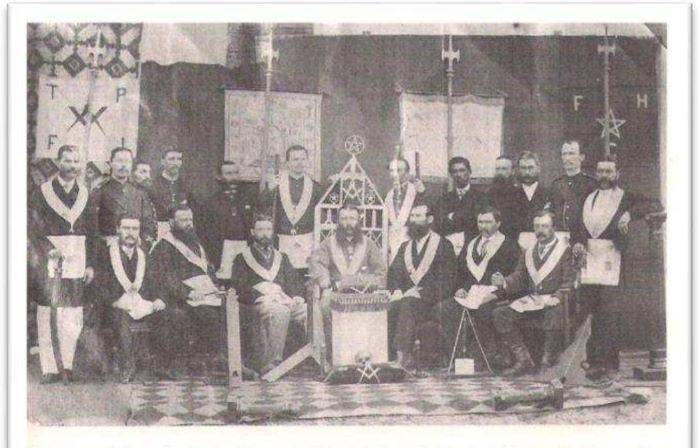
Freemasonry was brought to India by British colonialists in the 18th century. What began as an exclusive brotherhood for British officers gradually opened its doors to prominent Indians. Over time, it became a unique social space where Indian rulers, upper-caste professionals, and political thinkers interacted directly with the British ruling class.
How Indian Elites Benefited
For Indian royalty and wealthy upper-caste elites, joining a Masonic lodge provided powerful social, political, and economic advantages:
(1) Access to Imperial Power
Under British rule, Indians were legally and socially treated as colonial subjects. However, inside a Masonic lodge, members were formally treated as “brothers.” This allowed Indian princes, high-caste lawyers, and wealthy merchants to speak directly with British Viceroys, judges, and military generals without standard colonial barriers.
(2) Business and Reputation
Wealthy Parsee industrialists, Marwari traders, and upper-caste businessmen used Masonic networks to build trust and expand trade across the British Empire. Belonging to a lodge served as an elite stamp of character and high social standing.
(3) A Common Platform
India was deeply divided by religion, caste, and region. The lodge offered a rare “neutral zone” where Hindus, Muslims, Parsees, and others sat together on equal terms, placing their respective sacred texts side-by-side on lodge altars.
While Freemasonry preached universal equality, joining required high membership fees, formal regalia, and social balloting. As a result, it functioned primarily as an exclusive club for wealthy upper-caste Indians and rulers, largely excluding the general population.
Influence on the Freedom Movement
Freemasonry had a notable indirect influence on India’s early political landscape. Many prominent founding figures of the Indian National Congress—such as W. C. Bonnerjee, Dadabhai Naoroji, Sir Pherozeshah Mehta, and Motilal Nehru, were active Masons. Annie Besant was most famous of all.
The lodge environment provided these leaders with practical experience in parliamentary procedures, constitutional debate, structured governance, and cross-regional networking.
According to writer G.B. Singh, Mahatma Gandhi was also associated with Freemasons during his time in South Africa, reflecting how deeply these networks overlapped with key political figures of the era. The core Masonic values of secularism, rationalism, and constitutional order heavily influenced the “moderate” era of the nationalist movement, helping early leaders structure their institutions and articulate demands within the colonial legal system.
Conclusion
Freemasonry served as a vital bridge between the British Empire and Indian elites. It allowed Indian princes and upper-caste leaders to gain social prestige, business opportunities, and direct political access. Ultimately, the fraternity acted as a powerful social network that helped early Indian political leaders organize, debate, and navigate the complex power structures of colonial rule.
Reference
1.https://www.1723constitutions.com/evolution/british-empire/india/?hl=en-
2.https://journals.openedition.org/cve/8990?lang=en&hl=en-GB
3.Nehru, Vivekananda, Tata were also Freemasons https://indiaspeakdaily.in/nehru-vivekananda-tata-were-also-freemasons/
4.https://advocatetanmoy.com/list-of-eminent-indian-freemasons-tata-nehru-radhakrishnan-vivekananda-kesab-chandra-chittaranjan/?hl=en-GB
5.https://journals.openedition.org/1718/828?lang=en&hl=en-
6. Freemasonry in India, R J Nairn. 2012.
Extract from World of Freemasonry
7.https://himjournals.com/hjel/82/109/articleID%3D302/?hl=en-